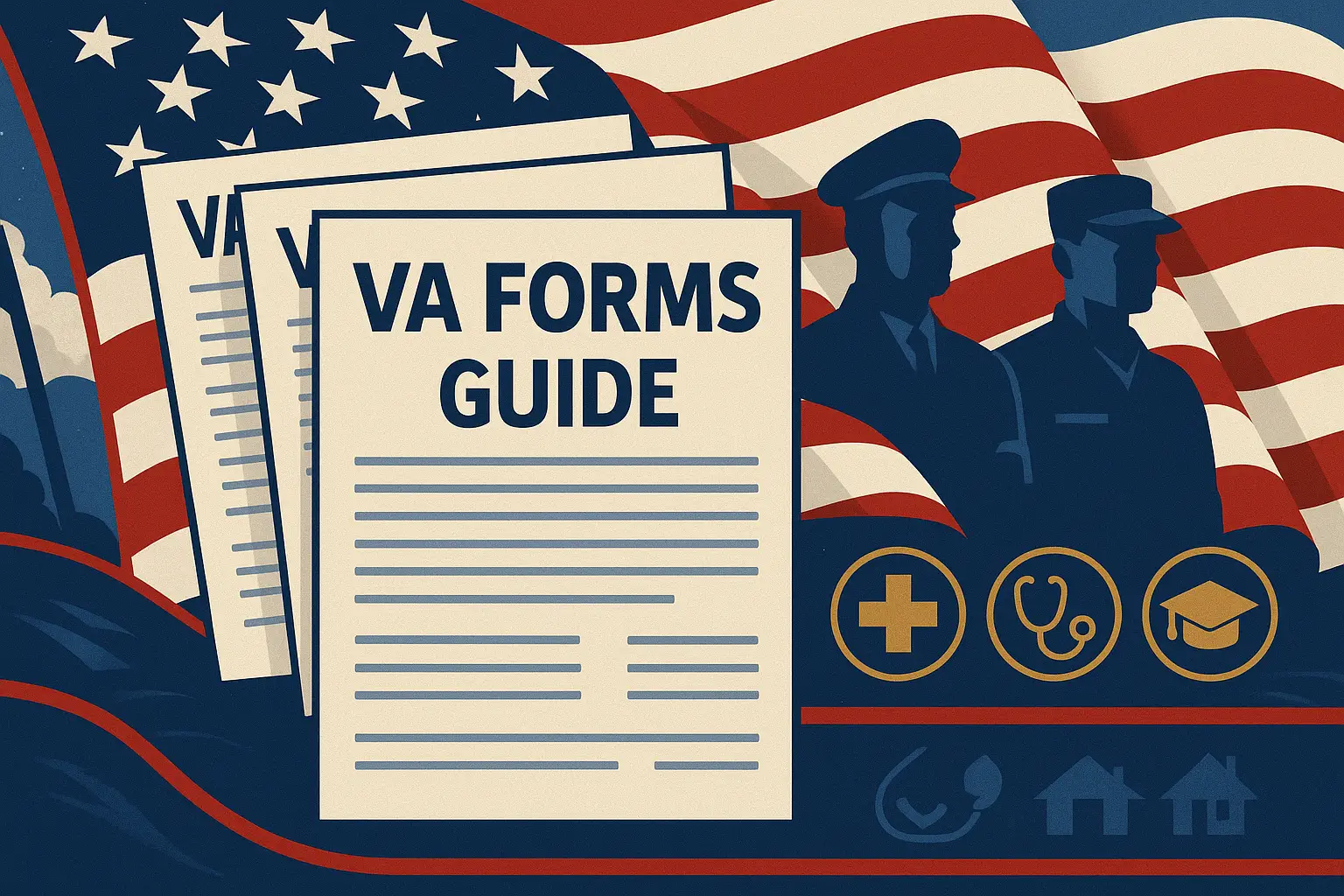
The Department of Veterans Affairs plays a central role in providing veterans, service members, and their families access to essential benefits. To receive these benefits, individuals must complete specific VA forms that serve as the official entry point into programs such as disability compensation, health care, education assistance, and housing support. Filing these forms correctly ensures that veterans and their families receive the support they have earned through service to the country.
VA forms are not just paperwork; they represent action toward receiving resources to improve the quality of life. From filing a claim for a service-connected disability to requesting health care benefits through a VA medical center, each form is tied to a process that requires accurate information, supporting evidence, and timely submission. Mistakes, outdated forms, or incomplete details can delay benefits or cause decisions to be appealed, making accuracy crucial.
For many veterans, surviving spouses, dependents, and families, completing VA forms can feel complex. The Department of Veterans Affairs provides guidance, but applicants must stay informed and carefully review requirements before they apply. Taking time to file with the proper documentation, request language assistance when needed, and contact VA representatives or Veterans Service Organizations for help can make the difference between receiving timely benefits and facing unnecessary delays.
What Are VA Forms?
VA forms are official documents that the Department of Veterans Affairs created to help veterans, surviving spouses, dependents, and families apply for benefits. Each form is designed for a specific program, such as disability compensation, health care benefits, education assistance, or home loans. Submitting the correct form ensures that the VA can review a claim, verify eligibility, and make an informed decision.
VA forms function as more than administrative paperwork. They establish a record of service-connected disability, medical evidence, or financial information that supports the request for benefits. Every claim is reviewed in order, based on the information and evidence provided. And the VA issues a letter with the final decision and disability ratings, where applicable. Applicants must also be prepared to provide new proof if their case is appealed or reconsidered.
Key Purposes of VA Forms
- Disability compensation claims: These forms allow veterans to apply for monthly cash payments related to injuries or conditions caused or worsened by military service.
- Health care enrollment: Veterans use these forms to apply for VA health care benefits and receive services at a VA medical center or through approved providers.
- Education benefits requests: Specific forms are required to apply for programs such as the Post-9/11 GI Bill or Montgomery GI Bill, which help cover the cost of tuition and training.
- Home loan eligibility: Applicants file forms to request a certificate proving eligibility for VA-backed loans, which makes housing more affordable for veterans and families.
VA forms are available on official VA pages, each with instructions, requirements, and a revision date. Veterans and families should always visit VA.gov to find the most current version of the form they need before they apply.
Major VA Form Categories
The Department of Veterans Affairs provides various forms to access specific benefits. Each form is tied to a distinct program; completing the correct document is the first step in the application process. Veterans, surviving spouses, dependents, and families should review each form carefully, ensure all required evidence is included, and file through official VA channels to avoid delays.
Disability Compensation Forms
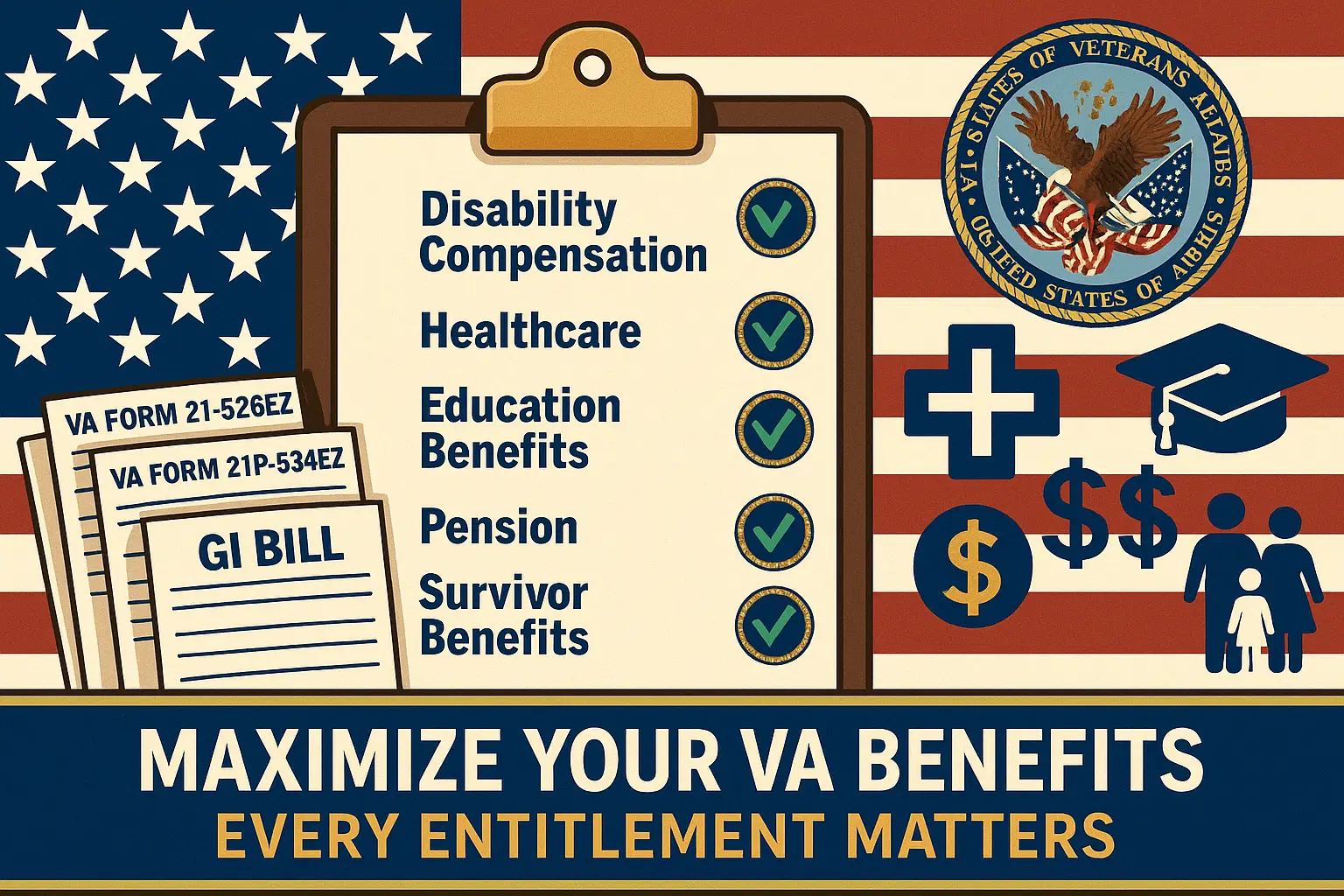
Disability compensation forms are used to apply for monthly cash payments for service-connected disability conditions. The most common is VA Form 21-526EZ, which allows veterans to file a claim for disability compensation and related benefits. The VA reviews medical evidence, determines disability ratings, and issues a decision letter. Veterans may appeal decisions, submit new evidence, or request a review if they believe the decision was incorrect.
- VA Form 21-526EZ (Application for Disability Compensation): This form files claims for injuries or conditions linked to military service. Supporting evidence, such as medical records or dependency information, must be included.
Health Care Enrollment Forms
Health care benefits require enrollment through specific VA forms. The most widely used is VA Form 10-10EZ, which veterans complete to apply for VA health care. This form helps determine eligibility for services provided at a VA medical center. Sometimes, the VA may cover costs not fully paid by Medicare or other insurance.
- VA Form 10-10EZ (Application for Health Benefits): Veterans provide personal, financial, and service information to apply for enrollment in VA health care. This form also helps the VA decide eligibility for additional resources, such as language assistance programs.
Education Benefits Forms
Veterans, families, and survivors seeking education or training must complete specific VA forms. The most common is VA Form 22-1990, which is used to apply for programs such as the Post-9/11 GI Bill and the Montgomery GI Bill. These benefits help cover the cost of tuition, housing, and training programs.
- VA Form 22-1990 (Application for Education Benefits): Applicants file this form to request education support, providing information about their service history, school choice, and program of study. The VA uses this information to determine eligibility and send a decision letter.
Home Loan Certificate of Eligibility Forms
Veterans and families must establish eligibility for VA-backed home loans for housing support. The VA Form 26-1880 requests a Certificate of Eligibility (COE), which lenders require to confirm entitlement. Filing this form can make purchasing or refinancing a home easier without significant upfront costs.
- VA Form 26-1880 (Request for a Certificate of Eligibility): This form allows veterans and surviving spouse dependents to show they qualify for VA-backed mortgage loans. Lenders use the COE to process home loan applications.
Eligibility Requirements
Eligibility for VA benefits is based on a combination of service history, type of discharge, and supporting evidence. Veterans, surviving spouses, dependents, and families must meet specific requirements for each program, and the Department of Veterans Affairs uses the information provided on forms to decide whether an applicant qualifies. Understanding the conditions before filing can save time and prevent delays in the process.
Disability Compensation Eligibility
To receive disability compensation, a veteran must show a direct link between military service and a current medical condition. The VA reviews medical records, service history, and other evidence to determine if the injury or illness qualifies as a service-connected disability. Disability ratings are assigned based on the severity of the condition, and these ratings determine the monthly cash payments.
- Basic requirements: The applicant must have a condition that affects their health or ability to work, which must be connected to military service.
- Types of claims: Conditions may be linked directly to service, worsened by service, or discovered after discharge but related to time served.
- Supporting evidence: Medical records, dependency details, and personal statements help strengthen the claim.
Health Care Eligibility
VA health care benefits are available to veterans with certain service and discharge requirements. The Department of Veterans Affairs uses VA Form 10-10EZ to review applications and determine eligibility for care at a VA medical center or through community providers.
- Service requirements: Most veterans must have served a minimum period of active duty, although exceptions exist for combat veterans and specific cases.
- Special categories: Priority may be given to former prisoners of war, veterans with service-connected disability ratings, or those with limited income.
- Other coverage: Veterans who already receive Medicare may still apply for VA health care benefits, which can reduce the overall cost of treatment.
Education Benefits Eligibility
Education programs are designed to help veterans, survivors, and families cover the cost of tuition, training, and related expenses. Eligibility depends on service period and discharge status, and applicants must file VA Form 22-1990 to request support.
- Post-9/11 GI Bill: This is available to veterans who served at least 90 days after September 10, 2001, or to those discharged due to a service-connected disability.
- Montgomery GI Bill (Active Duty and Selected Reserve): This requires honorable service and a commitment to pay into the program.
- Supporting documentation: Applicants must provide service history, school details, and bank information for direct deposit of benefits.
Home Loan Eligibility
VA-backed home loans help veterans and families purchase or refinance homes without large down payments. To qualify, applicants must meet minimum service requirements, file VA Form 26-1880, and receive a Certificate of Eligibility.
- Service length: Requirements vary depending on when the veteran served. For example, Gulf War veterans generally need at least 24 continuous months, while Vietnam-era veterans may qualify with 90 days.
- Surviving spouse eligibility: A surviving spouse can apply for a home loan benefit in certain cases, provided they meet specific dependency and service conditions.
- Supporting evidence: Discharge papers and service records are required to determine eligibility.
Step-by-Step Application Processes
Filing VA forms requires accuracy and attention to detail. Each type of benefit has its own process, and veterans, surviving spouses, dependents, and families should carefully follow the instructions. The Department of Veterans Affairs will review the claim, evaluate evidence, and issue a decision letter. Using the correct form and submitting complete documentation helps reduce delays.
Filing for Disability Compensation
Veterans seeking disability compensation for a service-connected disability must complete VA Form 21-526EZ. This process establishes eligibility, determines disability ratings, and may lead to monthly cash payments.
- Gather required documents: Collect discharge papers, medical records, and any letters that show how the injury affects your work or daily life.
- Choose a filing method: Apply online through VA.gov, by mail, in person at a regional office, or with the help of an accredited representative.
- Submit an intent to file: This preserves your effective date while you prepare new evidence to support your claim.
- File the completed form: Include all supporting evidence. The VA will review your case and issue a decision.
- Review the decision letter: If you disagree with the outcome, you may appeal, request a review, or provide additional evidence.
Applying for Health Care
Veterans use VA Form 10-10EZ to apply for VA health care benefits. Submitting this form helps determine eligibility for services at a VA medical center and access to language assistance when needed.
- Check eligibility requirements: Confirm your service history and discharge status meet the standards for VA health care.
- Select an application method: Apply online, mail the form, call the VA, or visit a medical center.
- Provide accurate information: Include income details, insurance such as Medicare, and service dates.
- Submit the form: The VA will process your application and send a letter with your enrollment decision.
Applying for Education Benefits
VA education benefits help cover the cost of tuition, housing, and training. Veterans and families can apply using VA Form 22-1990.
- Determine eligibility: Review requirements for the Post-9/11 GI Bill or Montgomery GI Bill.
- Prepare needed information: Gather Social Security number, bank account details, school information, and service records.
- File the application: Submit online, by mail, or in person.
- Receive confirmation: The VA will send a decision letter, listing benefits awarded and the date they begin.
Requesting Certificate of Eligibility for Home Loans
To access VA-backed loans, applicants must file VA Form 26-1880 and request a Certificate of Eligibility (COE).
- Confirm service eligibility: Determine if your length of service and discharge status qualify.
- Choose how to apply: File online through VA.gov, ask your lender to submit the request, or mail the form.
- Provide supporting evidence: Include discharge documents and dependency details if applying as a surviving spouse.
- Submit the application: The VA will decide eligibility and issue the COE, which lenders use to process your loan request.
Common Mistakes to Avoid
Filing VA forms requires careful attention. Errors in claims or applications can delay benefits, increase the cost of time spent correcting mistakes, or result in the Department of Veterans Affairs requesting new evidence. Veterans, surviving spouses, dependents, and families should review every page before submission to ensure the information provided is accurate and complete.
Disability Claims Errors
- Incomplete medical evidence: Applications often fail because the VA cannot determine the full impact of a service-connected disability without proper records.
- Missing intent to file: Failure to submit an intent to file form may affect the effective date for disability compensation.
- Skipping exams: Failing to attend or reschedule required exams can result in the denial of benefits.
- Incorrect details: Mismatched dates, injury descriptions, or dependency information can delay the review and decision process.
Education Benefits Errors
- Not verifying enrollment: Veterans and families must regularly confirm enrollment to continue receiving benefits.
- Unreported changes: Failing to report program or school changes may lead to overpayments or interruptions in benefits.
- Overlooking benefit limits: Each program has a fixed number of months or years of support. Missing deadlines can reduce the value of the benefits listed.
- Using outdated forms: Applying with old versions of VA forms can cause the claim to be rejected.
General Application Errors
- Incomplete forms: Missing signatures, unchecked boxes, or skipped sections can stop the application from moving forward.
- Not following up: Veterans should track their claim, file appeals when necessary, and review decision letters for accuracy.
- Submitting to the wrong address: Sending forms to the wrong office or not using the locator tool may delay processing.
- Ignoring VA requests: Failure to respond to requests for evidence or clarification within the given time frame can result in a denial.
Tips for Successful Applications
Veterans, surviving spouses, dependents, and families can improve their chances of receiving VA benefits by preparing carefully and following best practices. Submitting complete forms with accurate information reduces the likelihood of delays, appeals, or requests for new evidence. Staying organized and using available resources helps applicants remain informed and confident throughout the process.
Preparation Strategies
- Organize documents: Collect discharge papers, medical records, dependency information, and any letters that support your claim before you apply.
- Make copies: Keep personal copies of all forms and evidence submitted. This will help if you need to appeal or provide additional information later.
- Track deadlines: Write down filing dates and response deadlines to avoid missing essential actions that could affect benefits or disability ratings.
Best Practices for Filing
- Use online applications: Filing through VA.gov often speeds up the process and provides immediate confirmation.
- Provide full evidence: Submitting medical documentation, financial details, and dependency information ensures the VA can make an informed decision.
- Request help when needed: Accredited Veterans Service Organizations can provide free support to families and survivors who need guidance with the forms.
- Confirm form versions: Always visit the VA page for the most recent form before filing. Using outdated forms may result in the request being denied.
Ongoing Management
- Update personal information: Notify the VA about changes in address, marital status, or dependency to keep records accurate.
- Review decision letters carefully: Understand the rating, date, and payment details. If you disagree, you may file an appeal or submit new evidence.
- Monitor benefits usage: Keep track of how much support you have received each year and what remains for education and pension programs.
- Stay informed: For updates on your claim, use VA resources, contact hotlines, or visit a local medical center or regional office.
Helpful Resources & Contact Information
The Department of Veterans Affairs provides several resources to help veterans, families, and surviving spouse dependents with forms, claims, and benefits. Applicants can find official information, request language assistance, and contact the VA directly for support. Using these trusted resources ensures that the information provided is accurate and current.
Key VA Contact Numbers
- VA Benefits Hotline: Call 1-800-827-1000 (TTY: 711) for questions about disability compensation, pensions, and claims.
- VA Health Care: Call 1-877-222-8387 to apply for or manage VA health care benefits.
- Education Benefits: Call 1-888-442-4551 (TTY: 711) to speak with a representative about GI Bill programs and training support.
- Home Loan Guaranty Service: Contact a regional loan center to receive help with the Certificate of Eligibility and VA-backed mortgages.
- Veterans Crisis Line: Dial 988, then press 1 to connect with immediate support available 24/7 for veterans, survivors, and families.
Online Resources
- VA.gov: Visit va.gov to access forms, eligibility requirements, claim filing instructions, and updated program information.
- Find Forms: Visit va.gov/find-forms/ to locate and download the latest versions of VA forms.
- Claim Status: Visit va.gov/claim-or-appeal-status/ to track your application or appeal.
- My VA Dashboard: Visit va.gov/my-va/ for a personalized summary of your benefits and pending actions.
Veterans Service Organizations (VSOs)
Veterans and families can get free help filing forms and preparing claims through accredited VSOs. These organizations provide informed guidance and can reduce mistakes during the process. Examples include:
- American Legion: This organization offers support for claims, appeals, and benefits.
- Veterans of Foreign Wars (VFW): This organization helps veterans file disability compensation and pension applications.
- Disabled American Veterans (DAV): This organization provides representation for veterans and surviving spouse dependents.
- AMVETS and Vietnam Veterans of America (VVA): These organizations assist with claims, appeals, and resource connections.