Applying for disability benefits can be a lengthy and uncertain process. Many applicants are unsure how long it will take to receive a decision, which can add stress during an already challenging time. Understanding typical timelines helps individuals and families prepare for critical financial and medical needs while waiting for approval.
A disability timeline calculator estimates how long different stages of a claim may take. Government agencies such as the Social Security Administration, the Department of Veterans Affairs, and the Department of Labor provide data on average processing times. By reviewing this information, applicants can form a clearer picture of what to expect when they file.
Knowing the average timeframes can help people applying for Social Security Disability Insurance, Supplemental Security Income, or veterans seeking compensation through the VA plan manage income and arrange medical services like Medicare or Medicaid. It also provides insight into when to follow up on an initial claim or appeal.
What Is a Disability Timeline Calculator?
A disability timeline calculator is a planning tool that helps applicants estimate how long it may take to move through the disability benefits process. While agencies such as the Social Security Administration and Veterans Affairs do not provide an actual calculator, they publish detailed information on average processing times. By reviewing this data, applicants can create a personal estimate of how long their claim might take.
Key Purposes of a Disability Timeline Calculator
A disability timeline calculator is not a physical tool but a way of using government-provided data to estimate how long the disability benefits process may take. For applicants, it provides clarity and helps with planning during a lengthy and uncertain period. The purposes below highlight why this kind of estimate is so important:
- Set expectations: The tool allows applicants to understand the average wait times for each stage of the application process, from filing an initial claim to possible appeals. This reduces anxiety and uncertainty during the review period.
- Plan finances: A timeline estimate allows individuals and families to prepare for months when they may have little or no income. Knowing when monthly payments may begin helps them manage money more effectively.
- Track progress: By comparing their claim to typical timelines, applicants can decide when it may be appropriate to contact the Social Security Administration or Veterans Affairs for an update.
- Prepare documents: Many delays occur because required forms, medical records, or consent documents are missing. A timeline helps applicants recognize when to gather and submit important information in advance.
- Support families and dependents: Families, dependent children, and spouses can use the estimate to plan for healthcare, prescriptions, and other services that may only be accessible after approved benefits.
How It Supports Applicants
Applicants for Social Security disability benefits, SSI, or VA disability compensation often face months or even years of review. Having an estimate based on government-published timelines can reduce uncertainty. For service members and veterans, it also clarifies how factors like a disability rating or the type of claim may affect the process. Families, dependent children, and spouses also benefit since they can better anticipate when monthly payments or medical coverage might begin.
Eligibility Criteria for Disability Benefits
Qualifying for disability benefits depends on the program. Each agency has its rules about age, income, medical conditions, and family status. Understanding these requirements is an essential first step before filing an initial claim, since eligibility determines whether you can access monthly payments, health coverage, and other assistance.
Social Security Disability Insurance (SSDI)
Social Security Disability Insurance is designed for workers who have paid into the Social Security system. It provides monthly payments to people who can no longer work due to a severe disability.
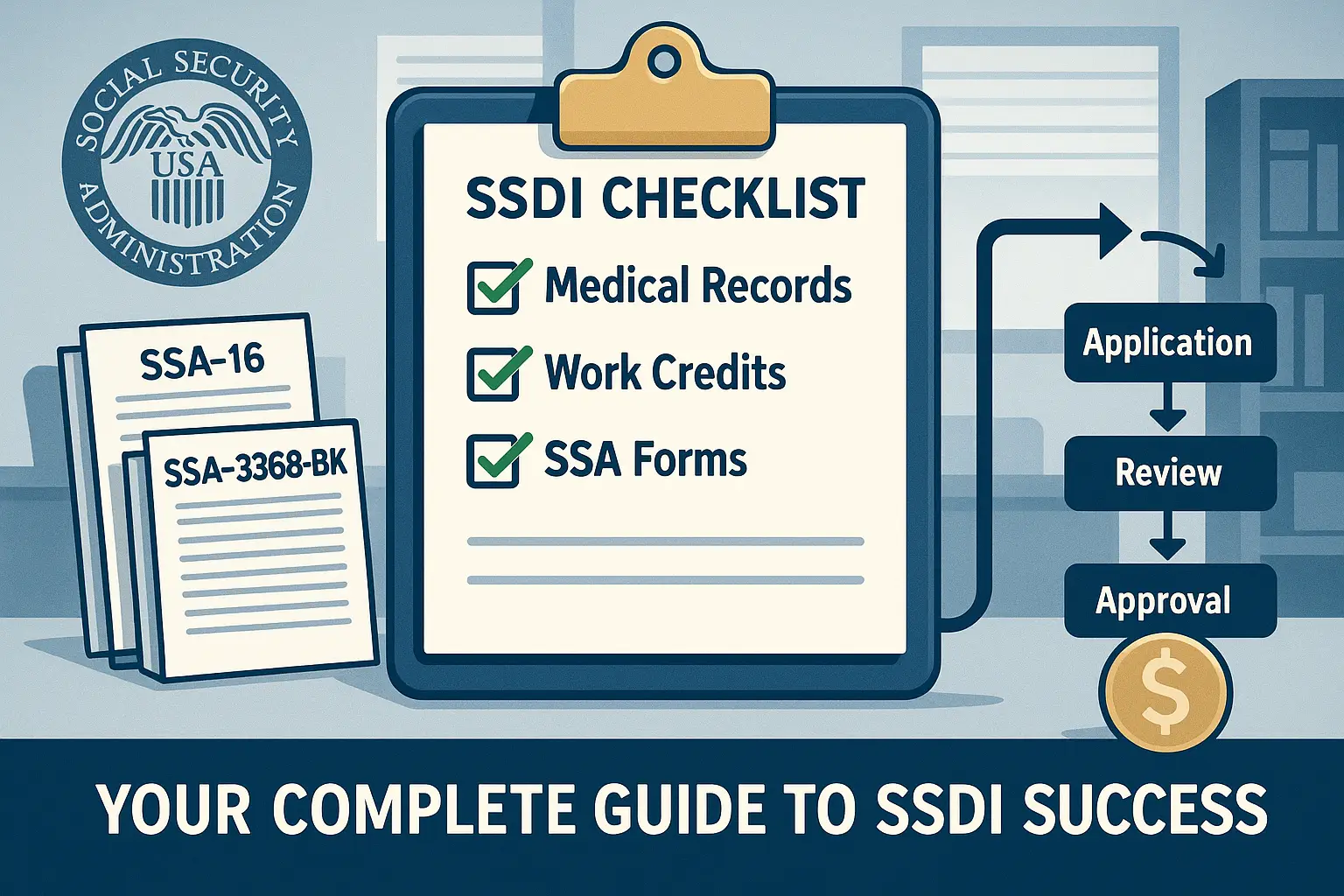
- Work credits: Applicants generally need 40 work credits, with at least 20 earned in the last 10 years. Younger workers may qualify with fewer credits.
- Qualifying disability: The condition must prevent substantial gainful activity, last at least 12 months, or be expected to result in death.
- Age requirement: Applicants must be under full retirement age when the disability began.
- Monthly payments and Medicare: Approved applicants receive SSDI benefits through monthly payments, and Medicare coverage starts after 24 months.
- Dependents: Spouses and dependent children may also be entitled to additional payments based on the worker’s record.
Supplemental Security Income (SSI) and Social Security Disability Benefits
Supplemental Security Income is a separate Social Security program that benefits individuals with limited financial resources. Unlike SSDI, it is based on need rather than work history.
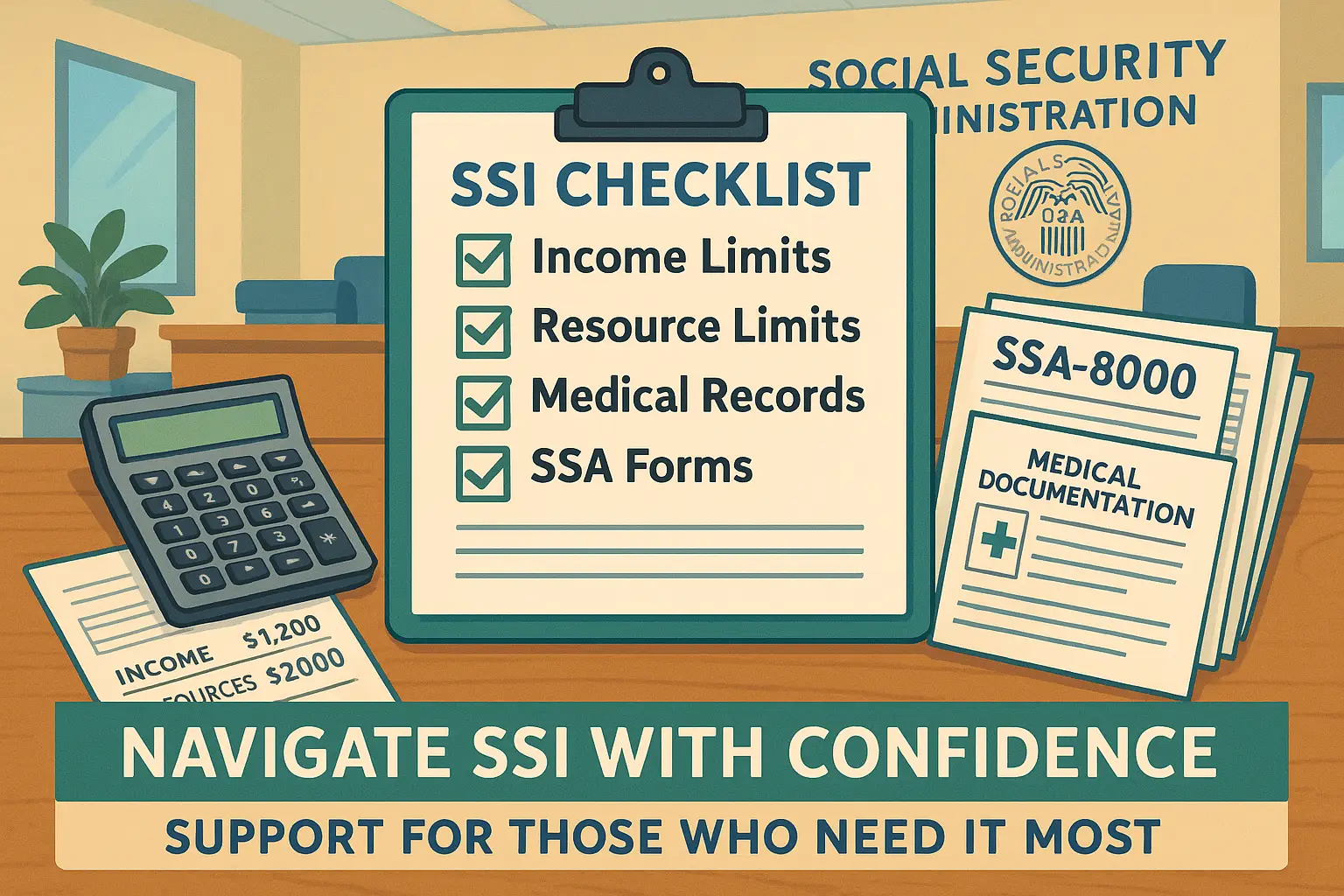
- Income and resources: Applicants must have minimal income and assets, which are reviewed during the application process.
- Age and disability: SSI is available to people 65 or older, blind, or disabled under Social Security’s definition.
- Residency and citizenship: Applicants must be U.S. citizens or qualified non-citizens living in the United States.
- Healthcare access: SSI recipients usually qualify for Medicaid immediately, which covers medical services and prescriptions.
- Payments: SSI provides modest monthly payments, but the program ensures access to essential services for individuals and families with the greatest need.
Veterans Affairs (VA) Disability Benefits
The Department of Veterans Affairs offers disability compensation to veterans with service-connected disabilities. Eligibility focuses on military service and how an illness or injury affects the veteran’s daily life.
- Service-connected disability: Applicants must show that an illness or injury was incurred or aggravated during active military service.
- Disability rating: The VA assigns a percentage rating that determines the level of compensation—a higher disability rating results in greater monthly payments.
- Discharge status: Veterans must have a discharge that is not dishonorable to qualify.
- Additional support: Benefits may include aid and attendance for veterans who need daily living assistance, as well as education, housing, and healthcare programs.
- Family coverage: Certain benefits extend to dependent children, spouses, or surviving families.
Other Federal Disability Programs
Other federal agencies, in addition to the Social Security and VA programs, provide disability compensation to specific groups of workers.
- Federal Employees’ Compensation (DOL): The Department of Labor supports federal employees who incur work-related injuries or illnesses. Compensation may cover medical bills, rehabilitation, and lost wages.
- Railroad Retirement Disability (RRB): The Railroad Retirement Board benefits workers with a history of railroad employment who become disabled. The timeline and application process are similar to those of Social Security programs.
- Family benefits: Some programs extend support to families, spouses, and dependent children, ensuring that households receive aid when the primary worker cannot earn.
Application Process and Timelines
The application process for disability benefits involves several stages, each with a timeline. Applicants often face months of waiting, sometimes years if appeals are required. Understanding how long each step usually takes makes it easier to prepare documents, manage expectations, and plan for monthly payments once benefits begin.
Social Security Disability (SSDI & SSI)
The Social Security Administration uses a multi-step process to determine eligibility for Social Security Disability Insurance and Supplemental Security Income. Each stage has an average timeframe, though the length can vary based on medical evidence, income documentation, and case complexity.
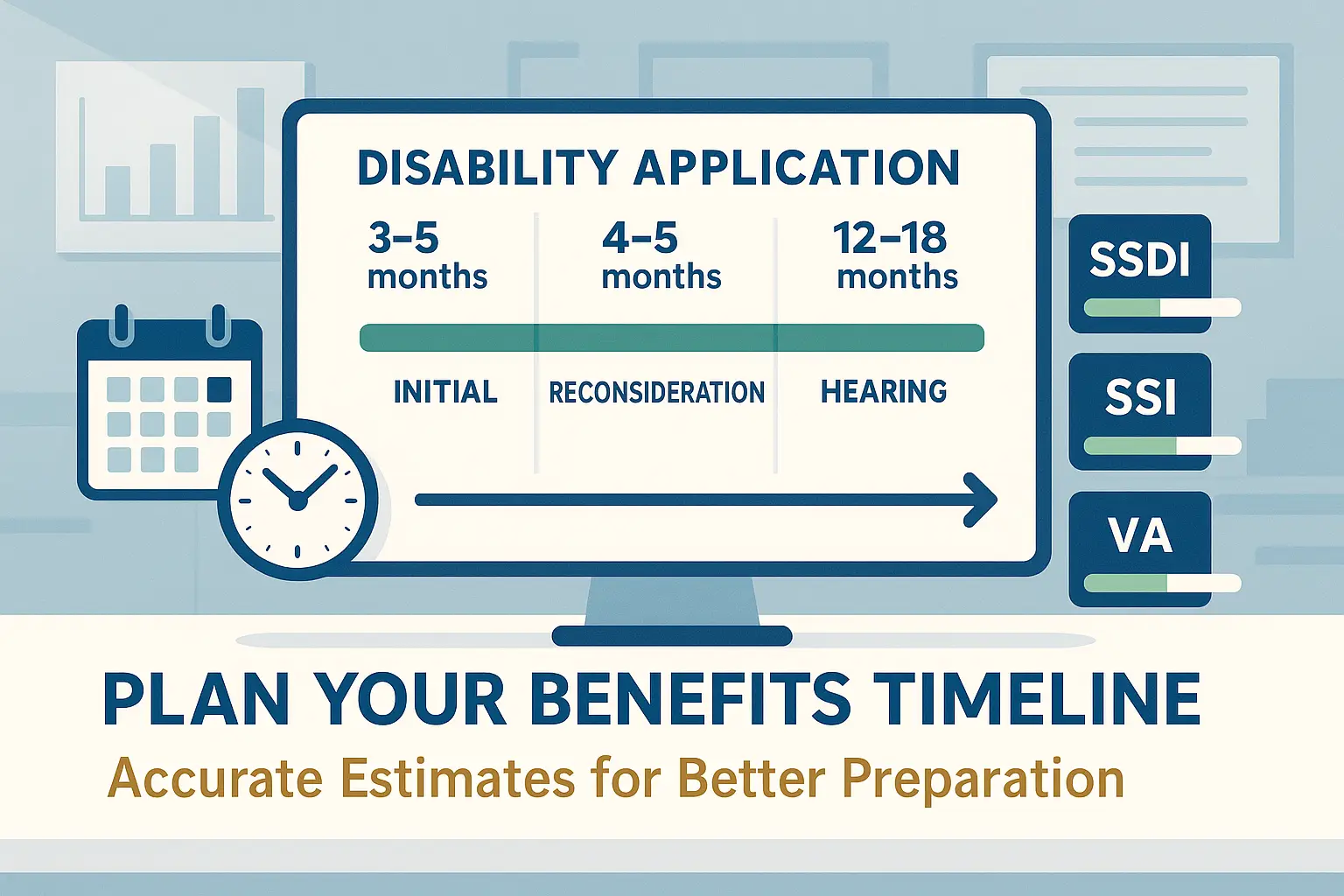
- Initial claim: Decisions usually take 3 to 5 months. This period includes reviewing medical evidence, employment records, and other documents to determine eligibility.
- Reconsideration: If the initial claim is denied, the reconsideration stage also takes 3 to 5 months. A different examiner reviews the application.
- Administrative Law Judge hearing: Applicants who appeal again may wait 12 to 18 months for a hearing. The judge reviews the case and may ask questions about medical records, work history, and dependents.
- Appeals Council review: If the judge denies benefits, applicants may request review by the Appeals Council. This stage also takes 12 to 18 months.
- Final federal court review: In some cases, applicants take their claim to federal court. Timelines here vary widely, depending on the court’s schedule and case complexity.
VA Disability Claims Timeline
The Department of Veterans Affairs follows a different process, focusing on service-connected disability and disability rating. While the average processing time is shorter than that of Social Security, claims may take longer if evidence is missing or multiple conditions are filed together.
- Average decision time: VA disability claims take about 134 days on average.
- Factors that affect time: Complex claims with multiple conditions, missing documents, or incomplete medical evidence may take longer.
- Disability rating: The VA assigns a rating determining disability compensation amounts and whether benefits extend to dependent children, spouses, or families.
- Appeals process: Veterans who disagree with their rating or decision may appeal. Depending on the case's complexity, appeals often take months to several years.
Other Programs
Other federal programs also provide disability compensation, though their processes are less standardized than those for SSA or VA claims.
- Federal Employees’ Compensation (DOL): Processing times vary widely depending on the case's complexity, the type of injury or illness incurred, and the required medical reviews.
- Railroad Retirement Disability (RRB): Timelines are similar to Social Security, with initial reviews taking several months and appeals adding longer delays.
Program Comparisons
Different disability programs share the goal of providing financial assistance, but their rules, payment structures, and healthcare access can vary significantly. Comparing programs side by side helps applicants understand where they may qualify, what benefits to expect, and how each system determines eligibility.
SSDI vs. SSI
The Social Security Administration administers Social Security Disability Insurance (SSDI) and Supplemental Security Income (SSI), but they serve different groups.
- Eligibility: SSDI benefits are based on work history and Social Security Disability Insurance contributions, while SSI is a need-based program for individuals with limited income and resources.
- Monthly payments: SSDI benefits generally provide higher monthly payments, while SSI offers lower amounts but ensures Medicaid eligibility in most states.
- Dependents: SSDI allows confident dependent children and spouses to receive benefits. SSI is calculated only for the applicant.
- Healthcare access: SSDI beneficiaries qualify for Medicare after 24 months of payments. SSI beneficiaries often gain immediate Medicaid coverage.
- Application process: Both programs use the same application process and require medical documents to determine eligibility.
SSA Disability vs. VA Disability Compensation
Social Security disability benefits and Veterans Affairs disability compensation differ in how they define disability, calculate payments, and what applicants can expect regarding eligibility.
- Definition of disability: Social Security defines disability as the inability to perform substantial gainful activity. The VA uses a disability rating system that assigns percentages to service-connected conditions.
- Ability to work: Applicants receiving Social Security disability benefits cannot earn above certain income limits. Veterans with a VA disability rating may still work while receiving disability compensation.
- Monthly payments: SSA benefits are based on past earnings, while the disability rating determines VA disability compensation.
- Dependents and families: VA benefits may extend to dependent children, spouses, and surviving families. Social Security also provides dependent benefits under SSDI, but not under SSI.
- Appeals: SSA and VA offer multi-stage appeals processes, though timeframes vary. Veterans Affairs appeals may also review disability ratings for adjustment.
Official Resources and How to Apply
Applicants for disability benefits often need reliable sources of information and direct access to official agencies. Using government websites and approved representatives ensures that forms are accurate, timelines are clear, and benefits are processed without unnecessary delays. Below are the primary resources available for applicants through Social Security, Veterans Affairs, the Department of Labor, and Medicare or Medicaid.
Social Security Administration (SSA)
The Social Security Administration manages both SSDI benefits and SSI. Applicants can file, track, and manage their disability claims online or in person.
- Apply online: Applicants can visit SSA.gov to file for Social Security Disability Insurance (SSDI) or Supplemental Security Income (SSI).
- Create an account: A personal My Social Security account allows applicants to check the status of a claim, review benefits, and upload documents.
- Publications and forms: SSA provides starter kits, consent forms, and guides to help applicants prepare.
- Speak to a representative: Applicants may call the SSA directly or visit a local office for in-person assistance.
Department of Veterans Affairs (VA)
The Department of Veterans Affairs provides resources for veterans and service members seeking disability compensation. Multiple support options are available to help with applications, ratings, and appeals.
- File online: Veterans can apply for VA disability compensation through VA.gov or the eBenefits website.
- Aid and attendance: Additional programs are available for veterans who need help with daily activities.
- Check claim status: Applicants may review their account online or call the VA hotline.
- Veterans Service Officers: Trained representatives help service members, veterans, and families complete forms and navigate appeals.
Department of Labor (DOL)
The Department of Labor oversees workers’ compensation for federal employees. Its programs provide disability compensation when an injury or illness is incurred on the job.
- Workers’ compensation claims: Federal employees can file claims under the Office of Workers’ Compensation Programs (OWCP).
- District offices: Contact information is available on DOL.gov for speaking with a representative about a case.
- Forms and documents: Applicants can download and submit the required paperwork directly from the website.
Centers for Medicare & Medicaid Services (CMS)
The Centers for Medicare & Medicaid Services provides health coverage information for people approved for disability benefits. Depending on the program, both SSDI and SSI applicants may qualify for medical assistance.
- Medicare information: Beneficiaries of SSDI benefits qualify for Medicare after 24 months of monthly payments. Information is available on Medicare.gov.
- Medicaid resources: SSI applicants often qualify for Medicaid, which helps with prescriptions and medical services.
- Access services: Applicants can apply online, visit a state office, or call the federal helpline for assistance.