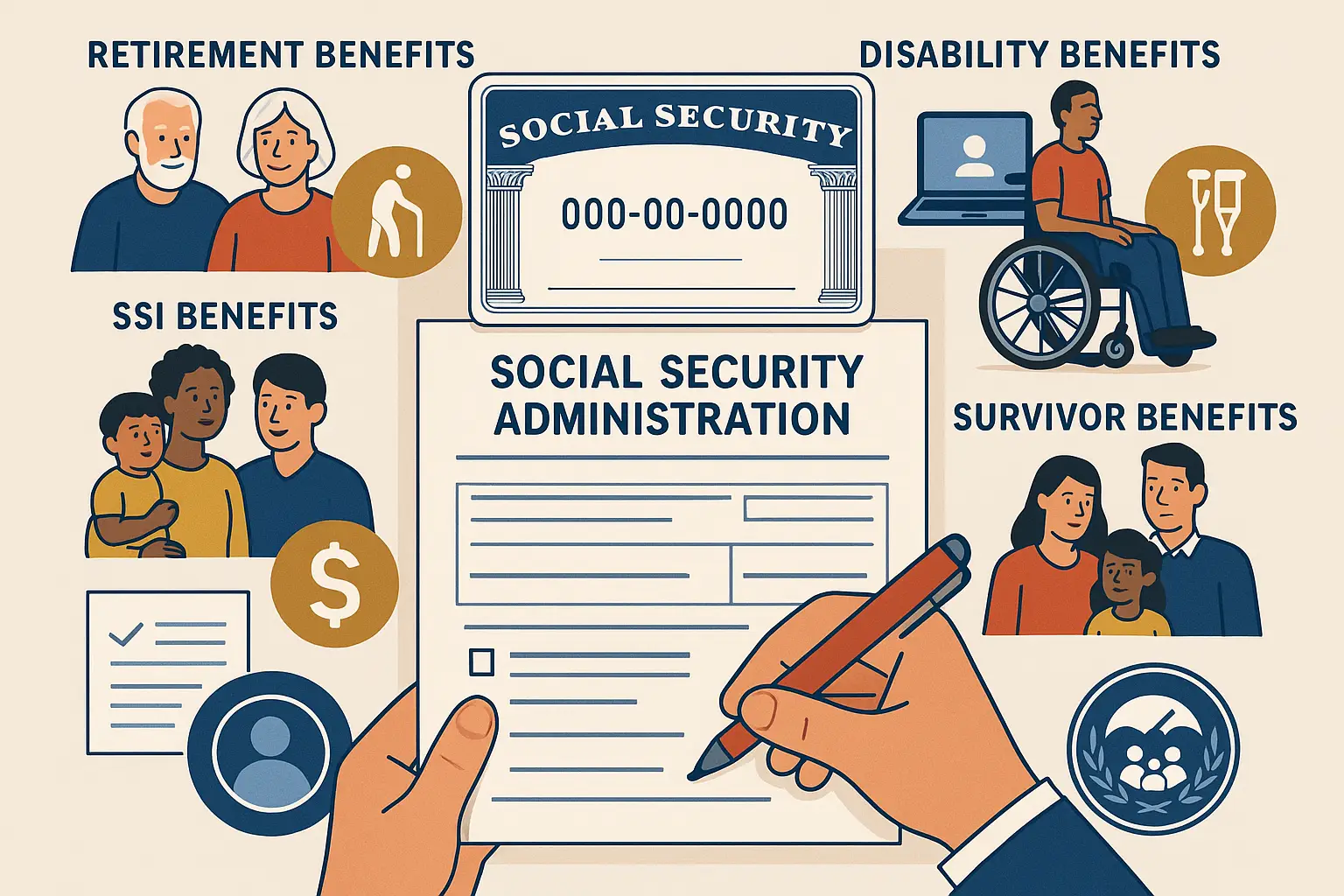
Supplemental Security Income (SSI) is a federal program managed by the Social Security Administration that provides monthly benefits to people with limited income and resources. Unlike Social Security Disability Insurance, which is based on work history and paid Social Security taxes, SSI eligibility depends on financial need and other non-work-related criteria. The program supports older adults, people with disabilities, and certain family members who meet the requirements.
SSI differs from retirement or Social Security disability benefits because it does not rely on work credits or prior contributions to Social Security taxes. Instead, it is designed to help people who are unable to secure enough income to cover basic living expenses due to age, disability, or blindness. This makes it one of the most essential federal disability programs for people without a substantial work history.
Most cases are reviewed directly by the Social Security Administration and disability determination services, which evaluate whether a person meets the strict definition of disability. The process can feel complex, but having clear information on eligibility, required documents, and application steps helps ensure that disabled individuals and their families are prepared to request benefits at a local Social Security office or apply online confidently.
SSI Eligibility Requirements
To qualify for Supplemental Security Income, applicants must meet financial and non-financial requirements set by the Social Security Administration. These rules ensure SSI benefits are directed toward people with limited income and resources who meet disability requirements or age criteria.
Financial Eligibility
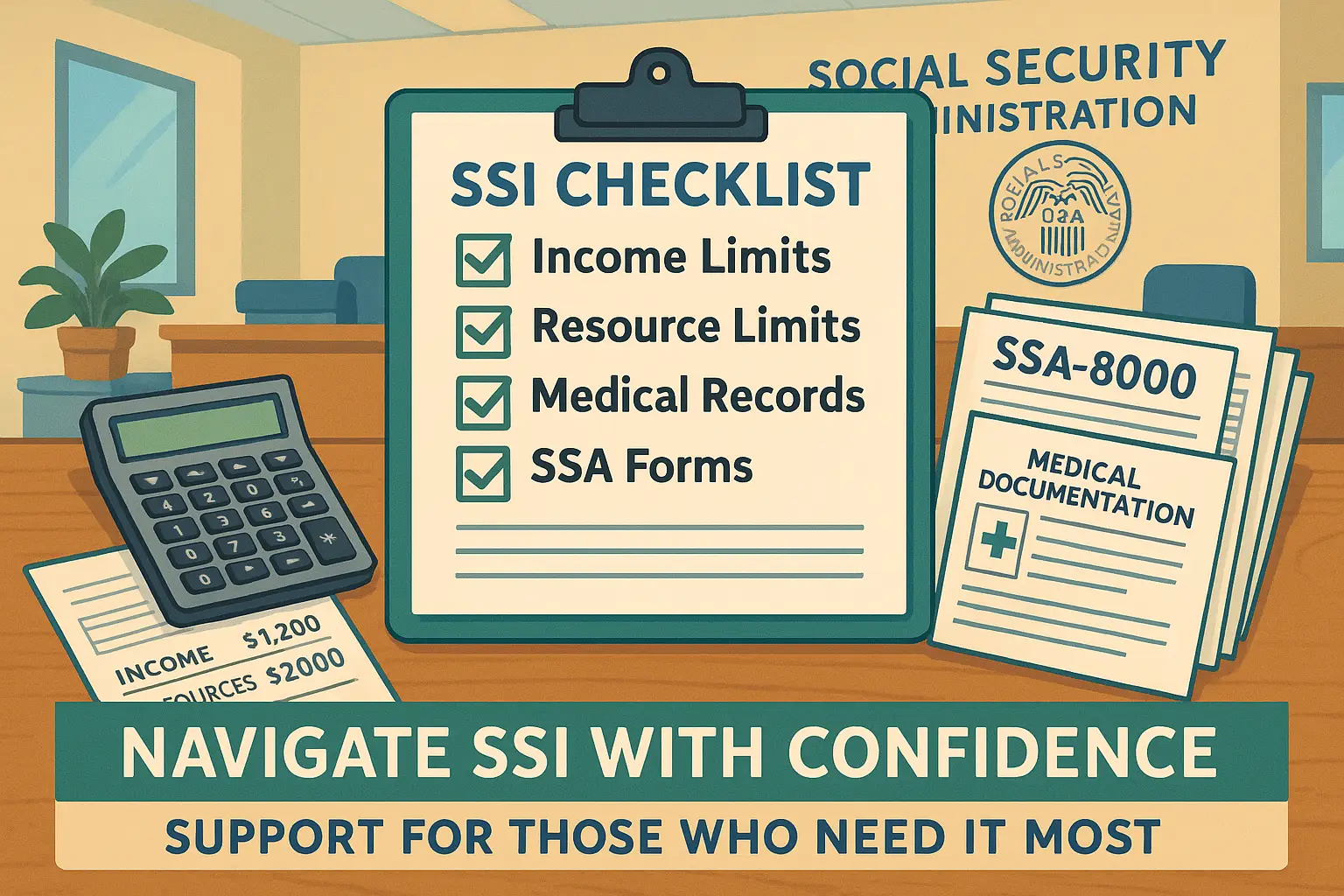
- Income limits: Applicants must have limited income, which includes earned wages, unearned income such as pensions, and specific benefits from other federal programs. The Social Security Administration determines how much income affects monthly benefits.
- Resource limits: Resources such as bank accounts, property (other than a primary residence), and certain personal assets must remain below strict federal limits. In most cases, the threshold is $2,000 for an individual and $3,000 for a couple.
- Living arrangements: SSI benefits may be reduced if someone receives free food or housing, as these are considered forms of income.
Non-Financial Eligibility
- Age requirement: Adults 65 and older may qualify for SSI benefits based on age, even without a disability.
- Qualifying disability: Adults under 65 must have a medical condition that meets the Social Security Administration’s strict definition of disability. This includes physical impairments and mental impairments that prevent substantial gainful activity.
- Special rules for blindness: Applicants who are legally blind may qualify under separate disability requirements with adjusted income limits.
- Citizenship or immigration status: To receive SSI benefits, a person must be a U.S. citizen or fall under specific categories of eligible non-citizens.
- Children with disabilities: A child may qualify if they meet medical and financial criteria, and the disability began before age 18.
Meeting these eligibility rules is the first step toward securing SSI benefits. Each claim is carefully reviewed, and in most cases, disability determination services evaluate whether the applicant meets the strict definition of disability before benefits are approved.
Required Documents Checklist
The Social Security Administration requires detailed documentation to process disability claims and determine eligibility for Supplemental Security Income. Having the correct paperwork ready helps avoid delays in the application process, whether you apply online or at a local Social Security office.
Personal Information
- Proof of identity: Applicants must provide a birth certificate, Social Security card, or other official records verifying identity and age.
- Citizenship or immigration status: Documents such as a U.S. passport, naturalization certificate, or immigration papers are required to confirm legal status.
- Military service records: If applicable, discharge papers (DD-214) are necessary for individuals with prior service.
Financial and Work Records
- Income statements: Recent bank statements, pay stubs, or pension award letters are required to verify income for eligibility purposes.
- Tax records: W-2 forms and federal tax returns help the Social Security Administration review financial standing.
- Other benefits information: Records related to workers’ compensation, unemployment insurance, or other federal disability programs must also be included.
Medical Records
- Medical condition documentation: Hospital records, test results, and doctors’ reports provide evidence of a qualifying disability.
- Medication list: Applicants should include details of prescriptions and prescribing doctors.
- Treatment history: The claim is supported by information about all doctors, clinics, and hospitals, including contact information and patient identification numbers.
Submitting these documents ensures that disability determination services have the information to decide whether the applicant meets disability requirements. Thorough preparation strengthens a disability claim and increases the likelihood of timely approval.
SSI Application Process
The application process for Supplemental Security Income follows a structured path managed by the Social Security Administration. Applicants can apply online, by phone, or at a local Social Security office. Each option requires gathering the correct documentation and following the proper steps to ensure the claim is reviewed without unnecessary delays.
Step 1: Preparing to Apply
- Review eligibility: Confirm that you meet the financial and non-financial requirements, including limits on income, resources, and qualifying disability criteria.
- Gather documents: Collect personal identification, financial records, and medical records that prove your disability and support your claim.
- Complete SSA forms: Review the Adult Disability Checklist and prepare to fill out forms such as the Adult Disability Report if applying with a disability claim.
Step 2: Submitting the Application
- Apply online: Many applicants can complete the application online at the Social Security Administration website. This option is available for adults starting new disability claims.
- Apply by phone: Call the SSA at 1-800-772-1213 to begin the process with the assistance of a representative.
- Apply in person: Visit a local Social Security office, where staff will guide you through the application process. Appointments are often required.
Step 3: After You Apply
- Initial review: The Social Security Administration checks the application for completeness and verifies eligibility.
- Medical evaluation: Disability determination services examine medical records and decide whether the applicant meets the strict definition of disability.
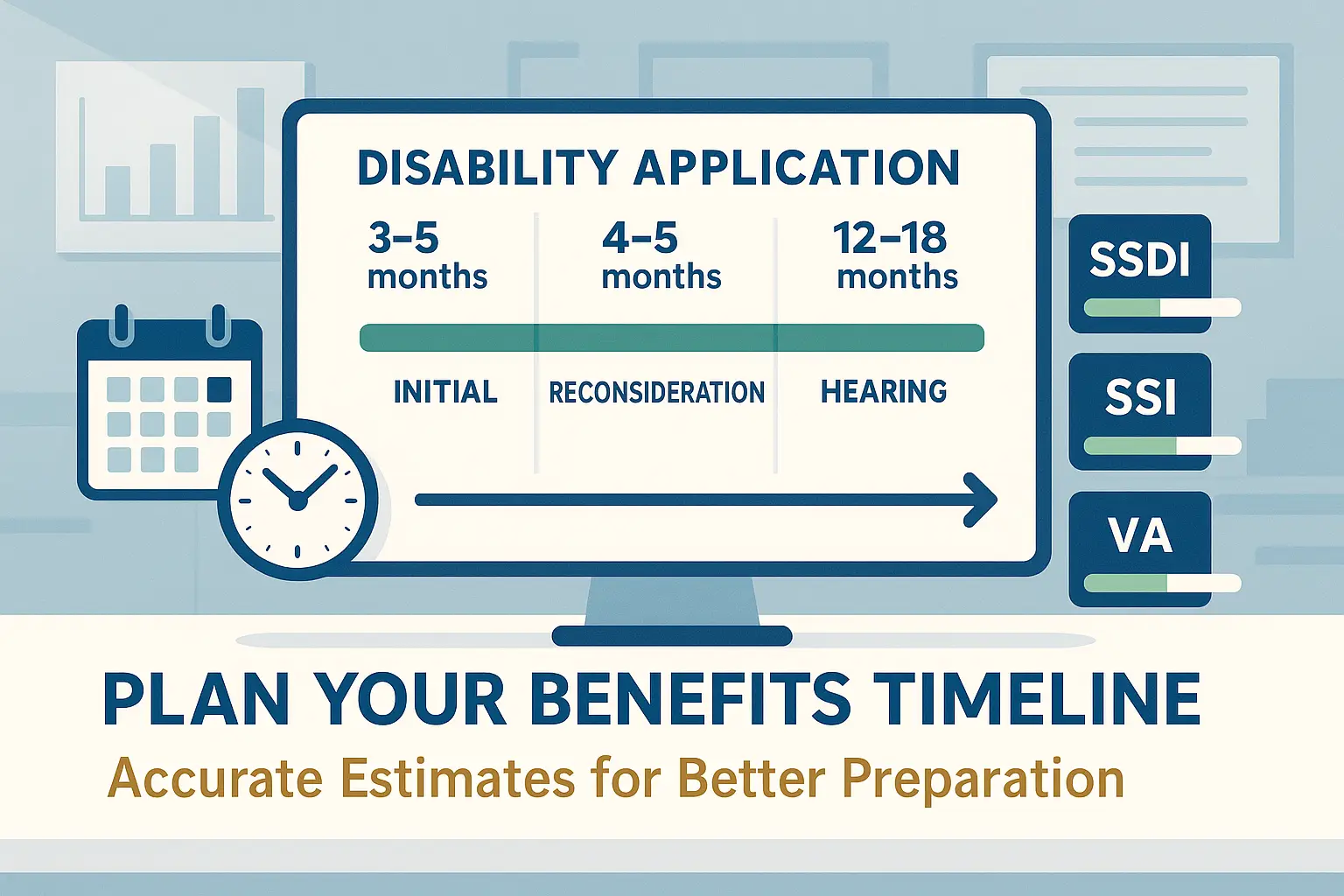
- Decision issued: Most cases receive a decision within several months. Applicants are notified by mail whether they have been approved, denied, or if more information is needed.
Following these steps ensures that the application process runs smoothly. Whether submitted online or in person, each disability claim must include complete documentation so the Social Security Administration can make an accurate determination.
Special Situations in SSI
Some applicants may qualify for Supplemental Security Income under special rules. These situations account for people with unique needs or circumstances and ensure that disability benefits are distributed fairly to those who meet the Social Security Administration’s requirements.
- Children with disabilities: Children under 18 may qualify for SSI if they have a medical condition that meets the strict definition of disability and their family has limited income and resources. For these cases, both medical records and financial documentation are required.
- Couples applying together: When two eligible people in the same household use, their income and resources are combined. The benefit amount for couples differs from the amount paid to an individual.
- People in medical facilities: Applicants living in nursing homes or hospitals may still qualify for SSI benefits, but payments are usually reduced if Medicaid covers the cost of care.
- Students and work incentives: Young people with disabilities who attend school may benefit from special rules like the Student Earned Income Exclusion, which allows them to earn a limited income without reducing their SSI benefits.
- Surviving spouses or family members: Certain members of a family may qualify for support under related federal disability programs if a death has occurred and the surviving person meets the eligibility requirements.
These special rules ensure that SSI benefits cover a wider range of people who are disabled, unable to work, or living with circumstances that make it difficult to meet basic living needs.
SSI Payment Details
SSI benefits are calculated based on strict federal guidelines. The Social Security Administration determines payment amounts using a combination of federal benefit rates and, in some states, additional supplements. These monthly benefits support people with limited income who qualify under the program rules.
- Federal Benefit Rate (FBR): The federal government sets the base SSI payment amount each year. This standard rate applies nationwide and is adjusted periodically to reflect changes in the cost of living.
- State supplements: Some states add extra money to the federal benefit, increasing the monthly benefits for residents in those states. The amount and eligibility criteria vary.
- Calculation of payments: The Social Security Administration considers income, living arrangements, and certain exclusions to determine the final SSI payment. For example, not all income is counted when deciding benefit levels.
- Health care coverage: In most cases, people who qualify for SSI benefits also automatically qualify for Medicaid, which provides access to essential medical services. Medicaid eligibility is an important part of the support system, particularly for people who are unable to afford private health care coverage.
- Direct deposit or electronic payments: Benefits are issued electronically, either through direct deposit into a bank account or on a prepaid card provided by the Treasury Department. This ensures safe and timely delivery of funds each month.
SSI payments are not designed to replace wages or retirement benefits but to provide a safety net for people with limited income who meet the eligibility rules. Understanding how the Social Security Administration calculates payments helps applicants set realistic expectations about the benefits they may receive.
Appeals Process if Denied
The Social Security Administration offers a structured appeals process if an SSI application is denied. This system ensures that applicants have several opportunities to have their disability claims reviewed. Acting quickly is important, as most cases require appeals to be filed within 60 days of receiving a denial notice.
- Reconsideration: A new reviewer at the Social Security Administration examines the entire claim, including medical records and supporting evidence, to determine whether the original decision should be changed.
- Hearing before an Administrative Law Judge: If reconsideration is denied, applicants can request a hearing. At this stage, a judge reviews the claim, listens to testimony, and may call on expert witnesses to decide whether the person meets disability requirements.
- Appeals Council review: If the hearing decision is unfavorable, applicants may request a review by the Appeals Council. The Council can affirm, reverse, or return the case to a judge for further review.
- Federal court review: As the final level, applicants can file a lawsuit in federal district court. This stage focuses on whether the Social Security Administration followed the law when deciding.
During the appeals process, applicants may present new evidence, request support from a representative, and clarify details about their medical condition or inability to perform other work. Following these steps helps ensure that each disability claim is given full consideration.
Official Resources and Tools
The Social Security Administration provides several resources to guide people through the application process, answer questions, and supply forms for disability claims. These official tools ensure applicants have reliable and accurate information.
- Social Security Administration website: The SSA.gov site offers details on supplemental security income, eligibility, and the option to apply online.
- USA.gov disability benefits: This federal resource overviews programs and directs applicants to the correct agencies for support.
- Benefits.gov eligibility tool: Applicants can use this online tool to determine whether they may qualify for SSI benefits or other federal disability programs.
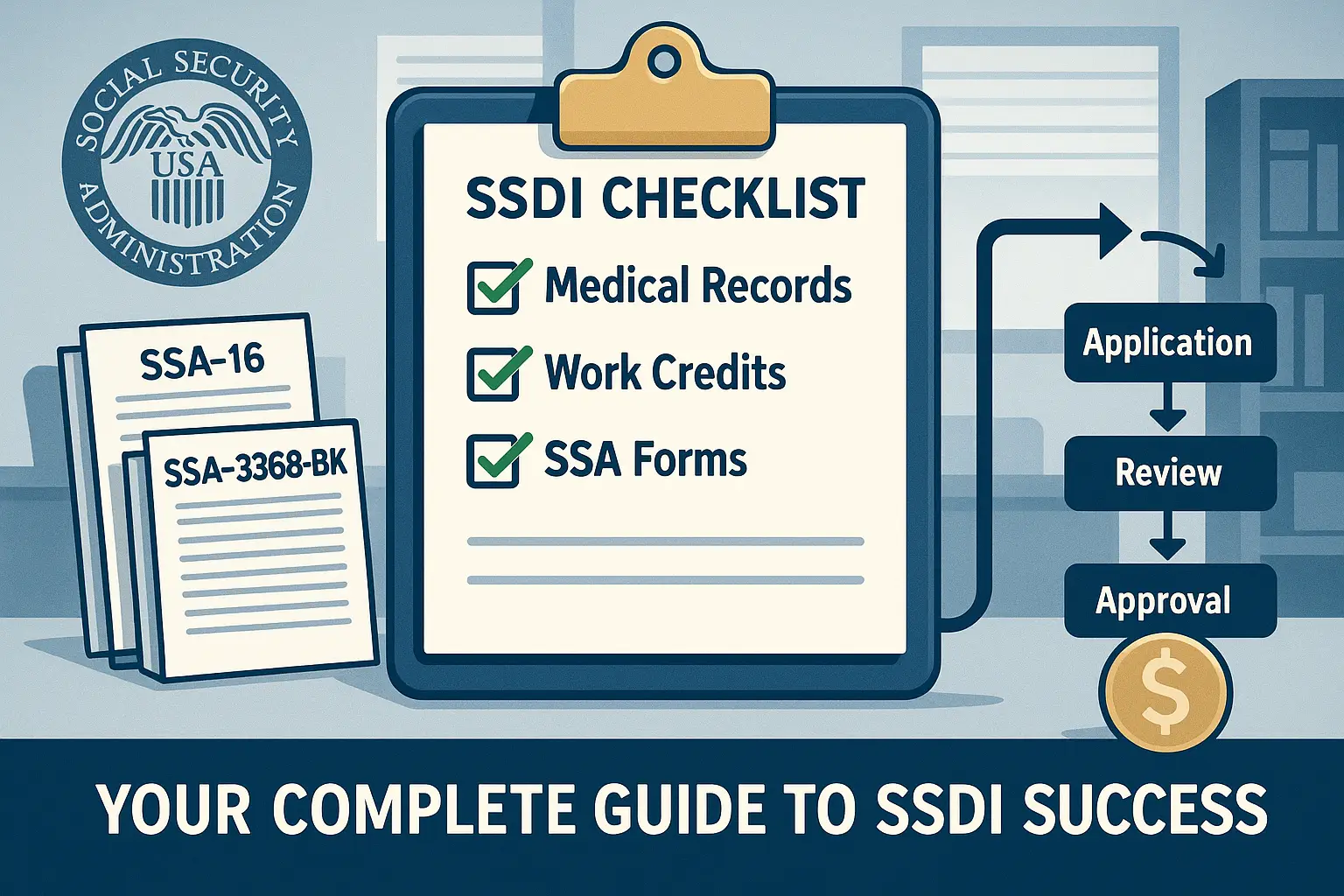
- SSA publications and forms: Documents such as the SSA-8000 (Application for SSI) and SSA-16 (Application for Disability Insurance Benefits) provide step-by-step guidance.
- Local social security office: Offices nationwide allow applicants to request appointments, submit forms, and receive in-person support during the application process.
Using these additional resources helps applicants understand their options, prepare the required documents, and effectively complete the application process.
Final SSI Checklist Before Applying
Confirming that all requirements have been met is essential before submitting an SSI application. This preparation helps the Social Security Administration process disability claims smoothly and reduces the chance of delays.
- Confirm eligibility: Make sure you meet the financial and non-financial requirements, including limited income and qualifying disability rules.
- Gather documents: Collect personal identification, financial statements, and medical records that verify your disability and support your claim.
- Complete forms: Ensure all required SSA forms are filled out accurately, including applications that can be submitted online or through a local social security office.
- Set up direct deposit: Provide bank account information or request an electronic payment option for monthly benefits.
- Keep copies: Retain copies of all documents and note any confirmation numbers or receipts after applying.
Following this checklist ensures that applicants are fully prepared to proceed with the application process, whether applying online, by phone, or in person.