The Department of Veterans Affairs supports those who served the country in uniform and their families and survivors. These programs exist to address the lasting impact of service by offering health care, financial stability, education assistance, and recognition of service-connected disability.
Accessing this support requires navigating a system that evaluates eligibility, reviews records, and issues official decisions. Every case depends on accurate evidence, proper forms, and timely responses to VA requests. Without preparation, applicants can face delays that create financial and personal stress for veterans and their families.
An organized approach helps reduce errors and ensures that nothing essential is overlooked. By keeping documents in order, tracking deadlines, and understanding how the VA makes determinations, veterans and survivors are in the strongest position to receive the assistance they are entitled to.
VA Benefits: Scope And Structure
What VA Benefits Include
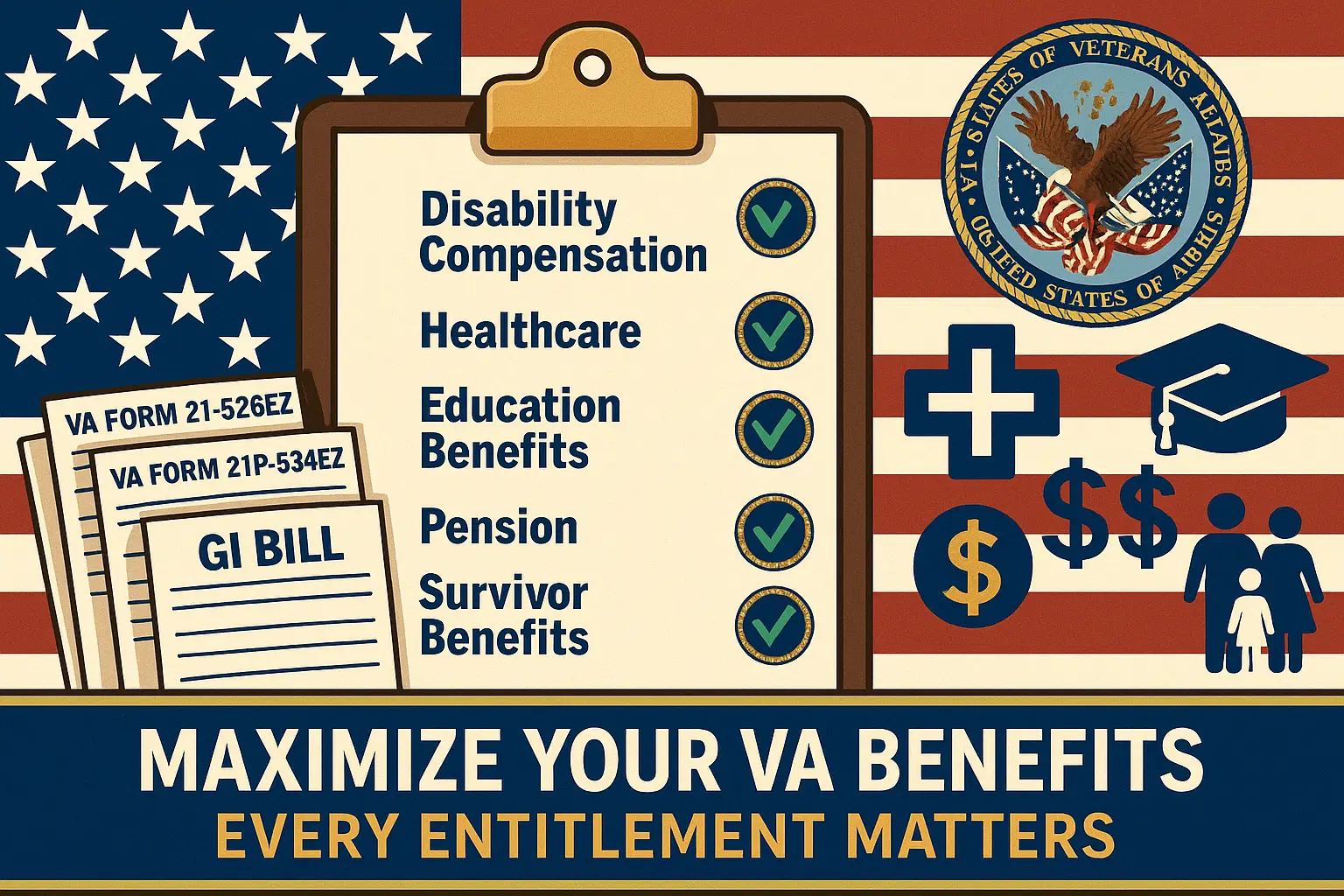
VA benefits extend far beyond one type of payment or service. Disability compensation provides monthly, tax-free payments to veterans with a service-connected disability. At the same time, a pension offers financial relief to wartime veterans and survivors who meet strict income and net worth limits. Education benefits like the Post-9/11 GI Bill and Montgomery GI Bill allow veterans, active duty service members, and family members to pursue higher education or job training. Healthcare benefits include treatment for injuries and illnesses that occurred in service and ongoing care for chronic conditions.
Why VA Benefits Matter
The Department of Veterans Affairs reviews each claim on its merits and assigns benefits based on eligibility rules. Some programs require a disability rating to determine payment levels, while others depend on service dates, income, or dependency status. Survivors may qualify for dependency and indemnity compensation, accrued benefits, or a survivors’ pension if the veteran’s service or death meets the statutory requirements.
Every program is tied to official VA procedures. Applicants must file the correct form, respond to requests for information, and wait for the VA to issue a decision letter. Regional office staff, accredited representatives, and service organizations are available to provide guidance when questions arise. Understanding the structure of VA benefits is the first step toward choosing the right program and ensuring that each claim is supported by clear evidence.
Disability Claim And The Claims Process
How To File A Disability Claim
Filing a disability claim requires preparation and attention to detail. Veterans must first decide which type of claim to file: an initial claim, a claim for increased benefits, or a supplemental claim with new evidence. The application can be submitted online through VA.gov, mailed to a regional office, or delivered in person. Applicants should keep copies of everything they file to reference the documents later in the process or during an appeal.
The claims process also requires veterans to respond to development letters from the department. These letters may ask for missing information, medical evidence, or clarification. Responding by the deadline helps prevent unnecessary delays. Veterans should also be prepared to attend scheduled examinations, since these appointments allow the VA to evaluate the severity of the disability and assign a rating.
Evidence Needed For A Successful Claim
The VA bases its decisions on evidence that supports the connection between service and disability. Medical evidence from hospitals, clinics, or private providers is critical. Service treatment records provide proof of injuries or illnesses that occurred while on active duty. In addition, personal statements and letters from family members, friends, or fellow service members can describe how the condition affects daily life.
New evidence is significant when filing an appeal or supplemental claim. Submitting updated medical records, test results, or professional opinions can strengthen a previously denied case. Veterans should organize all documents in the order they want the VA to review them, making it easier for the department to consider each piece of information.
VA Decision Review And Appeals Process
Once the VA completes its review, a decision letter is sent to the veteran. If the claim is denied or the veteran disagrees with the outcome, several review options are available. A higher-level review allows a senior claims adjudicator to re-examine the case without new evidence. A supplemental claim lets the veteran submit additional documentation or records. Finally, an appeal to the Board of Veterans’ Appeals provides another level of review for complex cases.
The timeline for appeals varies. Some decision reviews may take several months, while a whole appeal can last more than a year. Veterans should track deadlines carefully, since each option requires action within a specific timeframe. By understanding the process and what evidence to provide, veterans can protect their rights and ensure their claims are considered fairly.
Apply For VA Benefits
Application Methods
There are several ways to apply for VA benefits, and choosing the correct method depends on your preference for convenience, speed, and support. Each option has advantages, but ensuring your claim moves forward without delays requires accurate forms and timely responses.
- Apply online through VA.gov: This is the fastest and most convenient method, allowing applicants to complete forms, upload evidence, and track the progress of their claim in real time.
- Visit a regional office: Veterans and survivors can meet directly with VA staff who provide guidance, check documents for completeness, and answer questions before the claim is filed.
- Mail completed forms: Applicants may print and mail forms to the correct VA regional office. Using certified mail and keeping copies proves the request was submitted in order.
- Call us for assistance: The VA hotline offers step-by-step instructions, connects callers with resources, and refers applicants to regional offices if additional help is needed.
What Happens After You Apply
Applying is only the first step. Once the VA receives the claim, it begins a structured process to confirm eligibility, evaluate evidence, and reach a decision. Understanding what happens next helps veterans and survivors prepare for requests, avoid delays, and know what to expect while waiting for a response.
- Initial review: The VA checks that all required forms and documents have been submitted. If something is missing, the applicant will receive a letter requesting additional information. Responding quickly prevents unnecessary delays.
- Medical examinations: In many disability claims, the VA schedules a Compensation and Pension (C&P) exam. This exam helps determine whether the condition is service-connected and what disability rating should apply. Attendance is required.
- Evaluation of evidence: The VA reviews service records, medical records, and any new evidence submitted. Each piece of information is considered in the order it was received to ensure a fair review.
- Issuance of a decision letter: Once the review is complete, the VA mails a decision letter and posts it online. This letter explains whether the claim was approved or denied, the assigned rating if relevant, and the effective date.
- Next steps if denied: Applicants who disagree with the decision may request a decision review, file a supplemental claim with new evidence, or appeal to the Board of Veterans’ Appeals. Each option has its own rules and timelines.
Education Benefits And Other VA Programs
GI Bill And Education Benefits
The VA administers several education programs to support veterans, active duty service members, and eligible family members. The Post-9/11 GI Bill is the most widely used benefit, covering tuition, housing, and books for those with qualifying service after September 10, 2001. The Montgomery GI Bill provides similar support but applies to veterans who made specific contributions during their service period.
- Post-9/11 GI Bill: This program pays school tuition directly, provides a housing allowance, and covers book and supply costs.
- Montgomery GI Bill: This option requires prior enrollment and contributions during service but still provides monthly payments to help with educational expenses.
- Benefit transferability: Some veterans may transfer unused benefits to a spouse or child, ensuring family members receive education support.
Education benefits make it easier for veterans and their families to pursue degrees, vocational training, apprenticeships, and licensing or certification exams. These programs are central to helping veterans adjust to civilian life and improve long-term career opportunities.
Pension And Additional Support Programs
Not all benefits are tied to disability compensation. The VA pension program provides financial assistance to wartime veterans and survivors who meet income and net worth limits. The amount is determined after the department reviews financial information and considers the applicant’s resources.
Additional programs support dependents and survivors. Dependency and indemnity compensation is paid to a surviving spouse or child if a veteran’s death was linked to service. Accrued benefits may also be available if the veteran had a pending claim at the time of death. Survivors’ pensions provide income to low-income families of deceased veterans. Each of these programs requires proper filing, supporting evidence, and review by the VA to confirm eligibility.
Timelines, Costs, And Common Challenges
Processing Times For Claims
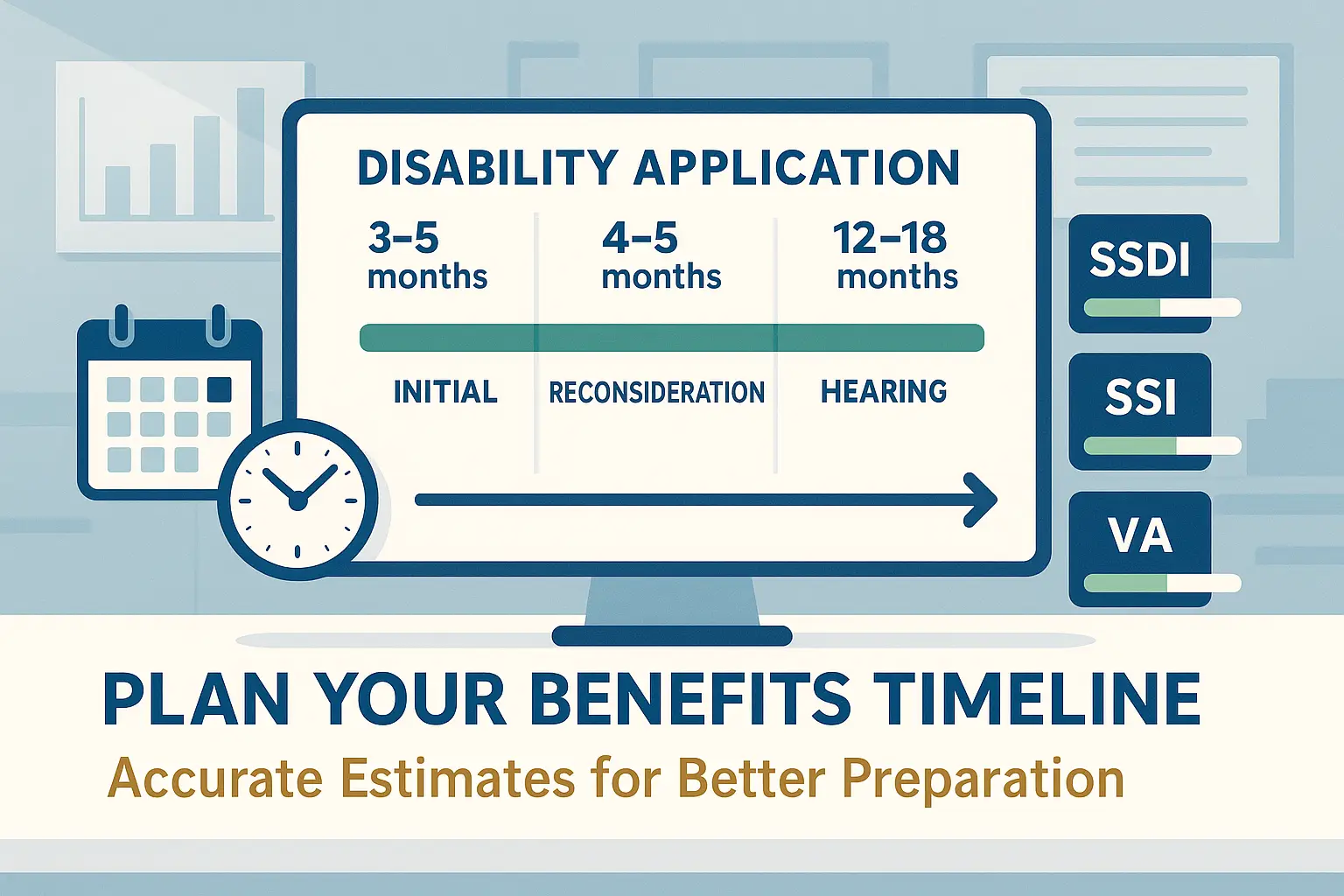
The time it takes for the VA to process a claim depends on the benefit type, the application's completeness, and the volume of pending cases. Some programs move quickly, while others require months or even years to decide. Applicants should be prepared for variation and plan accordingly.
- Health care enrollment: Many veterans receive a decision within days, especially if eligibility is clear and documentation is complete. Emergencies may qualify for same-day enrollment.
- Disability compensation claims: These typically take several months to process because the VA must review service records and medical evidence and sometimes schedule examinations. However, a fully developed claim, which includes all necessary evidence when filing, can shorten the process.
- Education benefits: GI Bill applications are often processed within 30 days, provided the applicant’s school certifies enrollment immediately. Missing school certifications can extend the wait.
- Pension benefits: Processing can take three to six months, as financial documents and net worth statements require careful review. Families should plan for this timeline when applying.
- Appeals and decision reviews: These take the longest. A higher-level review or supplemental claim may require several months, while an appeal to the Board of Veterans’ Appeals often lasts a year or more.
Applicants can reduce delays by submitting complete applications, responding quickly to VA letters, and using online systems to track progress. Knowing the typical timelines helps veterans and survivors set realistic expectations and prepare for the wait while their claim is under review.
Costs And Financial Considerations
Most VA benefits, such as disability compensation, pension, health care enrollment, and education benefits, do not require applicants to pay the Department of Veterans Affairs fees. These programs are designed to support veterans and survivors without direct charges. However, there are related expenses that applicants should anticipate, particularly when gathering evidence or managing the claims process.
- Medical records fees: Some private providers charge a fee to release copies of medical records or test results needed to support a disability claim or appeal.
- Mailing and copying costs: Sending forms by certified mail provides proof of delivery, but it adds a small expense. Copying documents for your records is also recommended.
- Legal or representative fees: Accredited attorneys or claims agents may charge fees for representation during appeals. Veterans Service Organizations, however, typically assist at no cost.
- Travel costs: Depending on the applicant's location, attending examinations, visiting a regional office, or meeting with representatives may involve transportation or lodging expenses.
- Time and missed work: While not a direct financial charge, the time required to gather documents, attend exams, or respond to VA requests can create lost wages or added personal costs.
Although the VA does not impose these costs, they are fundamental considerations for veterans and survivors. Planning and keeping receipts can help applicants track their expenses, especially if they later seek reimbursement in specific cases or need to demonstrate the impact of the claims process.
Common Mistakes To Avoid
Even well-prepared veterans and survivors sometimes encounter setbacks because of avoidable errors in the claims process. Being aware of these common mistakes helps applicants save time and reduce stress.
- Incomplete applications: Submitting claims without required forms, missing signatures, or failing to include supporting documentation almost always results in delays. Veterans should carefully review checklists before sending materials.
- Missed deadlines: Each stage of the process has strict time limits. Failing to respond to a VA request for information or missing the one-year deadline for filing an appeal can cause a claim to be closed.
- Incorrect regional office submission: Sending forms to the wrong office address or uploading them to the wrong online portal may prevent the VA from receiving the information. Applicants should double-check the location listed on the official instructions.
- Failure to provide new evidence: In decision reviews or appeals, the VA will not change its decision unless new evidence or a clear error is presented. Veterans must include updated medical records, fresh test results, or additional supporting statements.
- Overlooking dependency information: Many veterans forget to provide marriage certificates or children’s birth certificates when applying for benefits that include family members. Omitting this information can reduce the compensation received.
- Not seeking help: Some applicants try to manage the process alone and overlook resources such as Veterans Service Organizations, accredited representatives, or regional office staff. Seeking assistance often improves the quality of the application and reduces mistakes.
By understanding these pitfalls and taking simple steps to avoid them, veterans and survivors improve their chances of receiving a timely and accurate decision.
Get VA Resources And Get Help
Official Contact Information
The Department of Veterans Affairs provides several ways for veterans, survivors, and dependents to connect with support. VA.gov remains the central online resource for applications, updates, and official forms. Applicants can also reach the VA directly by calling the benefits hotline at 800-827-1000 or the health care eligibility center at 877-222-8387. Crisis assistance is available 24/7 by dialing 988 and pressing 1.
- VA.gov: This is the central website where veterans and survivors can apply for benefits, access information, and track claims online.
- Phone support: Veterans and family members can call 800-827-1000 for benefits questions or 877-222-8387 for health care eligibility information.
- Regional office locations: Local VA offices nationwide provide in-person assistance with applications, claims, and general information.
Working With Representatives
Many veterans and families benefit from professional guidance when filing a claim or navigating an appeal. The VA accredits Veterans Service Organizations to provide free assistance. These organizations help applicants gather evidence, prepare forms, and communicate with the department.
Veterans may sometimes choose to work with accredited attorneys or claims agents. These representatives can provide detailed advice and represent applicants during appeals. Whether through a regional office, a service organization, or a private representative, getting help ensures that veterans and survivors do not face the process alone and improves the chances of a fair decision.