Social Security Disability Insurance (SSDI) is a federal program managed by the Social Security Administration that provides monthly disability benefits to people with disabilities who are unable to work for at least 12 months or whose medical condition is expected to result in death. To qualify, an individual must have paid Social Security taxes and built enough work credits through their work history. Unlike short-term support programs, security disability insurance (SSDI) protects workers and their families when serious health issues prevent them from maintaining employment.
Applying for SSDI benefits can feel overwhelming, especially for adults facing a new disability. The SSA requires detailed medical information, documentation of work history, and proof that the condition prevents substantial gainful activity. Because the process includes a five-month waiting period before payments begin, people are encouraged to apply as soon as their disability begins and they cannot return to work. Early preparation helps applicants avoid delays in the application process and ensures they provide accurate information from the start.
This SSDI checklist is based on official SSA guidance and aims to simplify the process. By gathering the correct documents, understanding the eligibility rules, and following each step carefully, applicants may increase their chances of approval. Whether applying online, by phone at 1-800-772-1213 or TTY 1-800-325-0778, or through a local Social Security office, having the correct information ready is essential to move through the review and determination process efficiently.
Understanding SSDI Basics
Social Security Disability Insurance (SSDI) is a federal insurance program created to provide financial protection for people with disabilities who can no longer maintain steady employment. It is different from short-term assistance programs because SSDI benefits are designed for conditions that last at least 12 months or are expected to result in death. The Social Security Administration (SSA) manages the program, which is funded through Social Security taxes paid by workers during their employment.
To be eligible for SSDI, applicants must demonstrate that they have earned enough work credits. These credits are based on yearly income from jobs covered by Social Security. In 2025, one credit is earned for each $1,810 in wages or self-employment income, with a maximum of four credits per year. Most adults need at least 40 credits, with 20 earned in the 10 years before the disability began. Younger workers, however, may qualify with fewer credits depending on their age.
In addition to work history, the applicant’s medical condition must meet the strict disability definition set by the SSA. This means the condition must prevent substantial gainful activity, last at least 12 months, or be expected to result in death. Unlike Supplemental Security Income (SSI), which is based on limited income and resources, SSDI does not set financial resource limits as long as the applicant meets the medical and work requirements. SSI benefits may be available to people who do not have enough work credits but still live with disabilities and have limited income and resources.
Key facts to remember about SSDI:
- It is a federal program managed by the Social Security Administration.
- Applicants must have paid Social Security taxes through past work.
- Eligibility depends on both medical condition and work credits.
- Benefits may extend to certain family members of the disabled worker.
- It is separate from SSI benefits, which support people with disabilities who are eligible for SSI based on income and resources rather than work history.
SSDI Eligibility Requirements
Basic Eligibility
To qualify for Social Security Disability Insurance (SSDI), applicants must meet several baseline requirements set by the Social Security Administration. A person must have a medical condition that prevents substantial gainful activity and is expected to last at least 12 months or result in death. They must also have worked jobs covered by Social Security and paid Social Security taxes. Adults who are currently performing work at a level above the monthly earnings limits will not be considered eligible for SSDI.
Work Credits Explained
Eligibility also depends on earning enough work credits. Work credits are calculated based on income from wages or self-employment. In 2025, one credit is earned for every $1,810 in covered income, up to four credits per year. Most adults need 40 credits, with at least 20 earned 10 years before the disability began. Younger people with disabilities may be eligible with fewer credits. The SSA publication “How You Earn Credits” provides detailed rules for different age groups.
Substantial Gainful Activity (SGA) Limits
The SSA uses substantial gainful activity levels to determine whether someone’s ability to work disqualifies them from SSDI benefits. The SGA limit for non-blind individuals in 2025 is $1,620 per month. For people who are legally blind, the limit is higher, at $2,700 per month. Earnings above these amounts typically indicate that an applicant does not meet the disability standard. However, exceptions may apply, including special rules for people with disabilities who attempt to return to work through trial programs.
Preparing for the SSDI Application
Before beginning the application process, gathering the correct documents and preparing the necessary information is essential. Having everything ready helps the Social Security Administration review your case more efficiently and reduces the chance of delays. The following checklists outline what applicants need to provide.
Personal Information
Applicants must provide proof of identity and citizenship, as well as other personal records:
- Birth certificate or other legal proof of birth
- Social Security card or record of your Social Security number
- Proof of U.S. citizenship or lawful alien status if you were not born in the United States
- Military discharge papers if you served in the armed forces before 1968
Financial and Work Documents
Work and income records show that you have paid Social Security taxes and built enough work credits:
- W-2 forms and self-employment tax returns for the most recent year
- Bank routing and account information for direct deposit of monthly payments
- Workers’ compensation records, benefit award letters, or settlement agreements (if applicable)
- List of jobs held in the last five years before the disability began (including employer names and dates)
Medical Documentation
Medical records are central to proving that your condition meets the SSA’s strict definition of disability:
- Names, phone numbers, and addresses of medical professionals, clinics, and hospitals where you received treatment
- Patient identification numbers, admission dates, and details of care
- List of medications you are currently taking and the doctors who prescribed them
- Copies of test results, lab reports, and medical records are already in your possession
SSA Forms to Complete
The application requires several official forms, either submitted online or provided at your local Social Security office:
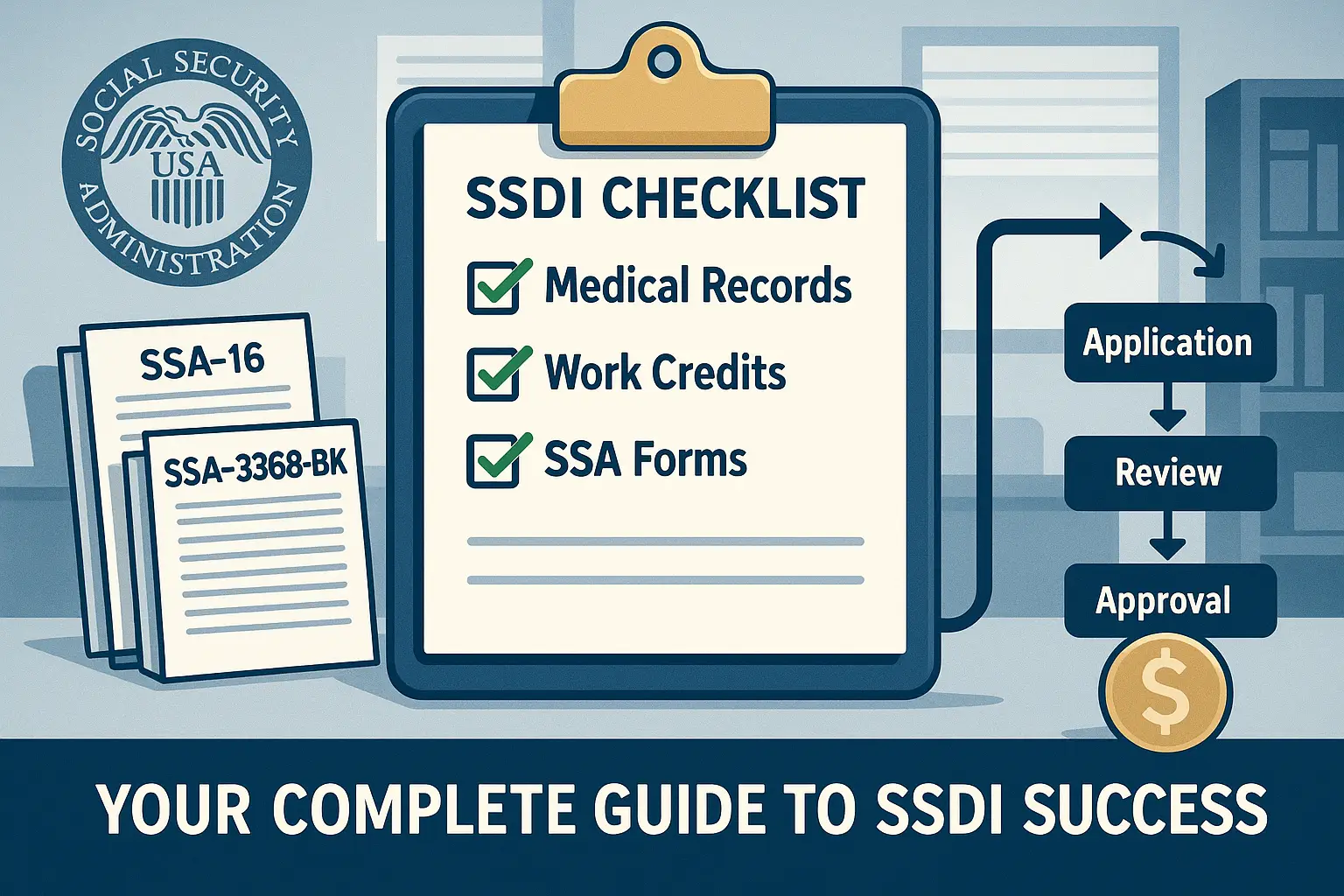
- Form SSA-3368-BK (Adult Disability Report): This form collects detailed information about your medical condition, work history, and daily activities, which the Social Security Administration uses to determine how your disability affects your ability to work.
- Form SSA-16 (Application for Disability Insurance Benefits): This is the main application form for SSDI benefits, where you provide your personal details and employment information and confirm that you meet the program’s eligibility requirements.
- Form SSA-561 (Request for Reconsideration): This form is used to appeal a denial of SSDI benefits, allowing you to request that the Social Security Administration review your application again with any additional medical or supporting evidence.
How to Apply for SSDI
You can begin the application process once you have gathered the required documents. The Social Security Administration offers three ways to apply for Social Security Disability Insurance (SSDI). Choosing the correct method depends on your preference, your access to technology, and whether you need personal assistance.
Apply Online
The SSA recommends that most adults apply online because it is convenient and available anytime.
- Visit the official application page at ssa.gov/applyfordisability.
- Complete the Adult Disability Report (Form SSA-3368-BK) and the application form (SSA-16).
- Submit scanned copies of supporting documents, or be prepared to provide them if requested later.
- Create or log in to your My Social Security account to track the application status.
Apply by Phone
Applicants who prefer assistance or who have limited internet access may apply by calling the Social Security Administration directly.
- Call 1-800-772-1213 between 8 a.m. and 7 p.m., Monday through Friday.
- If you are deaf or hard of hearing, use TTY 1-800-325-0778.
A representative will take your information, guide you through the process, and answer questions about eligibility and forms.
Apply in Person at a Local Social Security Office
Some people may prefer or need to complete the application in person. Appointments are usually required.
- Use the office locator tool on ssa.gov to find your local Social Security office.
- Bring original documents or certified copies for verification.
- Meet with a representative to review your information and confirm all necessary forms are completed.
What Happens After You Apply
After submitting your Social Security Disability Insurance (SSDI) application, the Social Security Administration begins a structured review process. Understanding what happens next helps applicants know what to expect and when they may receive updates.
Initial Review by SSA
The Social Security office checks your application for completeness and confirms that all required forms and documents are included.
- You will receive a confirmation notice once your application is logged.
- The SSA will contact you for clarification or additional records if information is missing.
Disability Determination Services (DDS) Evaluation
Your case is forwarded to a state Disability Determination Services office, where specialists review your medical condition and ability to work.
- Medical professionals evaluate your records to determine whether you meet the SSA definition of disability.
- If more evidence is needed, DDS may request additional documents or schedule a consultative medical exam at no cost to you.
Timeline for Decisions
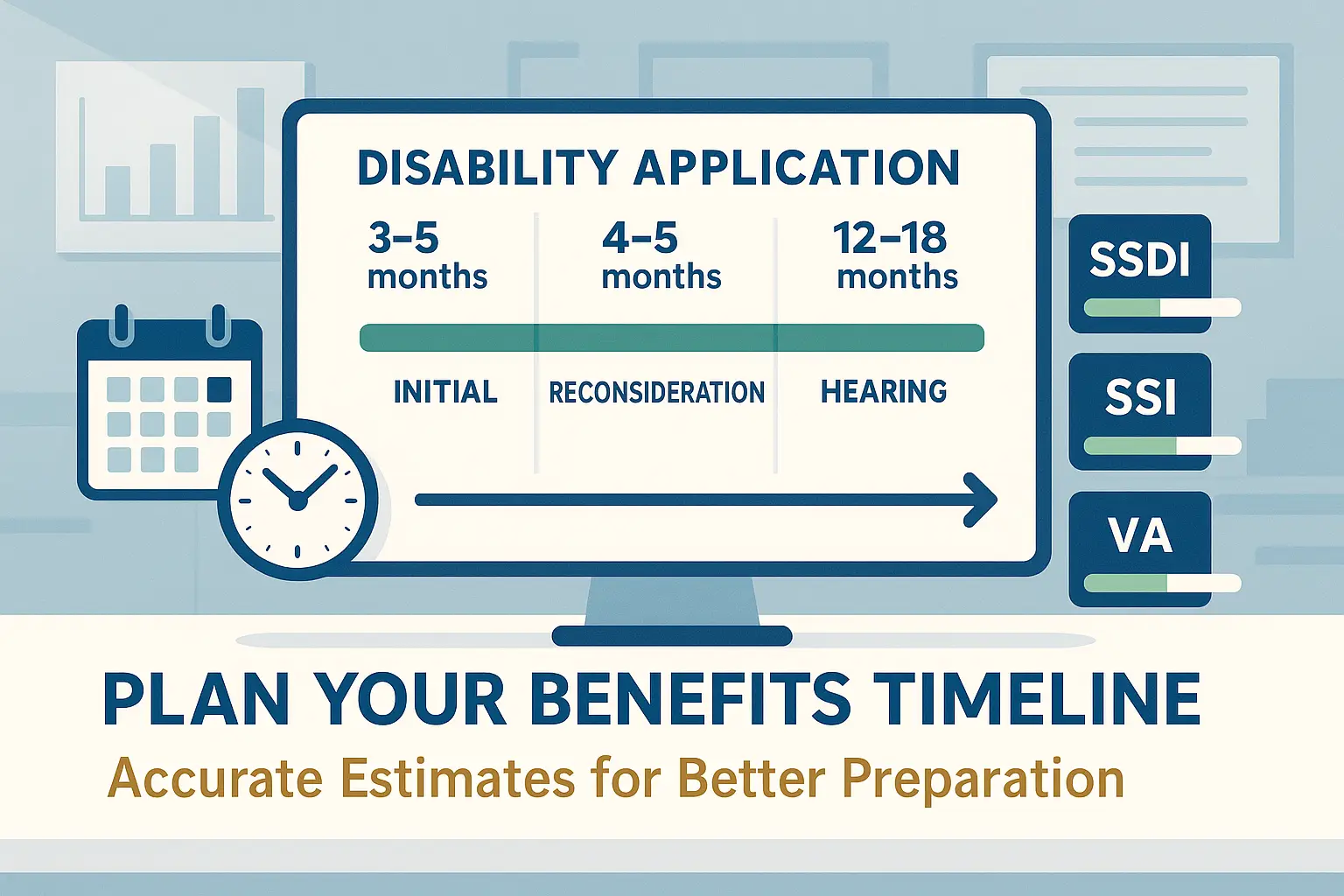
- Most initial decisions take between 3 and 5 months.
- The official SSA waiting period requires five full months after the disability began before SSDI benefits can be paid.
- If approved, monthly payments usually start in the sixth month following the onset of disability.
Retroactive and Future Benefits
- Retroactive benefits may be paid up to 12 months before the application date if you were disabled during that time.
- Medicare eligibility begins after you have received SSDI benefits for 24 months, except for certain conditions that qualify for immediate coverage.
SSDI vs SSI – Key Differences
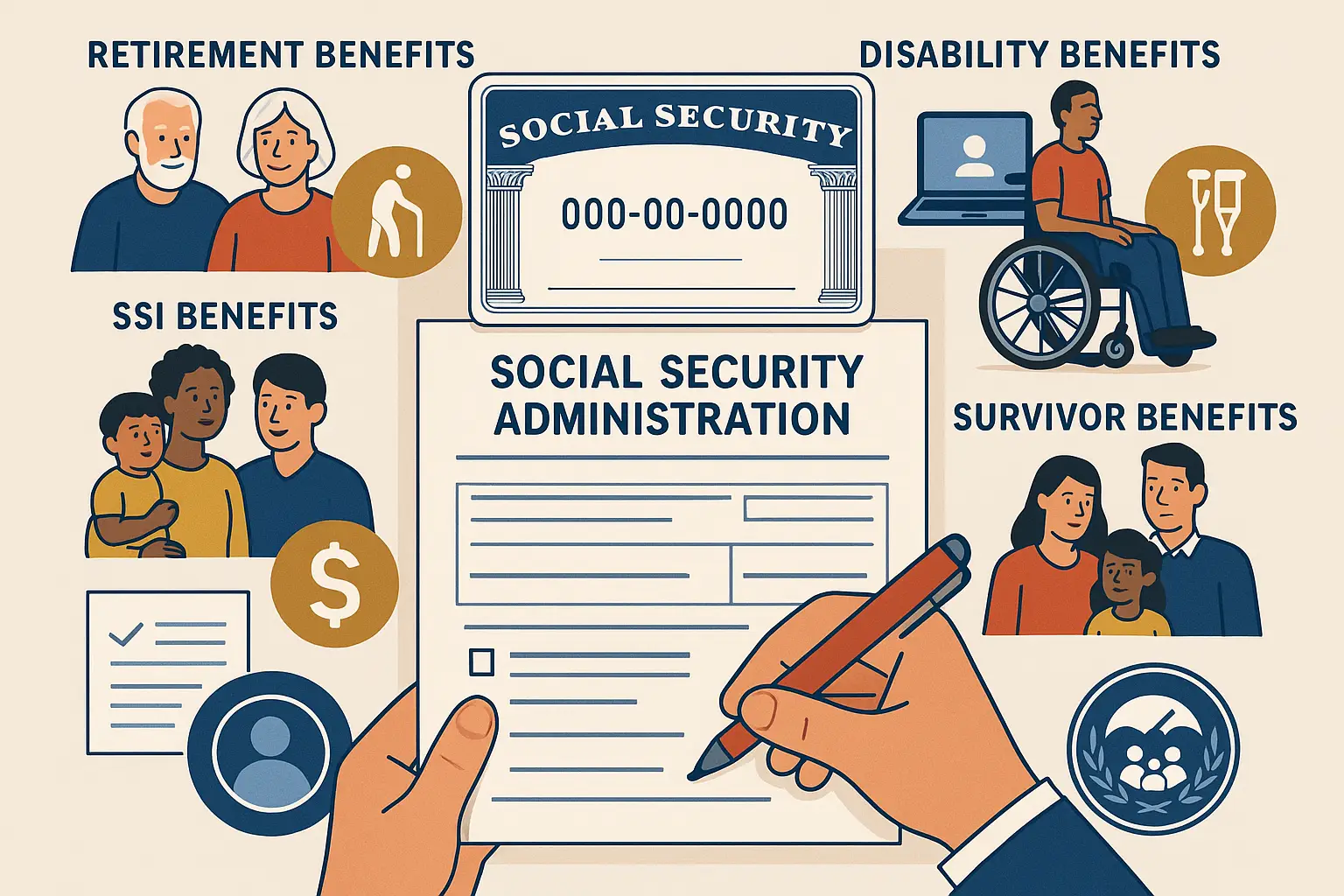
Social Security Disability Insurance (SSDI) and Supplemental Security Income (SSI) are programs managed by the Social Security Administration, but they serve different groups of people with disabilities. Understanding the differences helps applicants determine which program they may be eligible for.
In summary, SSDI benefits are for workers who have paid into the Social Security system and built enough work credits. In contrast, SSI benefits are designed for people with limited income and resources who may not have a sufficient work history. Some applicants may be eligible for both programs if they meet the work and financial requirements.
Appeals Process if Your Claim Is Denied
Many initial applications for Social Security Disability Insurance (SSDI) are denied, but the Social Security Administration provides a structured appeals process. Applicants who believe their denial was incorrect can request a review. Acting quickly is essential because most appeals must be filed within 60 days of receiving the denial notice.
Four Levels of Appeal
- Reconsideration: A new examiner reviews your application and any additional medical evidence. This review is conducted by someone who was not involved in the initial decision.
- Administrative Law Judge (ALJ) Hearing: If reconsideration is denied, you may request a hearing before an administrative law judge. This is a chance to present new evidence, bring witnesses, and explain how your medical condition limits your ability to work.
- Appeals Council Review: If the ALJ decision is unfavorable, you may request a review by the Appeals Council. The council may decide the case or return it to another judge for further review.
- Federal Court Review: The final level of appeal involves filing a lawsuit in a federal district court. At this stage, a judge reviews whether the SSA followed the law correctly in denying your SSDI benefits.
Checklist for Filing an Appeal
- Submit your appeal within 60 days of receiving the denial notice.
- Complete and file Form SSA-561 (Request for Reconsideration) or the form required for the next appeal stage.
- Gather updated medical information and submit any new test results or doctor’s reports.
- Consider obtaining help from a qualified attorney or advocate to strengthen your case.
Appealing a denial can be lengthy, but many applicants succeed at later stages. Providing thorough medical information and following each step carefully increases the chances of being found eligible for SSDI.
Special Situations
The Social Security Administration recognizes that certain groups face unique circumstances when applying for Social Security Disability Insurance (SSDI). Special rules may make it easier for some people with disabilities, surviving spouses, and children to qualify for benefits.
Benefits for People Who Are Blind or Have Low Vision
The SSA has specific provisions for individuals who are legally blind.
- In 2025, the substantial gainful activity (SGA) limit for blind individuals is $2,700 per month, which is higher than the limit for non-blind applicants.
- Different work credit requirements may apply, allowing some individuals to qualify with fewer credits.
- Legal blindness is defined as vision of 20/200 or worse in the better eye, or a visual field of 20 degrees or less.
Benefits for Surviving Spouses with Disabilities
Widows and widowers may qualify for disability benefits on a deceased spouse’s record.
- Applicants must be between the ages of 50 and 60.
- The disability must have started before or within seven years of the worker’s death.
- The applicant must meet the SSA definition of disability, which requires the condition to last at least 12 months or result in death.
- Applications for these benefits cannot be completed online and must be made by calling 1-800-772-1213 or TTY 1-800-325-0778.
Benefits for Children with Disabilities
Minor and adult children may be eligible for disability benefits under specific circumstances.
- A Disabled Adult Child (DAC) may qualify for benefits if the disability began before age 22, the individual is unmarried, and a parent is receiving Social Security retirement or SSDI benefits or is deceased.
- Children under 18 years old may be eligible for Supplemental Security Income (SSI) if the family has limited income and resources.
- Eligibility requires that the child’s medical condition meet SSA disability standards.
These special rules ensure that vulnerable groups, including children and surviving spouses, may still receive the support they need even if their work history or income differs from standard SSDI requirements.
Final SSDI Application Checklist
Confirm Eligibility
Before applying, make sure you are eligible for SSDI benefits. You must have paid Social Security taxes, earned enough work credits, and have a medical condition that prevents you from working for at least 12 months or is expected to result in death. Confirming these requirements ensures your application meets the Social Security Administration’s basic standards.
Gather Required Documents
Collect all personal, financial, and medical information before beginning the application process. This includes proof of identity, tax records, work history, and detailed medical reports. Having documents ready in advance reduces the likelihood of delays and helps the SSA review your claim more efficiently.
Complete SSA Forms
Fill out the Adult Disability Report (Form SSA-3368-BK) and the Application for Disability Insurance Benefits (Form SSA-16). These forms provide the Social Security Administration with information about your work history, medical condition, and ability to work. Double-check each section to avoid errors or missing details.
Set Up Direct Deposit
If you are approved, provide your bank routing and account information so that monthly payments can be deposited directly. Direct deposit ensures that benefits arrive on time without the risk of lost or delayed paper checks.
Keep Copies and Confirmation
Save copies of all submitted documents, including medical records and forms. After filing, note your application confirmation number or receipt. Keeping records of your submission allows you to track your application status and provide proof of filing if needed.