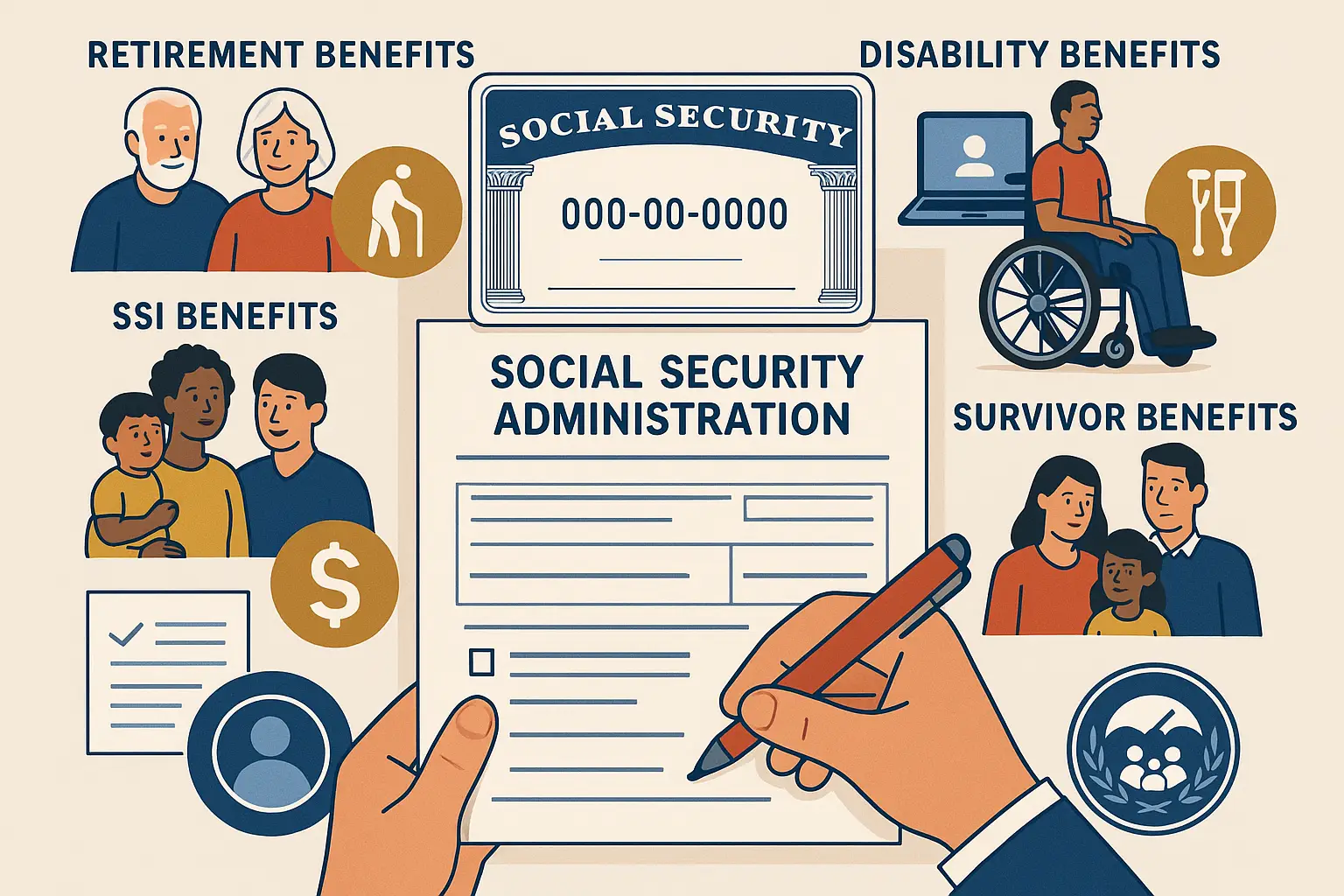
The Social Security Administration is central in helping people across the United States access retirement, disability, and income support. Its forms are the foundation of these programs, ensuring that benefits are distributed fairly and according to law. Knowing how to find and complete the correct SSA forms can make the difference between receiving benefits smoothly and facing delays.
Individuals pay Social Security taxes over a lifetime of work, which fund programs such as Social Security Disability Insurance and Supplemental Security Income. These contributions provide financial protection for workers and their family members in cases of retirement, disability, or the loss of a loved one. The application process may feel complex, but every form and step is designed to confirm eligibility and ensure accurate payment.
Because Social Security affects not only workers but also certain members of their families, it is vital to understand the role of SSA forms in applying for assistance. The process relies on accurate documentation, whether applying for SSI benefits, verifying income with a benefit verification letter, or creating a Social Security account to review records. Depending on work history, income, and personal circumstances, these tools remain essential for people of all ages who may need support.
Understanding SSA Forms and Their Importance
SSA forms are essential tools provided by the Social Security Administration. They ensure that applications for benefits are complete, accurate, and reviewed consistently. Each form has a specific role, and submitting the correct one allows people to receive benefits without unnecessary delays.
Why SSA Forms Matter
SSA forms are more than just paperwork. They are the primary way the Social Security Administration confirms eligibility and calculates the correct benefit amount.
- Verification of eligibility: The details on each form are used to confirm work history, income, disability status, or other qualifying factors.
- Accurate benefit calculation: Forms ensure payments are based on Social Security taxes paid, income level, and family status.
- Support for family members: The appropriate forms allow certain members of a worker’s family, such as children or a spouse, to qualify for benefits.
Common Uses of SSA Forms
These forms are required for various purposes, from new applications to ongoing updates. Using the proper form helps people avoid errors and keeps their records current.
- Applying for benefits: Workers may use SSA forms to apply for retirement, Social Security Disability Insurance, or SSI benefits.
- Maintaining an account: Forms allow people to update income, report changes in living arrangements, or request a benefit verification letter.
- Managing payments: Applicants can complete forms to review their records, check eligibility, or adjust payment details.
- Appealing decisions: If an application is denied, specific forms are required to begin the appeals process.
How SSA Forms Are Submitted
The Social Security Administration allows several ways to submit forms. Choosing the correct method depends on personal preference and the type of application.
- Online: Forms can be completed through a Social Security account on the SSA website.
- By mail: Paper forms can be sent to a local Social Security office.
- By phone: Applications may be started by calling the SSA’s toll-free number.
- In person: Forms can be submitted at an office with help from SSA staff.
Eligibility for Social Security Programs
Eligibility for Social Security programs depends on factors such as age, income, work history, and disability status. The Social Security Administration reviews each application carefully to confirm whether a person is eligible and how much they can receive. Each program has its rules; meeting the requirements is necessary before benefits begin.
Social Security Disability Insurance (SSDI)
SSDI is designed for people who have worked and paid Social Security taxes but can no longer work due to a qualifying disability.
- Work credits: Applicants must have paid Social Security taxes and earned enough credits from employment. Most people need about 40 credits, or 10 years of work, although younger workers may qualify with fewer.
- Medical requirements: To qualify, the disability must prevent substantial work and be expected to last at least one year or result in death.
- Impairment listings: The Social Security Administration maintains a Listing of Impairments to identify conditions that meet eligibility automatically.
Supplemental Security Income (SSI Benefits)
SSI benefits provide monthly support to people with limited income and resources. This program is based on financial need, not work history.
- Financial need: SSI benefits are available to people with limited income and resources, regardless of work history.
- Eligibility groups: Individuals aged 65 or older, blind, or disabled may qualify. Certain family members, such as children with disabilities, may also be eligible.
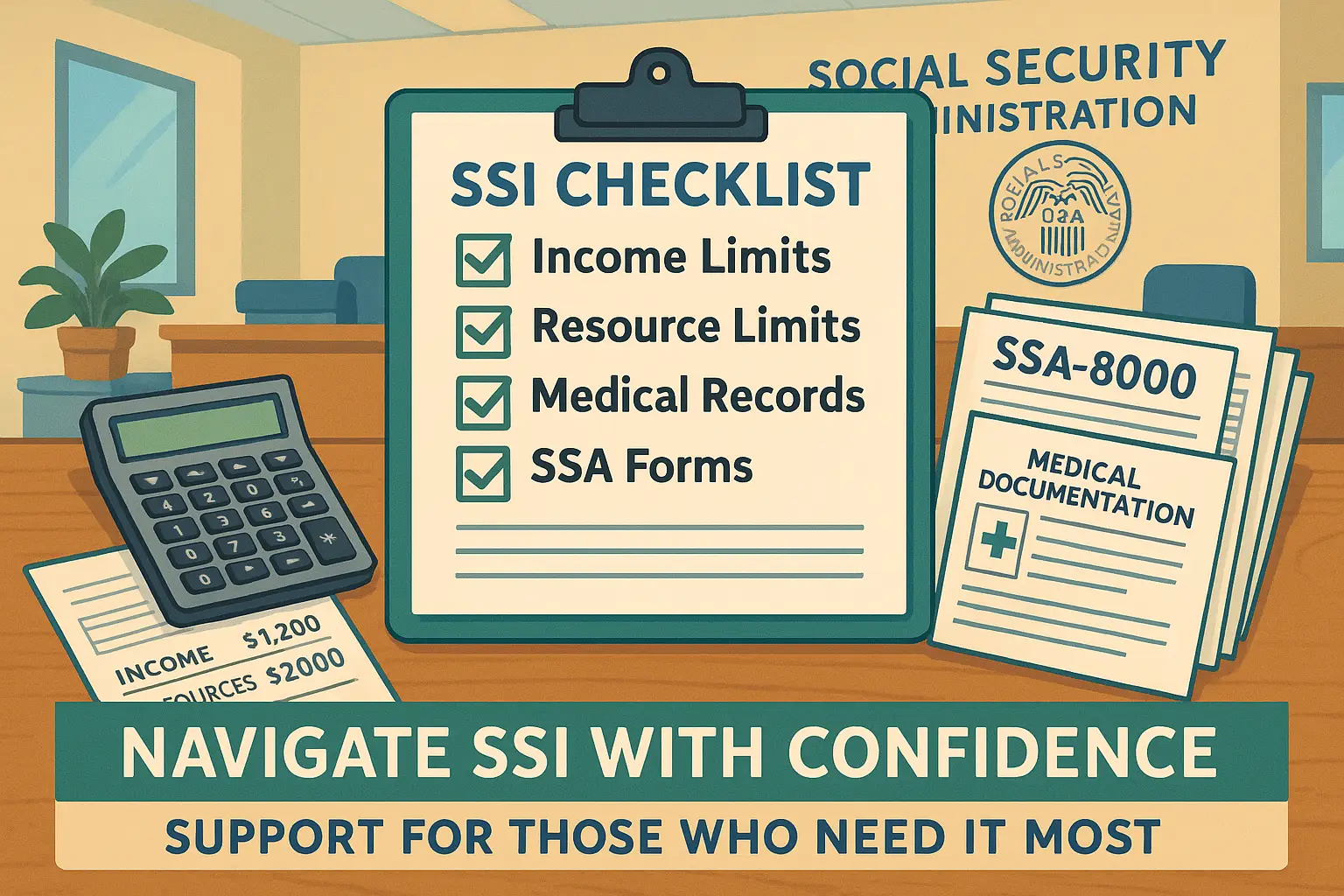
- Resource limits: Individuals may not have more than $2,000 in countable resources, while couples may not exceed $3,000.
Retirement Benefits
Retirement benefits are available to workers who have reached the required age and earned enough work credits.
- Age requirements: People can apply as early as age 62, though payments are reduced if claimed before full retirement age, which, depending on birth year, is between 65 and 67.
- Work credits: Most people need at least 40 credits, earned by paying Social Security taxes, to receive benefits.
- Payment adjustments: Benefits increase if retirement is delayed beyond full retirement age.
Medicare Enrollment
Medicare is closely connected to Social Security benefits, and eligibility often depends on age or disability status.
- Standard eligibility: Most people, based on their work record or their spouse's, qualify for Medicare at age 65.
- Disability-based eligibility: People who have received Social Security Disability Insurance for 24 months or those with ALS or end-stage renal disease may qualify earlier.
- Enrollment timing: Missing the initial enrollment period can result in penalties or delayed coverage, making a timely application necessary.
How to Apply for SSA Benefits
Applying for benefits through the Social Security Administration is possible in several ways. Each method is designed to make the process more accessible online, by phone, or in person. Applicants should choose the option that best fits their needs and be prepared to complete the required forms.
Steps to Apply
- Apply Online: The SSA website allows applicants to create a Social Security account and complete forms anytime. Online applications provide immediate confirmation, enable users to save progress, and are often the fastest way to receive benefits.
- Apply by Phone: To start an application, people can call the SSA’s toll-free number at 1-800-772-1213. Those who are deaf or hard of hearing can use the TTY number at 1-800-325-0778. Phone applications provide direct help from SSA representatives who can review questions and guide applicants.
- Apply in Person: Applicants may visit a local Social Security office to complete forms with staff support. To reduce waiting time, it is recommended that applicants call ahead or schedule an appointment online. Applications submitted in person allow people to provide original documents directly and receive assistance with complex situations.
Key SSA Forms You Need to Know
The Social Security Administration provides a wide range of forms, each tied to a specific program or type of benefit. Using the correct form ensures that applications are complete and processed without delays.
- Form SSA-1 (Application for Social Security Benefits): This form is used to apply for retirement benefits and serves as the most common starting point for people who have paid Social Security taxes during their working years.
- Form SSA-2 (Application for Wife’s or Husband’s Insurance Benefits): Spouses of eligible workers may complete this form to receive benefits based on their partner’s record.
- Form SSA-3 (Application for Child’s Insurance Benefits): Certain family members, including children, may qualify for benefits if a parent is retired, disabled, or deceased. This form is required to apply.
- Form SSA-4 (Application for Survivor Benefits): Family members can use this form to apply for benefits after the death of a worker who paid Social Security taxes.
- Form SSA-8 (Application for Supplemental Security Income): People with limited income and resources can complete this form to apply for SSI benefits.
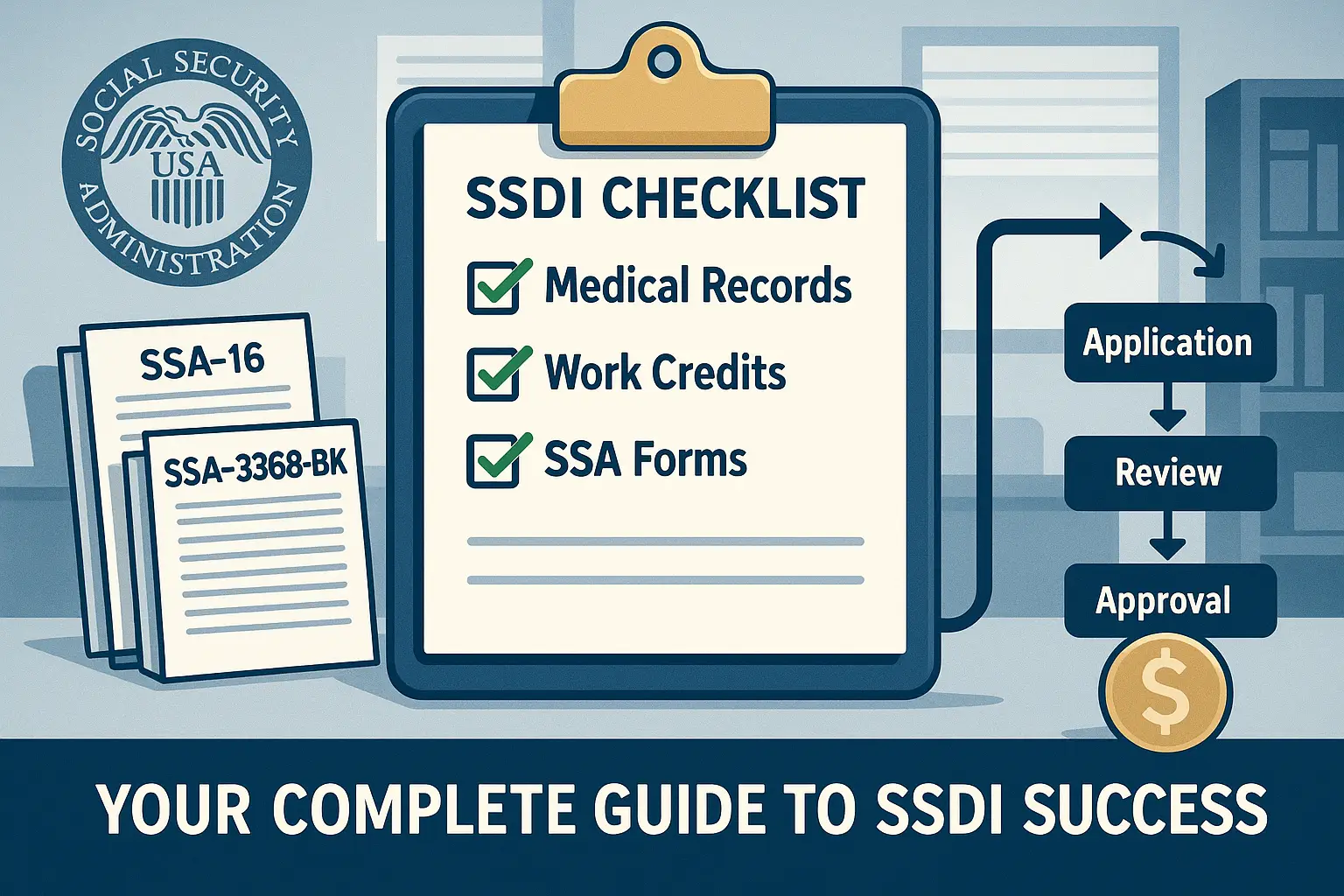
- Form SSA-16 (Application for Disability Insurance Benefits): Workers with qualifying disabilities use this form to apply for Social Security Disability Insurance (SSDI).
- Form SSA-827 (Authorization to Disclose Information): This form allows the SSA to request and review medical records or other personal information needed to confirm eligibility.
Comparing SSA Programs
The Social Security Administration runs several programs with different rules and benefits. The points below highlight how they compare.
- Basis for eligibility:
- SSDI: A person qualifies by earning enough work credits and having a qualifying disability.
- SSI: A person qualifies by showing financial need, being disabled, or being 65 or older.
- Retirement Benefits: A person qualifies by reaching the required age and earning sufficient work credits.
- Survivor Benefits: A person qualifies by being a family member of a deceased worker who paid Social Security taxes.
- SSDI: A person qualifies by earning enough work credits and having a qualifying disability.
- Funding source:
- SSDI: This program is funded through Social Security taxes collected from workers and employers.
- SSI: This program is supported through general tax revenues rather than Social Security taxes.
- Retirement Benefits: These benefits are funded by Social Security taxes collected during a worker’s career.
- Survivor Benefits: These benefits are paid based on Social Security taxes contributed by the deceased worker.
- SSDI: This program is funded through Social Security taxes collected from workers and employers.
- Benefit amount:
- SSDI: The benefit amount is determined by the worker’s earnings record.
- SSI: The federal benefit rate sets the benefit amount, and some states add supplemental payments.
- Retirement Benefits: The benefit amount is based on the worker’s earnings record and is adjusted for early or delayed retirement.
- Survivor Benefits: The benefit amount is calculated using the deceased worker’s earnings record and the survivor's relationship to the worker.
- SSDI: The benefit amount is determined by the worker’s earnings record.
- Medicare eligibility:
- SSDI: A person becomes eligible for Medicare after receiving SSDI for 24 months.
- SSI: A person is automatically eligible for Medicaid, and Medicare may apply later, depending on age or disability.
- Retirement Benefits: A person automatically qualifies for Medicare at age 65 when receiving retirement benefits.
- Survivor Benefits: A survivor may qualify for Medicare or Medicaid, depending on family status and eligibility rules.
- SSDI: A person becomes eligible for Medicare after receiving SSDI for 24 months.
Helpful SSA Tools and Resources
The Social Security Administration provides several free tools to help people manage their benefits and review important information. These resources can be accessed online, by phone, or through an office.
- Social Security Account: Creating an online account at ssa.gov allows people to check their earnings history, review benefit estimates, and manage payments. The account also makes applying for new benefits or requesting documents easier.
- Benefit Eligibility Screening Tool (BEST): This online tool helps people determine which benefits they may be eligible for based on income, age, and disability status. It also guides users toward the correct applications and forms.
- Retirement Estimator: This tool provides personalized estimates of retirement benefits based on a person’s actual Social Security earnings record. It helps people decide the best time to apply for retirement to maximize monthly payments.
- Appeals Process Resources: The SSA offers step-by-step information and forms for people who want to appeal a decision. These resources explain how to complete the required paperwork and check the status of an appeal.
Application Tips and Required Documentation
Applying for Social Security benefits requires planning and preparation. The Social Security Administration reviews every application closely, so having the correct information ready makes the process smoother. The following guidance explains what to do before, during, and after you apply, along with the specific documents you may need for different benefit types.
Before You Apply
Before starting an application, it is essential to organize personal and financial information. This preparation helps prevent mistakes and ensures that forms can be completed without delays.
- Gather personal records: If applicable, collect your birth certificate, proof of citizenship or lawful status, and military service papers.
- Check income records: To confirm earnings, you should have your most recent tax return, W-2 forms, or self-employment records available.
- Set up a Social Security account: Creating an account online allows you to review your work history and earnings before starting an application.
- Plan: You should call your local office or use email or phone support if you expect complex questions about eligibility.
During the Application Process
Accuracy and timeliness are essential when completing the application. Errors or missing details may cause delays or result in incorrect payment amounts.
- Provide accurate details: To avoid errors, ensure that all names, dates, and income information match official records.
- Submit supporting documents: The Social Security Administration directs that you send the required paperwork by mail, online, or in person.
- Keep copies: Always save a complete copy of every application and form submitted, including attachments.
- Respond promptly: If the Social Security Administration requests more information, reply quickly to avoid delaying payment.
For Disability Claims
Applicants for disability benefits must provide additional records to confirm their medical condition and work history. Having complete evidence ready can shorten review times.
- Medical evidence: Applicants should collect records from doctors, hospitals, and clinics, including test results and treatment notes.
- Medication list: It is necessary to provide a complete list of current prescriptions and dosages.
- Work history summary: You should prepare a record of past jobs, duties, and time periods.
For Family and Survivor Benefits
Proof of relationship is required when applying for family or survivor benefits. These documents confirm that family members qualify for payments based on the worker’s record.
- Marriage certificates: This document is required when applying for spousal benefits.
- Children’s birth certificates: These records are needed to apply for child benefits.
- Death certificates: This document must be provided when applying for survivor benefits.
- Divorce decrees: A divorce decree is required if you apply as a divorced spouse.
For Supplemental Security Income (SSI)
SSI benefits are based on financial need, so applicants must submit documents that show income, property, and other resources. These records help the Social Security Administration determine eligibility and monthly payment amounts.
- Financial records: Applicants must submit bank statements, property deeds, and insurance policies.
- Living situation: You should provide housing, leases, or property ownership details.
- Other resources: It is essential to list vehicles, burial funds, or other assets, since these affect SSI eligibility.
Official Sources and Verification
All information about Social Security programs should be confirmed through official government resources. Rules can change over time, so it is essential to review the most recent guidance before applying or updating your account.
- Social Security Administration (ssa.gov): This site provides forms, applications, benefit details, and office contact information.
- Centers for Medicare & Medicaid Services (cms.gov): This resource explains Medicare eligibility and enrollment rules.
- Code of Federal Regulations (ecfr.gov): Title 20 covers Social Security regulations and employee benefits.
- USA.gov: This site offers general benefit information and links to official agencies.
- Program Operations Manual System (POMS): This internal SSA reference explains policies, procedures, and detailed eligibility rules.
Disclaimer
This guide is provided for informational purposes only and is not legal advice. Individual circumstances may affect eligibility, payment amounts, or the benefits you can receive. The Social Security Administration reviews every application on a case-by-case basis, and its decisions are based on official records and regulations. Contact your local office, call the SSA by phone for personalized guidance, or consult a qualified professional.