Are you struggling to cover rent, buy groceries, or keep up with medical bills? The Supplemental Security Income (SSI) program was created for moments like this. SSI provides monthly cash benefits to individuals and families with limited income and resources, helping them meet essential needs such as food, shelter, and clothing.
Understanding SSI eligibility rules is the first step to securing this crucial financial support. Too many people delay applying or make mistakes on their application, only to face unnecessary denials, frustrating appeals, and weeks or months of lost payments. With benefits set at $943 per month for individuals and $1,415 for couples in 2024, even a short delay can leave you without the money you need.
This guide will explain who qualifies for SSI, what counts as income and resources, and the rules you must follow to stay eligible. You’ll also learn why applying early and filing accurately is essential—and how the proper support can help you avoid costly mistakes. By the end, you’ll be ready to take the next step and protect the benefits you and your family deserve.
What is SSI, and Who Does it help
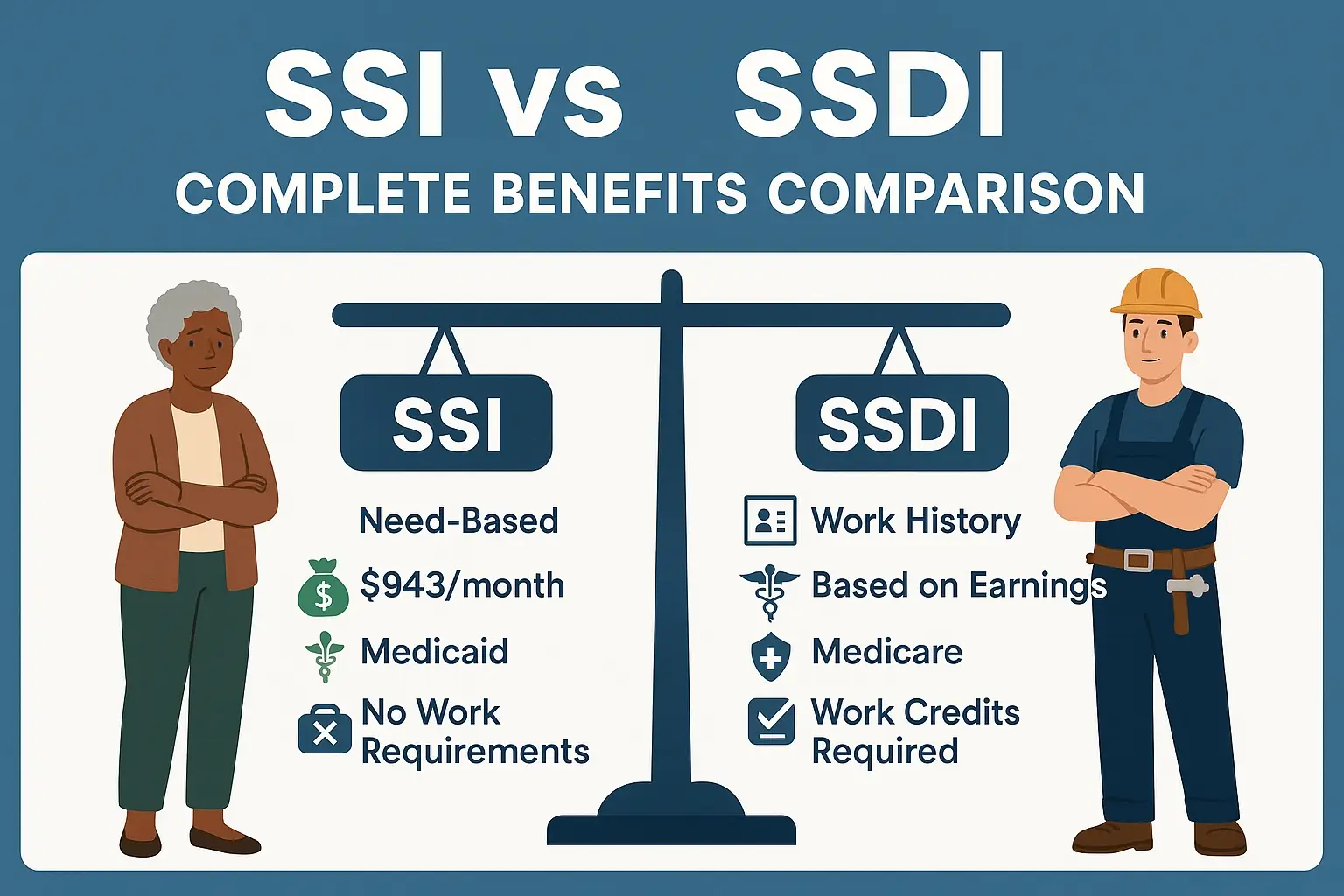
Supplemental Security Income (SSI) is a federal program run by the Social Security Administration (SSA) that provides monthly cash benefits to people with limited income and resources. Unlike Social Security Disability Insurance (SSDI), SSI is not based on your work history or the Social Security taxes you have paid. Instead, it is funded by general tax revenues to ensure the nation’s most vulnerable individuals have access to basic needs like food, shelter, and clothing. The SSI program is a safety net for those who might otherwise fall through the cracks of other government programs. Whether you are new to the process or have been told you may be eligible for assistance, understanding how SSI works is the first step toward protecting your financial stability.
Eligible Individuals
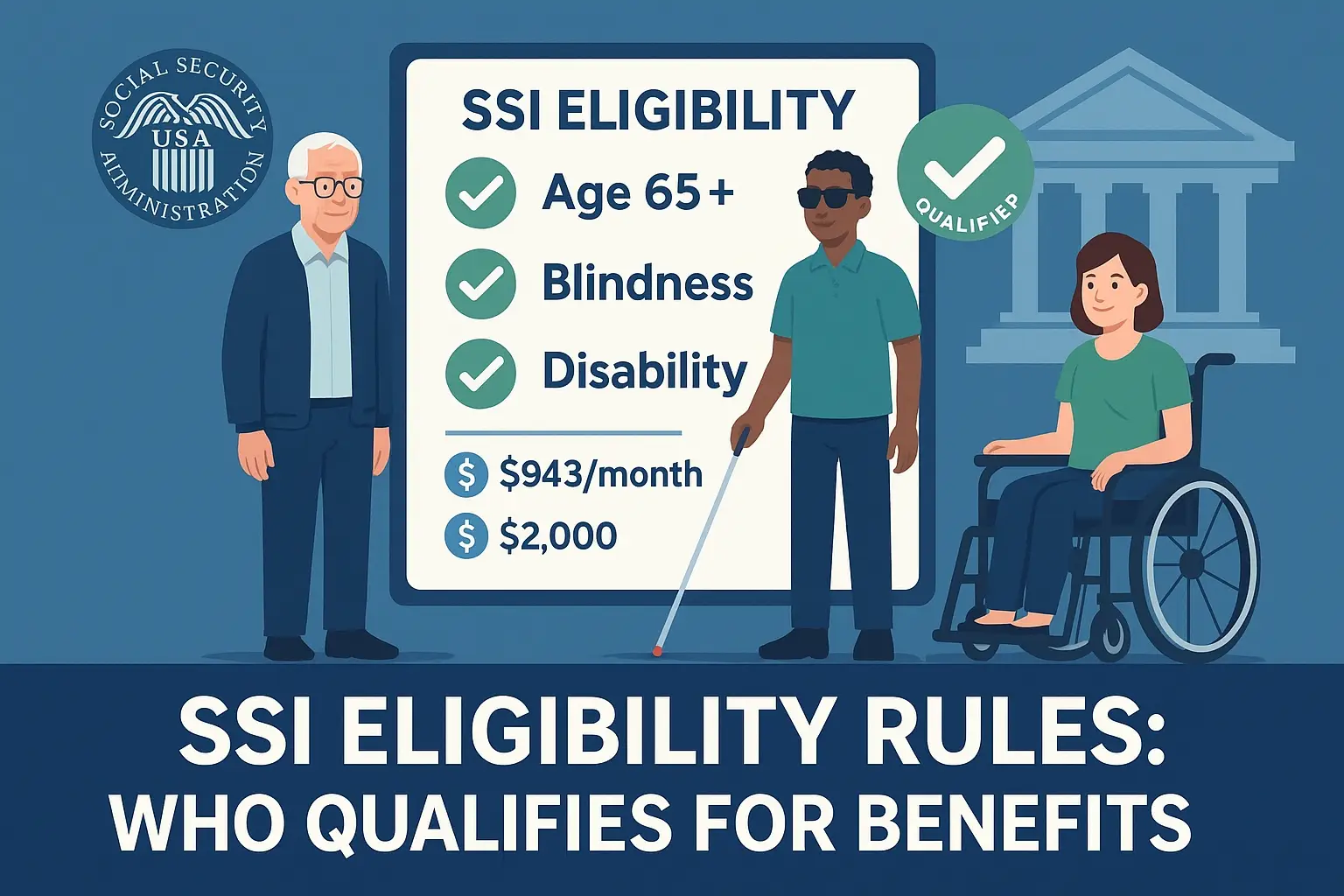
You may qualify for SSI benefits if you fall into one of three main groups:
- Aged: Individuals 65 or older can receive SSI if they meet income and resource requirements.
- Blind: People with vision loss meeting SSA’s criteria are considered eligible.
- Disabled: Adults and children with physical or mental impairments that prevent substantial work activity may qualify.
Each group has specific eligibility rules, but the goal is the same: to provide income support to people who need it most. By knowing whether you are eligible, you can take action early and avoid delays in receiving the help you deserve.
SSI Eligibility Rules Explained
Knowing the exact SSI eligibility rules is essential before starting your application. The Social Security Administration (SSA) uses strict standards to determine who qualifies, and missing even one requirement can make you ineligible for benefits.
Age, Blindness, and Disability Requirements
- Age: You may qualify if you are 65 or older, as long as your income and resources stay under the federal limits.
- Blindness: SSA defines blindness as having 20/200 vision or less in your better eye, even with glasses, or a visual field of 20 degrees or less.
- Disability: Adults must have a medically determinable condition that prevents them from working and is expected to last at least 12 months or result in death. For children, the condition must cause severe functional limitations.
These criteria ensure that only individuals who genuinely need income support receive SSI.
Citizenship and Residency Requirements
To be considered an eligible individual, you must meet specific citizenship or immigration rules:
- U.S. citizen or national
- Lawfully admitted permanent resident (green card holder)
- Refugee, asylee, or other qualified alien status
- Certain humanitarian parolees or special immigrant groups
You must also reside in one of the 50 states, DC, or the Northern Mariana Islands, and you cannot be outside these areas for more than a whole month without losing eligibility.
Public Institution and Criminal Justice Rules
You cannot receive SSI payments if you live in a public institution (such as a prison or government-paid hospital) for a whole calendar month. SSI is also suspended for people who:
- Are incarcerated
- Have an unsatisfied arrest warrant for flight or escape.
- Violating probation or parole conditions
Following these regulations helps maintain your eligibility and avoid interruptions in your payments.
Income and Resource Limits
Understanding how the SSA counts your income and resources is crucial for determining whether you may be eligible for SSI. Even if you meet the disability or age criteria, going over the financial limits can make you ineligible.
Income Limits
SSI has strict monthly income limits based on the Federal Benefit Rate (FBR):
- Individuals: $943 per month (2024)
- Couples: $1,415 per month (2024)
The SSA counts several types of income:
- Earned income: Wages, tips, and net earnings from self-employment.
- Unearned income: Social Security payments, pensions, unemployment, or other cash benefits.
- In-kind support: Free food or living arrangements provided by others.
- Deemed income: Income from a spouse or parent that counts toward your limit.
Specific amounts are excluded to help you stay under the limit. The first $20 of most income, the first $65 of earnings, and half of the remaining earnings are not counted. Benefits like SNAP, small irregular payments, and tax refunds are also excluded.
Resource Limits
In addition to income limits, SSI restricts the resources you can own:
- Individuals: $2,000
- Couples: $3,000
Countable resources include accounts (bank accounts, CDs), stocks, bonds, and property other than your primary home. Certain assets, like your main residence, one vehicle, and funds in ABLE accounts up to $100,000, are excluded.
Comparison Table 1: Countable vs. Excluded Resources
These rules ensure that SSI supports people with limited money and assets. If your resources are close to the limit, you may need to find ways to spend down responsibly or explore a state program for additional support.
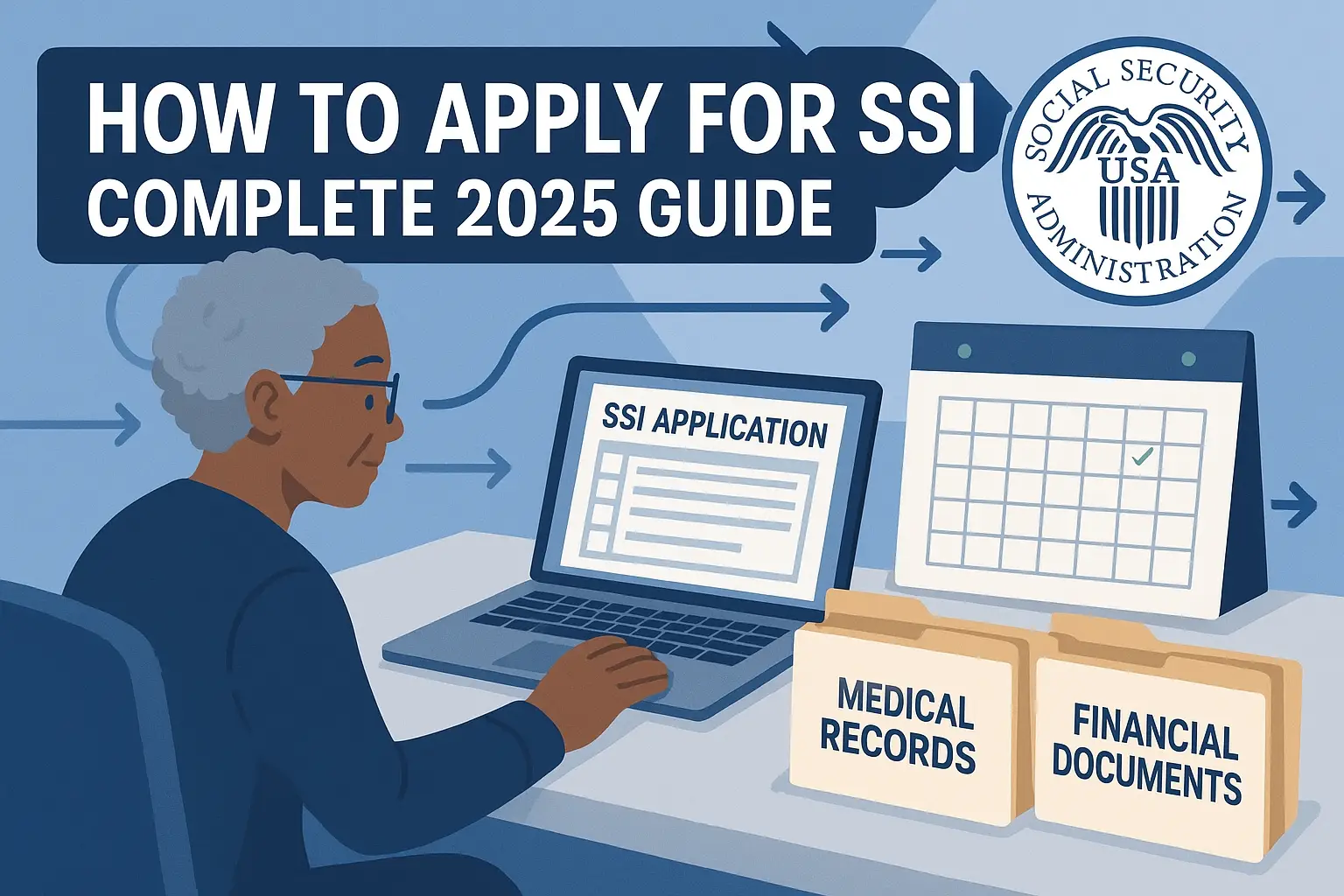
How to Start the SSI Application Process
Getting started with your SSI application process can feel intimidating, but knowing the proper steps will make it easier and faster. Filing early and correctly is the best way to avoid delays in receiving your payments.
Application Methods
You can begin your SSI claim in three ways:
- Apply online: You can start your application anytime on the SSA’s secure website. Applying online can save time and reduce errors.
- Apply by phone: Call 1-800-772-1213 (TTY 1-800-325-0778) to schedule a phone interview with your local Social Security office.
- Apply in person: Visit your nearest SSA office for face-to-face help.
Required Information
Prepare these steps ahead of time to make the process smoother:
- Personal details: Social Security number, proof of age, and citizenship or immigration documents.
- Financial information: Bank statements, proof of income, property deeds, and insurance policies.
- Medical records (if disabled): Names of doctors, medications, and hospital visits.
What Happens After You Apply
Your application will go through a review by SSA staff, and if you applied for disability, your medical evidence will be evaluated. You will receive a written decision by mail. If you are denied, you can file an appeal within 60 days. Taking action quickly can prevent you from losing months of benefits.
SSI vs. SSDI: Key Differences
Many people confuse Supplemental Security Income (SSI) with Social Security Disability Insurance (SSDI), but they are separate programs run by the Social Security Administration. Understanding the difference can help you know which program—or both—you may qualify for.
Comparison Table 2: SSI vs. SSDI
Some people receive both programs at the same time. If your SSDI payment is very low and you meet SSI’s strict financial limits, SSI can supplement your monthly payments. This combined benefit can make a big difference in covering basic living expenses, especially if you have worked but still have a limited income.
Special Situations and Work Incentives
Certain life situations can affect your SSI eligibility or payment amounts, so it’s essential to understand the rules.
Institutional Living and Criminal Justice Involvement
If you live in a public institution such as a prison or government-paid hospital for a month, you are generally ineligible for SSI payments. Benefits are also suspended for incarcerated individuals who have unsatisfied arrest warrants or are violating parole or probation.
Work Incentives
The SSA offers programs that encourage you to return to work without immediately losing benefits:
- Plan to Achieve Self-Support (PASS) allows you to set aside income or resources for work goals such as education or job training.
- Student Earned Income Exclusion: In 2024, students under 22 can earn up to $2,290 per month without affecting their SSI benefits.
State Supplements
Some states add extra payments on top of federal SSI. Contact your local office to check if your state program provides additional help.
Conclusion
SSI can be a crucial lifeline for individuals and families who are struggling financially. By understanding the SSI eligibility rules—including income limits, resource restrictions, and who qualifies—you can take steps to secure the support you need. Acting early is key: applying online or visiting your local Social Security office as soon as you qualify helps prevent delays and missed payments. Take control of your financial future today. With accurate information and the proper guidance, you can protect your benefits and avoid costly mistakes that could delay your approval.