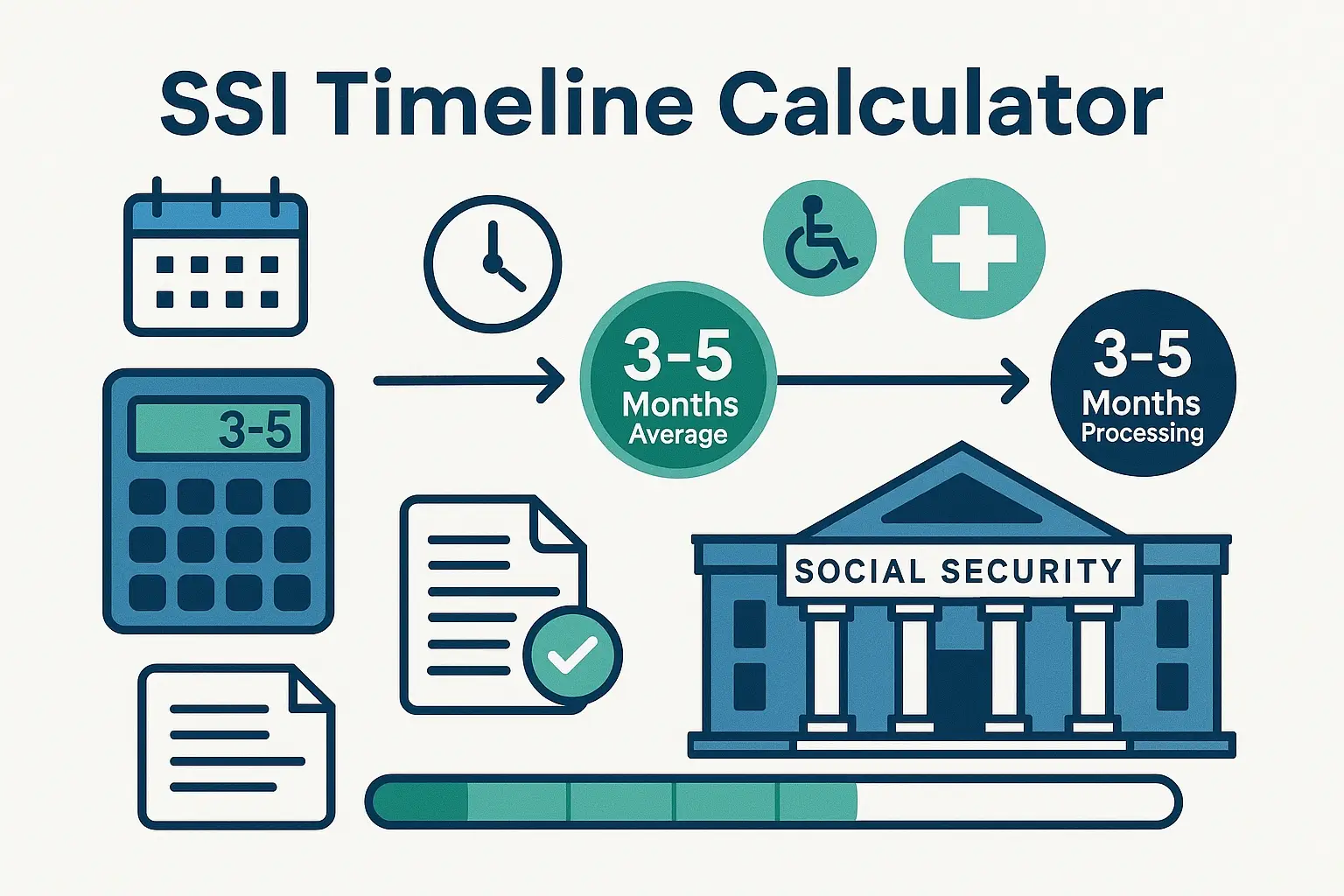
According to the Social Security Administration (SSA), the average SSI disability application takes three to five months to process—and incomplete forms or missing medical records can delay approval even longer. Every month matters for people who rely on these benefits to cover rent, utilities, and food. That’s why understanding the SSI disability timeline is so important: it helps you prepare, avoid mistakes, and receive benefits immediately.
Supplemental Security Income (SSI) is a federal program that provides monthly payments to individuals who are disabled, blind, or 65 or older and have limited income and resources. Unlike Social Security Disability Insurance (SSDI), SSI does not require prior work history or Social Security tax contributions. Instead, the focus is on meeting strict financial and medical requirements.
This guide, paired with our SSI Disability Timeline Calculator, will walk you through each step of the application process so you know what to expect and when. We’ll explain eligibility criteria, average waiting periods, and what factors can speed up or slow down approval. You’ll also learn how SSI compares to SSDI, what happens if your claim is denied, and how to avoid costly mistakes that could push your payments back by months. Understanding the timeline means more than just knowing dates—taking control of your benefits, reducing stress, and protecting your financial future.
What Is the SSI Disability Timeline?
The SSI disability timeline is from when you submit your application to when you start receiving payments. According to the Social Security Administration (SSA), most initial decisions for Supplemental Security Income (SSI) take three to five months, but timelines vary. Complex medical cases, missing documentation, or a high volume of claims at your local SSA office can extend the process. Understanding this timeline is essential because SSI benefits are not retroactive before the application date. If you delay filing, you could lose months of payments that you would otherwise be eligible to receive.
Filing as soon as you meet the requirements can help you get SSI faster and avoid unnecessary financial stress. The timeline typically includes an eligibility review, a disability determination, medical records collection, and a final decision. Each step must be completed before the SSA can issue monthly payments. Knowing what to expect at each stage helps applicants prepare documents in advance, respond promptly to SSA requests, and minimize the chance of delays. Whether you are disabled, blind, 65 or older, the SSI timeline is a crucial part of securing financial support for basic living needs.
SSI Disability Eligibility Requirements
Before using an SSI disability timeline calculator to estimate your case's length, you must know whether you’re eligible for SSI. The Social Security Administration (SSA) sets strict guidelines that applicants must meet before benefits can begin. These rules focus on your medical condition, income, resources, and several additional factors determining your eligibility.
Disability Criteria
To receive SSI benefits, you must meet one of the following:
- Be disabled, with a condition that prevents you from working at a substantial level.
- Have a condition that is expected to last at least 12 months or result in death.
- Be blind or 65 or older at the time of application.
- If applying for a child, meet the SSA’s childhood disability standard.
- At age 18, the SSA will reevaluate your case under adult rules.
Financial Criteria
SSI has strict limits on income and resources:
- Countable resources (like bank accounts, investments, and property other than your primary home) must stay below federal limits.
- Monthly income from work, pensions, or other benefits may reduce payment amounts.
- Exceeding limits can result in loss of eligibility or overpayment penalties.
Additional Requirements
Applicants must also:
- Live in the U.S. or Northern Mariana Islands.
- Apply for any other benefits they may be eligible for.
- Not fleeing to avoid prosecution or violating parole conditions.
Meeting every requirement helps avoid delays and ensures benefits start immediately.
Step-by-Step SSI Disability Timeline
Knowing what to expect at each stage of the SSI disability timeline can help you prepare the proper documents and avoid delays. The process includes several steps that the Social Security Administration (SSA) follows before approving benefits.
1. Pre-Application: Eligibility Check
Before you start, use the SSA’s benefits eligibility questionnaire to confirm you meet the requirements. This step helps you avoid wasting time on an application you cannot qualify for. Gather medical records, income statements, and identification documents early to save time later.
2. Application Submission (1–2 Hours)
You can submit your application:
- Online at ssa.gov for faster processing and no mailing delays.
- By phone at 1-800-772-1213 (TTY: 1-800-325-0778).
- In person at your local SSA office (appointments recommended).
Filing as soon as possible locks in your protective filing date, which is the earliest month your SSI benefits can start if approved.
3. Initial Review (30–90 Days)
During this stage, the SSA checks your application for completeness and verifies basic eligibility. Missing information or unsigned forms can pause this process. Respond to any SSA letters quickly to avoid starting over.
4. Medical Evidence Collection (60–120 Days)
The SSA requests your medical records from doctors, hospitals, and clinics. They may schedule a consultative examination with an SSA-approved doctor if information is missing. Supplying complete records early can shorten this step significantly.
5. Disability Determination and Decision (90–120 Days)
State Disability Determination Services (DDS) reviews all medical evidence and makes a decision. If approved, you will receive a determination letter, and benefits can begin as early as the month after your approval.
6. Payment Start and Ongoing Requirements
Once approved, SSI payments are typically issued on the first of each month. You must continue meeting income and resource limits and report any changes to SSA to avoid overpayments or interruptions.
SSI vs SSDI: Understanding the Differences
Many people confuse Supplemental Security Income (SSI) with Social Security Disability Insurance (SSDI), but these programs have key differences. Knowing which one applies to you can save time and help you avoid filing for the wrong benefit. SSI is designed for people with limited income and resources, regardless of work history. In contrast, SSDI is based on your past work and the Social Security taxes you have paid over time. Both programs provide monthly payments, but the eligibility rules, waiting periods, and health coverage options differ.
Here’s a side-by-side comparison to help you see the differences clearly:
Comparison Table: SSI vs SSDI Overview
Some applicants may be eligible for both SSI and SSDI simultaneously. This is called receiving concurrent benefits, and the SSA automatically checks for eligibility for both programs when you apply.
Appeals Process if Your SSI Application Is Denied
Many SSI applications are denied at the initial level—but this doesn’t mean the process is over. The Social Security Administration (SSA) has a structured appeals system that allows you to challenge the decision and provide additional evidence. Filing appeals on time is critical to keeping your case active and avoiding the need to start over.
Here’s what the typical SSI appeals timeline looks like:
Comparison Table: SSI Appeals Timeline
Missing these deadlines can mean starting the process again, delaying benefits for months or years. Respond promptly, keep copies of all documents, and consider professional representation to improve your chances of success at higher appeal levels.
Tips to Speed Up Your SSI Application
While you cannot control every part of the SSI disability timeline, there are steps you can take to help the Social Security Administration (SSA) process your claim faster and reduce the chance of delays.
Practical Ways to Avoid Delays
- Submit a complete application: Fill out every section thoroughly, including details about medical treatment, income, and resources. Incomplete forms are one of the most common causes of processing delays.
- Provide full medical evidence early: Include hospital records, doctor’s notes, lab results, and a detailed treatment history—the more comprehensive your file, the fewer requests SSA will need to make later.
- Respond promptly to SSA requests: If the SSA contacts you for additional information, reply immediately. Delays in responding can pause the entire process.
- Stay in touch with your doctors: Inform them that SSA may request records and encourage quick responses to record requests.
- Report any changes immediately: Notify SSA if you move, change doctors, or have updates about your medical condition.
Taking these steps helps you avoid easily preventable errors, keeps your file moving through the system, and gets your monthly payments started sooner.
Conclusion
Understanding the SSI disability timeline is key to avoiding missed payments and costly delays. Because SSI benefits are not retroactive, every month you wait to apply could mean losing the income you are entitled to. Acting early, submitting a complete application, and staying in touch with the SSA can significantly affect how quickly you start receiving monthly payments. Whether you are disabled, blind, or a non-working individual with limited income, the process does not need to feel overwhelming. Preparing your documents carefully and responding promptly to SSA requests keeps your case moving and protects your financial future.