In 2024, more than 7.5 million people rely on Supplemental Security Income (SSI) to cover basic needs like food, housing, and medical care. Despite the program’s importance, thousands of applications are delayed or denied yearly because of simple, easily avoidable mistakes. Missing documents, incorrect income reporting, or incomplete forms can push your approval back by months, causing financial stress and missed SSI benefits.
The Social Security Administration (SSA) designed SSI to support individuals who are 65 or older, blind, or living with a qualifying disability. However, to be eligible for SSI, you must meet strict income and resource limits and submit the proper documentation during the application process. Filing altogether and accurately is essential to start receiving your monthly payment as soon as possible.
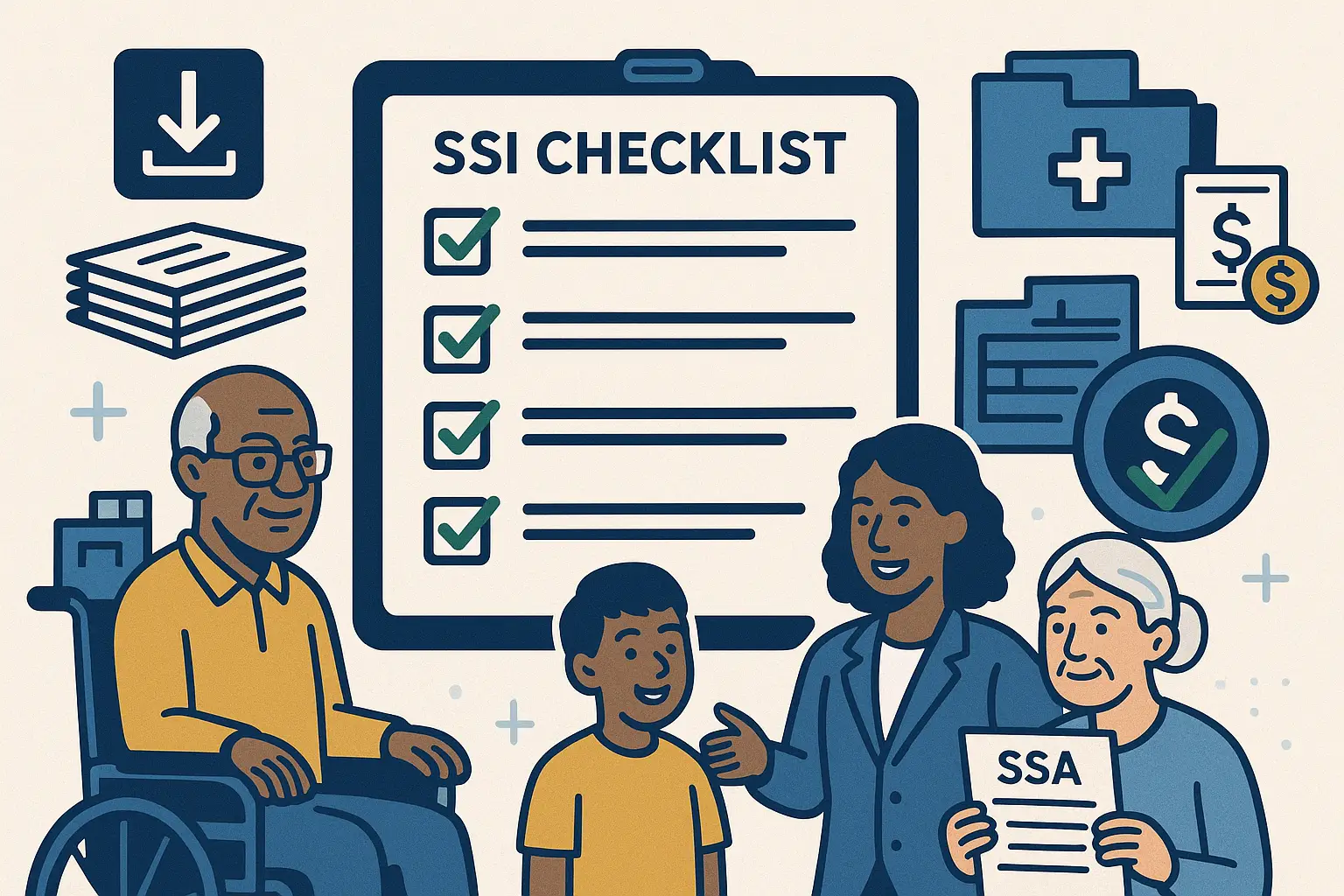
This guide gives you a full SSI checklist download that helps you prepare, stay organized, and avoid common errors. Whether you are applying for yourself, a spouse, or a child, this checklist makes it easier to gather required information and submit a strong application on the first try. Using it can reduce stress, protect your benefits, and help you receive the support you deserve without unnecessary delays.
Understanding Supplemental Security Income (SSI)
Supplemental Security Income (SSI) is a federal program that provides monthly disability benefits and financial support to people with limited income and resources. Unlike other social security programs, SSI does not require that you have worked or paid into Social Security. Instead, it is funded by general tax revenues. It is meant to ensure a basic standard of living for people who are 65 or older, blind, or living with a qualifying disability.
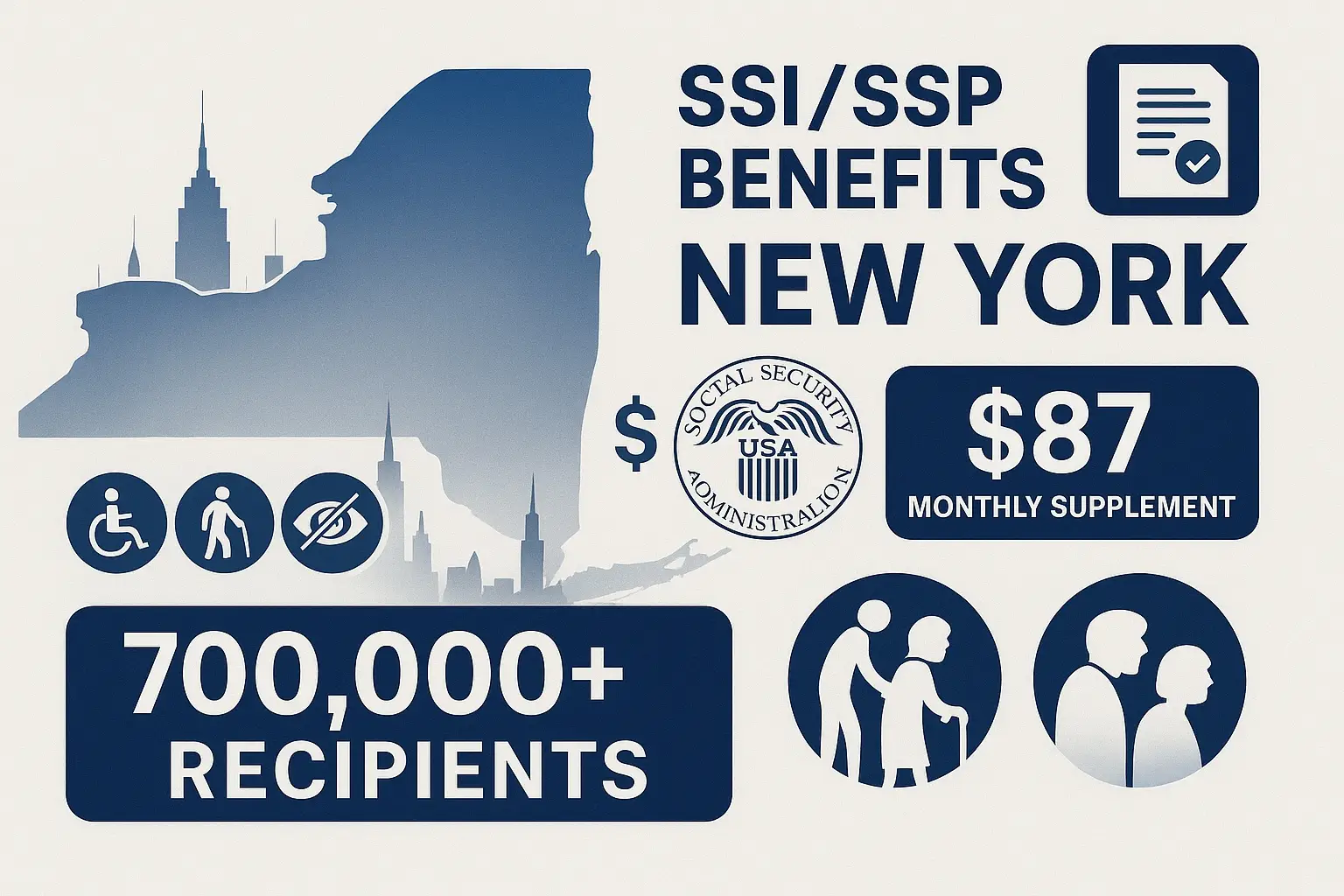
The Social Security Administration (SSA) manages this program and sets strict rules about who can be eligible for SSI. Your benefits are based on your financial situation, including countable income and resources. In 2024, the federal benefit rate is $943 per month for individuals and $1,415 for couples, with some states adding extra payments.
Before you proceed to the eligibility checklist, it’s helpful to understand how SSI compares with other programs such as SSDI, Medicare, and Medicaid.
Comparison Table: SSI vs. SSDI
This distinction is crucial: people who have not worked or have very low income can still get SSI, while SSDI is tied to past employment history.
SSI Eligibility Checklist
Before you download and use the checklist, make sure you meet the basic eligibility rules. The Social Security Administration has strict requirements, and understanding them up front can help you avoid wasted time or a denied claim.
Age and Disability Requirements
- You must be 65 or older to qualify based on age.
- If you are under 65, you must have a disability preventing you from working substantially. The condition must be expected to last at least 12 months or result in death.
- For blindness, your central visual acuity must be 20/200 or less in your better eye, or your visual field must be restricted to 20 degrees or less.
Income and Resource Limits
- Your income must be below $943 per month if you are single, or $1,415 per month if you are married. The SSA excludes some earnings and assistance when calculating countable income.
- Your resources (cash, bank accounts, property other than your primary home) must not exceed $2,000 for an individual or $3,000 for a spouse.
- Your primary home and one vehicle are typically not counted toward these limits, making more people eligible than expected.
Citizenship and Residency
- You must be a U.S. citizen or a qualifying noncitizen with lawful status.
- You must reside in the United States and not remain outside the country for more than 30 consecutive days.
Meeting these requirements is the first step to getting SSI benefits. Your application could be denied if you do not meet even one of these criteria.
SSI Application Process
Once you confirm that you are eligible for SSI, the next step is to complete the application process correctly. A complete and accurate application prevents delays and helps you start receiving your monthly payment as quickly as possible.
Step 1: Gather Your Documents
Before you apply, collect every document you might need. Missing paperwork is one of the most common causes of delayed approval.
- Personal documents: Birth certificate, Social Security card, and photo ID.
- Financial records: Bank statements, pay stubs, property deeds, and tax returns. These prove your income and resources are within limits.
- Medical records: Doctor’s reports, hospital discharge summaries, and test results if applying based on disability.
A complete set of documents makes your appointment or online application faster and easier.
Step 2: Submit Your Application
You can apply in person at your local SSA office, 1-800-772-1213, or online through SSA.gov. You will need to complete Form SSA-8000. Before applying, be prepared to answer detailed questions about your living situation, income, and resources each month.
Step 3: SSA Review and Decision
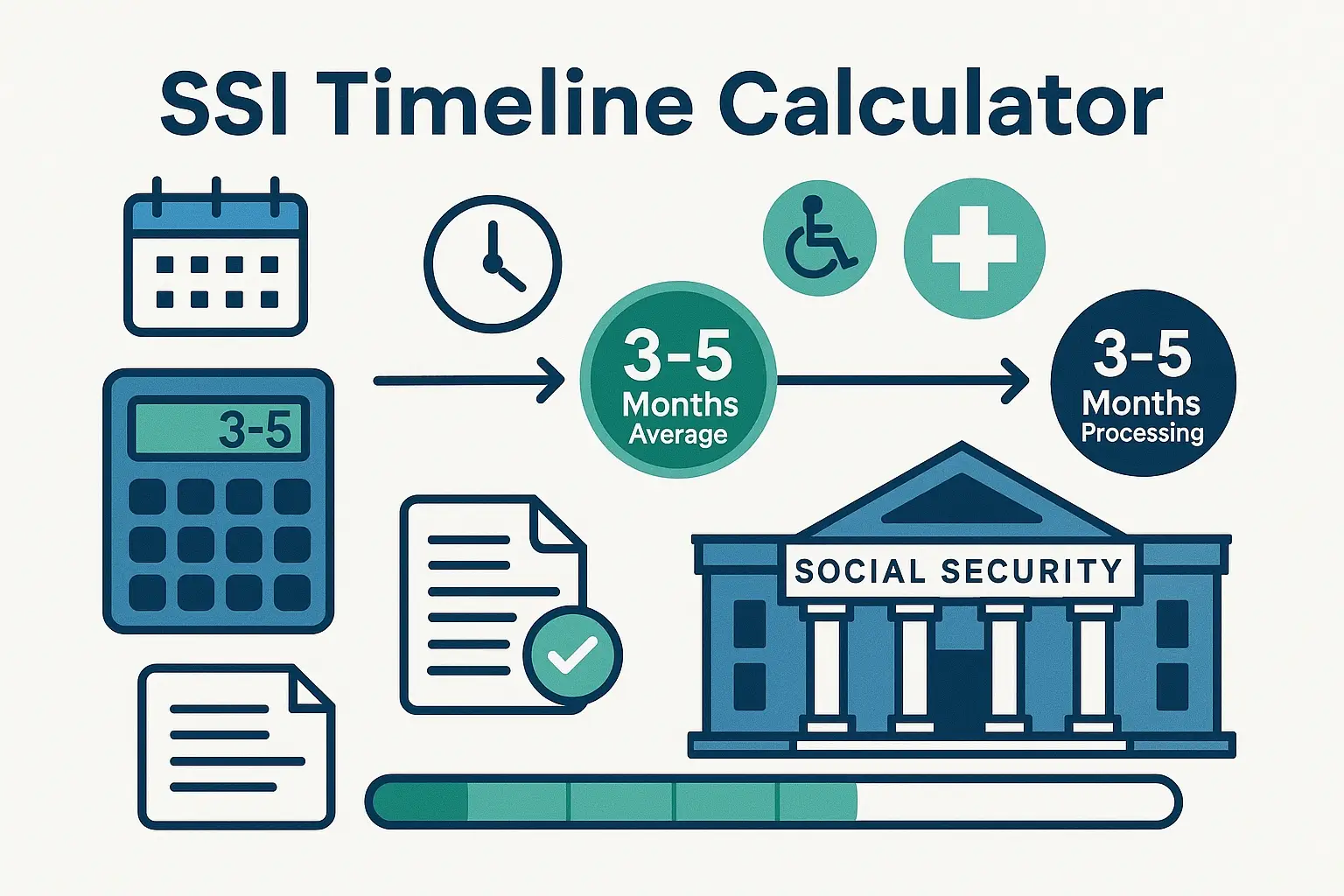
The Social Security Administration will review your application, verify documents, and, if needed, schedule a consultative exam. Most applicants receive a decision within 3–5 months, though some age-based claims may process faster. If your claim is denied, you have 60 days to file an appeal and request reconsideration.
Following these steps carefully will help you move smoothly through the process and avoid unnecessary delays in receiving your SSI benefits.
Why Filing Completely and Correctly Matters
Filing for SSI isn’t just about submitting a form—it’s about getting everything right the first time. Missing one document or providing incomplete details can delay your money for months and create extra stress. The Social Security Administration may return your case for review, request additional records, or deny the claim until the missing information is provided.
It’s also important to report any change in income, living situation, or resources as soon as it happens. Failure to report changes can lead to overpayments, which you may have to repay later, or even penalties. Having help from professionals can make the process easier and prevent avoidable mistakes. A clear SSI checklist download ensures you have all information ready before you apply, helping you avoid costly delays.
Comparison Table: Filing Errors vs. Filing Correctly
This step is where preparation pays off—taking time to check your application now can save months of waiting later.
Tips to Avoid Common SSI Mistakes
Even small mistakes can delay your SSI benefits or require you to reapply entirely. Use these practical tips to protect your claim and improve your chances of getting approved the first time.
- Report All Sources of Income: Many applicants forget to include part-time work, child support, or other small earnings. Leaving them out can result in overpayment issues or benefit suspension later.
- Meet All Deadlines: You must submit your application promptly and respond quickly to any SSA requests. Missing a deadline could delay your benefits for months or force you into the appeal process.
- Provide Complete Medical Records: If you apply based on a disability, include every doctor’s report, test result, and treatment record. The more evidence you submit, the faster the SSA can confirm your eligibility.
- Keep Copies of Everything: Always keep copies of forms, letters, and supporting documents. This helps you check what you’ve submitted and avoid duplicate requests from the SSA.
- Get SSI Support from Professionals: If you are unsure about any part of the process, seek help. Professionals can review your application, catch errors, and ensure your case is as strong as possible.
Avoiding these common pitfalls can help you get SSI faster and with fewer complications.
Special Considerations for Children and Spouses
SSI rules can be different when you are applying for a child or have a spouse living with you. Knowing how household income and resources are counted can prevent surprises during the application process.
- SSI for Children: Children with severe disabilities may qualify for Supplemental Security Income if their family meets income and resource limits. Parents must submit medical evidence and details about the child’s daily activities, school records, and any treatments received.
- Impact of a Spouse’s Income: If you are married, part of your spouse’s income and resources are considered when determining your eligibility. This process is called “deeming.” If your spouse earns more than the allowed limit, it could reduce or even eliminate your SSI payment. You must immediately report a change in your household—like marriage, divorce, or a new child—to keep your benefits accurate and avoid overpayment.