
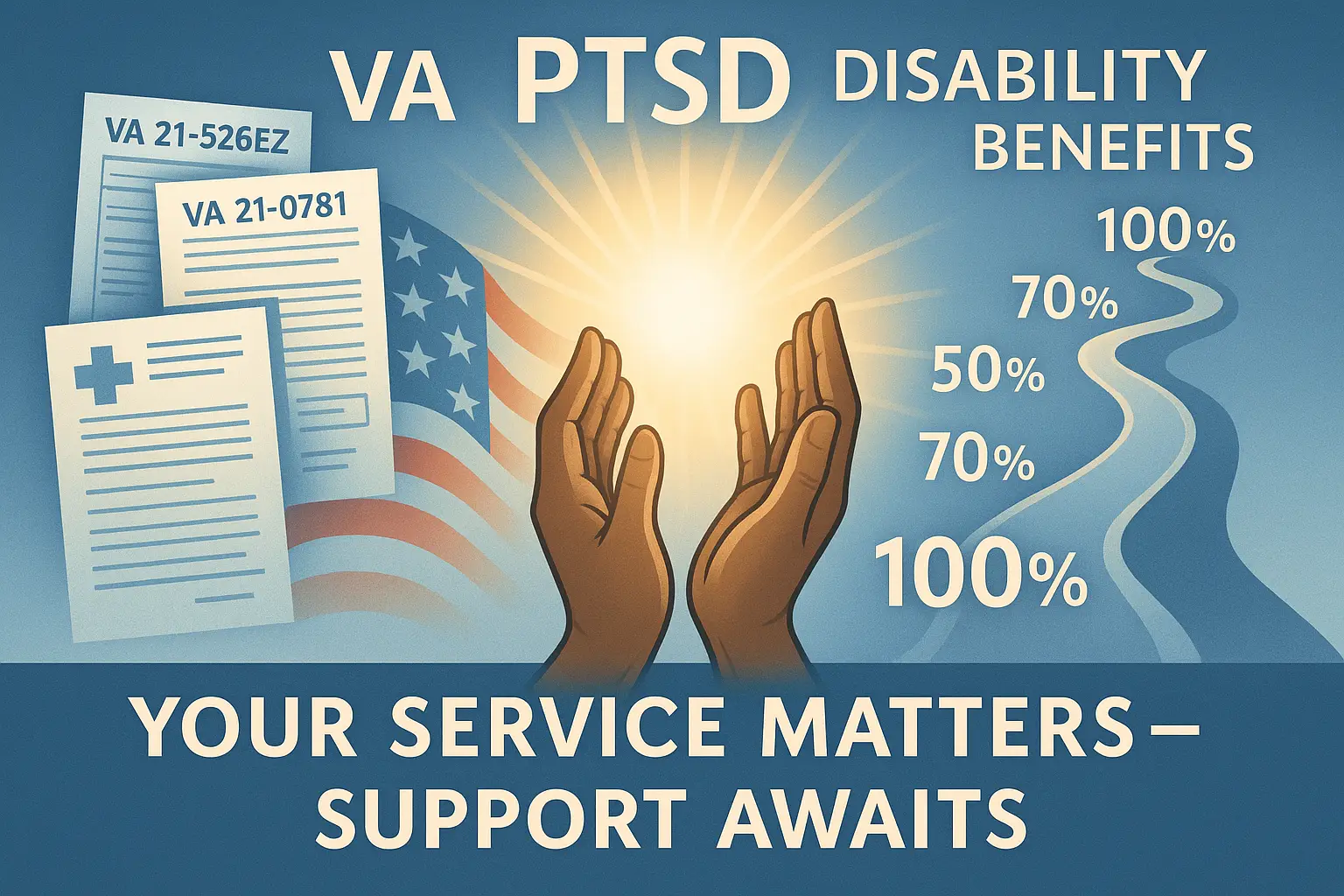
Post-Traumatic Stress Disorder (PTSD) is a mental health condition that can occur after a traumatic event such as combat, military sexual trauma, or other service-related experiences. Many veterans face lasting effects from these events, including intrusive memories, avoidance behaviors, mood disturbances, and heightened reactions. These symptoms can disrupt daily life and make maintaining steady employment or relationships difficult.
The Department of Veterans Affairs acknowledges PTSD as one of the most common service-connected disabilities among veterans. Through the VA disability system, veterans may qualify for disability compensation based on the severity of their condition. Compensation helps address the financial impact of reduced work capacity and ongoing treatment needs while ensuring access to additional related benefits.
Because PTSD can present differently in each veteran, the VA rating process evaluates the extent of social impairment, ability to perform occupational tasks, and the presence of specific symptoms such as suicidal ideation, impaired judgment, or chronic sleep impairment. By assigning a disability rating, the VA creates a standard method to measure how service-connected PTSD affects both health and quality of life.
Understanding PTSD and VA Disability
Post-traumatic stress disorder is classified as a mental health disorder in the VA’s Schedule for Rating Disabilities. The condition can develop after a veteran experiences or witnesses a traumatic event during military service, including combat exposure, personal or sexual trauma, or physical assault. While many veterans experience temporary stress reactions, PTSD is diagnosed when symptoms persist for more than a month and cause significant stress or social impairment.
PTSD symptoms vary but often include intrusive memories, flashbacks, nightmares, heightened anxiety, and difficulty concentrating. These symptoms can lead to occupational and social impairment by interfering with the ability to perform occupational tasks, maintain social relationships, and function satisfactorily in daily life. Veterans may also face depression affecting mood, panic attacks, impaired impulse control, or neglect of personal hygiene, which further complicates treatment and work stability.
The VA recognizes PTSD as a service-connected disability when there is medical evidence linking the condition to a verified in-service stressor. Veterans must have a formal PTSD diagnosis from a qualified medical professional. Because PTSD is considered one of the primary mental disorders affecting service members, the VA rates PTSD based on severity and impact on functioning, allowing veterans to access disability benefits and related health care.
Eligibility Requirements for VA Disability Benefits
To qualify for VA disability for PTSD, veterans must meet specific criteria set by the Department of Veterans Affairs. The requirements are designed to establish that the condition is medically documented and connected to military service. Three core elements form the foundation of a successful disability claim: a current diagnosis, proof of an in-service stressor, and medical evidence linking the two.
Current Medical Diagnosis
A veteran must have a confirmed PTSD diagnosis from a qualified healthcare provider. The diagnosis must follow the standards outlined in the Diagnostic and Statistical Manual of Mental Disorders (DSM-5). Without a clear medical record showing the diagnosis, a PTSD claim cannot move forward. This ensures that only verified cases of post-traumatic stress disorder are considered for disability benefits.
In-Service Stressor Event
The VA requires evidence that the PTSD symptoms are tied to a specific traumatic event that occurred during military service. This may include direct combat exposure, fear of hostile military activity, military sexual trauma, physical assault, or other significant incidents such as training accidents or natural disasters. Establishing the stressor is essential to proving service connection.
Medical Nexus
A medical nexus is the documented link between the in-service stressor and the current PTSD diagnosis. This usually comes as a medical opinion or evaluation provided by a licensed professional. The nexus demonstrates that the veteran’s current mental health disorder is not unrelated but instead directly tied to experiences during military service.
VA Disability Rating System for PTSD
The VA uses a standardized schedule to assign a disability rating for post-traumatic stress disorder. Ratings reflect the severity of PTSD symptoms, the level of occupational and social impairment, and how well a veteran can perform occupational tasks. The VA rates PTSD under Diagnostic Code 9411, with possible outcomes ranging from 0% to 100%. A higher rating results in greater monthly disability compensation.
100% Rating – Total Impairment
A 100% rating applies when severe symptoms cause total occupational and social impairment. Veterans at this level may experience gross impairment in thought processes, persistent delusions, grossly inappropriate behavior, or a persistent danger of harming themselves or others. They may struggle with minimal personal hygiene, disorientation to time or place, or memory loss of close relatives and their names. Compensation reflects the inability to perform occupational tasks in any capacity.
70% Rating – Deficiencies in Most Areas
The 70% level applies when PTSD symptoms interfere with nearly every aspect of life, including work, school, judgment, and social relationships. Common symptoms include suicidal ideation, obsessional rituals, impaired impulse control, depression affecting daily functioning, neglect of hygiene, and difficulty adapting to stressful circumstances. Veterans at this rating show severe social and occupational impairment but may still retain limited capacity to function.
50% Rating – Reduced Reliability and Productivity
At 50%, PTSD causes reduced reliability at work and in relationships. Symptoms may include frequent panic attacks, impaired judgment, disturbances in mood, difficulty understanding complex commands, and problems maintaining effective social relationships. This level often reflects significant but not total impairment.
30% Rating – Occasional Decrease in Work Efficiency
A 30% disability rating applies when PTSD results in an occasional decrease in work efficiency or intermittent inability to perform occupational tasks. Veterans at this level are generally functioning satisfactorily but may experience symptoms such as depressed mood, chronic sleep impairment, mild memory loss, or weekly panic attacks.
10% Rating – Mild or Transient Symptoms
A 10% rating applies when PTSD symptoms are mild or transient, appearing only during significant stress or controlled by continuous medication. Veterans with this rating can usually maintain occupational and social functioning but may have moments of reduced efficiency under stressful circumstances.
0% Rating – Diagnosis Without Impairment
A 0% rating is assigned when a veteran has a PTSD diagnosis, but the symptoms do not interfere with occupational tasks or require continuous medication. Although no compensation is provided, the condition is still recognized as service-connected, which may allow access to related VA benefits.
How to File a VA Disability Claim for PTSD
Filing a VA disability claim for PTSD is the first step toward receiving disability compensation and related benefits. The VA offers several ways to submit a claim, but all require the proper forms and supporting documentation. Veterans should prepare thoroughly to avoid unnecessary delays in the claims process.
Filing Online
The fastest way to file a PTSD claim is through the VA.gov website. Veterans can complete the application electronically and upload the required documents directly. Online submission confirms receipt and allows applicants to track progress through the VA claims process.
Required Forms
The main form for a disability claim is VA Form 21-526EZ, Application for Disability Compensation and Related Compensation Benefits. Veterans filing for PTSD must also submit VA Form 21-0781, Statement in Support of Claim for Service Connection for Post Traumatic Stress Disorder. If the PTSD stems from military sexual trauma, VA Form 21-0781a is required. These forms help establish the in-service stressor and support service connection for PTSD disability benefits.
Alternative Filing Methods
In addition to online filing, claims may be submitted by mail to the appropriate VA regional office. Veterans may also file in person at a regional office, through an accredited Veterans Service Organization, or with the assistance of an accredited attorney or claims agent. Each option ensures the claim is reviewed and processed, though the timeline may vary depending on the chosen method.
Evidence and Documentation Needed
Substantial evidence is essential for a successful PTSD disability claim. The VA has a duty to assist veterans in gathering records, but providing comprehensive documentation can speed up the process and strengthen the case. Evidence generally falls into three main categories: medical records, service records, and lay evidence.
Medical Evidence
Medical evidence is required to prove a current PTSD diagnosis and the severity of symptoms. This may include:
- Records from VA or private healthcare providers documenting a PTSD diagnosis and treatment
- Psychological or psychiatric evaluations that describe occupational and social impairment
- Hospital records, prescriptions, or treatment notes confirming use of continuous medication
- Documentation of related conditions, such as depression affecting mood, chronic sleep impairment, or panic attacks
Service Records
Service records help establish the in-service stressor that caused or contributed to PTSD. Common examples include:
- DD Form 214 (Certificate of Release or Discharge from Active Duty)
- Service treatment records that document injuries or mental health disorder symptoms
- Unit reports, morning reports, or records of exposure to combat or traumatic events
- Awards or decorations that support proof of combat exposure or hazardous duty
Lay Evidence
Lay evidence can provide additional context for a veteran’s PTSD symptoms and their impact on daily functioning. Examples include:
- Statements from family or friends describing changes in behavior, mood, or social relationships
- Buddy statements from fellow service members confirming exposure to a traumatic event or physical assault
- Personal statements from the veteran explaining how PTSD affects the ability to perform occupational tasks, manage stressful circumstances, or maintain hygiene and social interactions
VA Compensation & Pension (C&P) Examination
The Compensation and Pension (C&P) examination is a critical part of the VA claims process for PTSD. This exam helps the VA determine the severity of the mental health condition and assign the correct disability rating. It is not a treatment appointment but an evaluation focused on symptoms, social impairment, and the veteran’s ability to perform occupational tasks.
Purpose of the Examination
The examiner, usually a VA or contract mental health professional, will review medical evidence, service records, and personal statements. The exam assesses how PTSD symptoms such as panic attacks, impaired judgment, or chronic sleep impairment affect daily life. The results play a major role in establishing service connection and determining the appropriate PTSD VA rating.
What to Expect
During the exam, veterans can expect:
- A clinical interview covering PTSD symptoms and their frequency
- A mental status examination evaluating memory, thought processes, and mood
- Questions about social and occupational impairment, including relationships and work performance
- Review of treatment history, medications, and any related conditions, such as depression, affecting daily functioning
Preparing for the Exam
Veterans should bring copies of their medical records, service records, and a written account of the traumatic event that caused PTSD. Preparing a list of current symptoms, including mild or transient symptoms, severe symptoms, or episodes of suicidal ideation, can help ensure nothing important is overlooked. Veterans may also choose to bring a support person if permitted, which can reduce stress during the appointment.
Disability Benefits Questionnaire (DBQ)
The examiner will complete a Disability Benefits Questionnaire specific to PTSD. This form records clinical findings, the presence of social and occupational impairment, and whether continuous medication is required. The DBQ provides standardized information to support the VA’s decision and helps ensure that PTSD disability claims are evaluated consistently.
Secondary Conditions Related to PTSD
PTSD often leads to additional health problems that may also qualify for VA disability benefits. These secondary conditions are recognized when medical evidence shows they are caused or aggravated by service-connected PTSD. Veterans may file for disability compensation for these conditions alongside their primary PTSD claim.
Common Secondary Mental Health Conditions
PTSD is closely linked with other mental health disorders. Veterans may experience:
- Major depressive disorder
- Generalized anxiety disorder
- Panic disorder
- Substance use disorders
Common Secondary Physical Conditions
PTSD can also contribute to physical health problems. Some of the most common include:
- Chronic sleep impairment, including insomnia or nightmares
- Hypertension and cardiovascular issues
- Gastroesophageal reflux disease (GERD) and irritable bowel syndrome (IBS)
- Chronic headaches or migraines triggered by PTSD symptoms
- Erectile dysfunction caused by medication side effects or psychological stress
Filing for Secondary Conditions
To receive disability compensation for secondary conditions, veterans must provide medical evidence connecting the new diagnosis to service-connected PTSD. This may include physician statements, treatment records, or a VA examination. Recognizing secondary conditions ensures that veterans receive full PTSD disability benefits, reflecting the total impact of their mental health condition.
Appeals Process if a Claim Is Denied or Rated Too Low
Not every PTSD disability claim is approved the first time. In some cases, the VA may deny the claim or assign a disability rating that does not fully reflect the severity of the veteran’s symptoms. Veterans have several options to appeal a decision, all of which are part of the modernized appeals system.
Supplemental Claim
A Supplemental Claim allows a veteran to submit new and relevant evidence not included in the original decision. This may include updated medical evidence, additional service records, or lay statements about worsening PTSD symptoms. The claim is reviewed by the VA, and if the outcome is still unfavorable, further appeals are possible.
Higher-Level Review
In a Higher-Level Review, a more senior VA reviewer examines the case using the same evidence provided in the initial claim. No new evidence can be submitted, but veterans or their representatives may request an informal phone conference to explain why the prior decision was incorrect. This process can be useful if the veteran believes the VA misapplied the law or overlooked important details.
Board of Veterans’ Appeals
Veterans may appeal to the Board of Veterans’ Appeals if the claim remains denied. This option involves filing VA Form 10182 and choosing one of three lanes: direct docket, evidence submission, or hearing. A Veterans Law Judge reviews the case and decides based on the evidence and applicable regulations.
Court of Appeals for Veterans Claims
As a final option, veterans can appeal to the U.S. Court of Appeals for Veterans Claims. This step must be taken within 120 days of the Board’s decision. The court reviews whether the VA followed the law correctly, but it does not consider new evidence. This process is often more formal and may require legal representation.
Additional VA Benefits Available
In addition to monthly disability compensation, veterans with service-connected PTSD may qualify for other VA benefits. These programs provide healthcare, financial support, and vocational assistance to improve the quality of life and support long-term stability.
VA Healthcare
Veterans with PTSD are often eligible for priority enrollment in VA healthcare. This includes access to specialized PTSD treatment programs, individual and group counseling, telehealth services, and prescription coverage. Enrollment ensures that veterans receive ongoing treatment for their mental health condition.
Vocational Rehabilitation and Employment (VR&E)
The VA’s Chapter 31 Vocational Rehabilitation and Employment program provides education, job training, and career counseling for veterans with service-connected disabilities. For those whose PTSD symptoms create barriers to steady employment, VR&E can also provide independent living services and job placement support.
Total Disability Based on Individual Unemployability (TDIU)
Veterans who cannot perform occupational tasks due to PTSD may qualify for TDIU. This benefit pays at the 100% disability compensation rate even if the veteran’s PTSD rating is below 100%. TDIU ensures that veterans who are unable to maintain gainful employment receive full financial support.
Special Monthly Compensation (SMC)
Special Monthly Compensation is available for veterans whose PTSD or related conditions require aid and attendance or leave them housebound. This benefit provides additional financial assistance beyond the standard disability benefits to cover extra care needs.
Current VA Disability Rates
The VA updates disability compensation rates annually to reflect cost-of-living adjustments. These tax-free payments vary based on the veteran’s assigned disability rating, dependent status, and family size. Compensation for PTSD follows the same schedule used for all service-connected disabilities.
2025 VA Disability Compensation Rates
These amounts became effective on December 1, 2024. In addition to the monthly payment, veterans may qualify for extra compensation based on dependents, secondary conditions, or special circumstances such as unemployability. Veterans Affairs adjusts the yearly rates to keep pace with inflation and living costs.


