
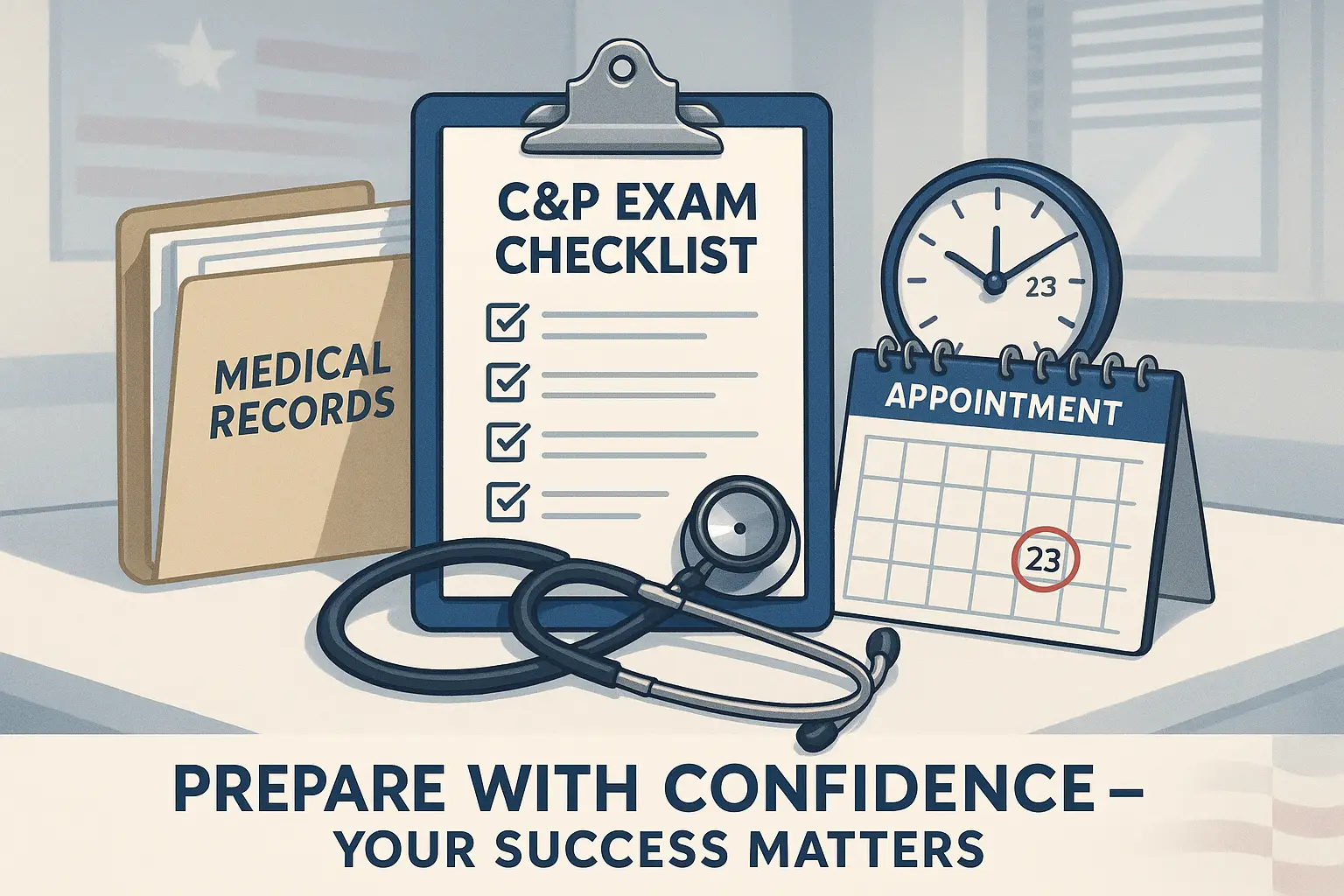
A Compensation and Pension exam, often called a claim exam, is an evaluation conducted by the Department of Veterans Affairs. It helps determine whether a veteran has a service-connected disability and measures how that condition affects daily life and basic activities. Unlike a regular appointment at a VA medical center, this exam is not designed for treatment but for gathering medical evidence.
During the exam, a medical professional reviews the veteran’s claim file, including medical and personnel records and other documents. The examiner may ask questions, perform medical tests, and assess both physical health conditions resulting from military service and mental health conditions, such as post-traumatic stress disorder, depression, or anxiety. These steps ensure that there is enough medical evidence for the VA to assign a disability rating and determine disability compensation.
The exam results are compiled into an exam report, which becomes part of the claim file. This report is then reviewed by Veterans Affairs staff as they make the claim decision. For most veterans, the findings from this exam are a key factor in determining how much disability compensation they may receive and whether they qualify for other benefits.
What Is a C&P Exam in the VA Disability Compensation Process?
A VA Compensation and Pension exam, or a claim exam, is a medical evaluation to support the disability claims process. Its primary purpose is establishing the link between a veteran’s military service and current medical conditions, ensuring the VA can determine whether the disability is service-connected. Unlike a visit to a local VA medical center for ongoing care, the exam is focused on documenting evidence for a claim decision.
How the Exam Works
The claim exam is conducted by a medical professional who reviews the veteran’s claim file, including medical and personnel records. They may ask detailed questions, evaluate how conditions impact basic activities and daily life, and conduct medical tests if necessary. This allows the VA to gather the evidence needed to assign an accurate disability rating, directly affecting the amount of disability compensation and monthly payments a veteran may receive.
Why It Matters
In many cases, most veterans will attend at least one claim exam before deciding. If multiple conditions exist or the VA needs additional evidence, more than one exam may be required. Although the examiner does not determine the outcome, the exam report is forwarded to Veterans Affairs for review. That report is a central document in determining the disability rating, confirming eligibility for other benefits, and finalizing the claim decision.
Eligibility for a VA Claim Exam
A claim exam is not required for every disability claim, but it is often scheduled when the VA needs more medical evidence. Eligibility is based on the veteran’s service history and the nature of the disability claim. Veterans should understand when an exam will be scheduled and when it might be waived.
Who Qualifies for a Claim Exam
- Veterans who served in active duty, naval service, or air service and were discharged under conditions other than dishonorable
- Veterans who file a disability claim with the VA for a physical health condition resulting from injury, illness, or toxic exposure during military service
- Veterans who file for mental health conditions, including post-traumatic stress disorder or military sexual trauma
- Veterans filing claims for secondary conditions linked to an existing service-connected disability
- Veterans with multiple conditions, since more than one exam may be required to gather complete medical evidence
When a Claim Exam May Not Be Required
The VA may determine that there is already enough medical evidence in the claim file to decide without scheduling a new exam. This may happen if:
- The claim file includes medical records from VA facilities or private healthcare providers.
- The veteran submitted a disability benefits questionnaire completed by a qualified medical professional.
- The personnel records clearly show the link between the disability and military service.
- The evidence demonstrates a precise diagnosis and ongoing treatment that supports the claim.
Who Conducts the Exam
C&P exams may be conducted by doctors, nurse practitioners, or other medical professionals employed by the VA or contracted through an outside provider. Regardless of who performs the evaluation, the examiner must follow Veterans Affairs guidelines to ensure consistent and fair exam results.
How to File a VA Disability Claim and the Scheduling Process
The first step in receiving disability compensation is filing a claim for VA disability benefits. Once a claim is submitted, the VA reviews the evidence and decides whether a Compensation and Pension exam is required. Understanding the filing process and how the scheduling process works helps veterans prepare for each stage of the claim.
Filing a VA Disability Claim
- Complete the application: Veterans start by completing VA Form 21-526EZ, the Application for Disability Compensation and Related Compensation Benefits.
- Gather supporting documents: Veterans should include medical records, personnel records, and other documents that show the connection between their condition and military service.
- Submit the claim: Applications can be submitted online through VA.gov, mailed to the Department of Veterans Affairs, or filed at a regional office. Veterans may also work with an accredited representative, claims agent, or accredited attorney to ensure their application is complete.
- VA reviews the claim: The VA evaluates the information in the claim file and decides whether there is enough medical evidence to proceed without a claim exam or whether one should be scheduled.
Scheduling Process for a C&P Exam
- The VA sends an appointment letter detailing the scheduled exam date, time, and location if an exam is required.
- Veterans typically receive notice at least 30 days before the original appointment, giving them time to prepare.
- If a veteran cannot attend, they must notify the VA as soon as possible to request a new appointment. Missing the exam without good cause may delay the claims process or result in a denial.
- The exam may occur at a local VA medical center or through a contracted provider, depending on availability and location.
Why Scheduling Matters
The claim depends on the VA’s ability to gather medical evidence promptly. The sooner the exam is completed, the faster the claim decision can be made. For most veterans, completing the exam as scheduled is essential to keeping the processing time on track and avoiding unnecessary delays.
Types of VA C&P Exams
Depending on the claimed condition, the Department of Veterans Affairs conducts several Compensation and Pension exams. Some veterans may attend only one evaluation, while others with multiple conditions may need more than one exam. Each type of exam focuses on collecting enough medical evidence to guide the disability rating and compensation decision.
General Medical Exams for Disability Compensation
A general medical exam is used when a veteran claims a physical health condition from military service. During this evaluation, the medical professional reviews the claim file, verifies the veteran’s medical records, and may conduct physical tests to measure the condition's impact. The findings are summarized in an exam report and later used by Veterans Affairs to determine disability compensation.
Mental Health Conditions in C&P Exams
When a veteran applies for benefits related to mental health conditions, such as post-traumatic stress disorder, depression, anxiety, or military sexual trauma, a mental health C&P exam is scheduled. This evaluation is more conversational than physical, focusing on how the condition affects daily life and basic activities. The examiner may ask detailed questions about the veteran’s emotional well-being, sleep patterns, and social relationships. These findings help the VA decide whether the condition is service-connected and what disability rating should be assigned.
Specialized Claim Exams
Some conditions require specialized exams. For example, an audiology exam is needed for hearing loss, while an ophthalmology exam may be scheduled for vision problems. Veterans with musculoskeletal injuries may undergo orthopedic evaluations, while those with heart or lung conditions may be referred for cardiovascular or respiratory exams. In cases involving toxic exposure or terminal illness, tailored assessments ensure the VA has enough medical evidence to make a fair claim decision. When multiple conditions are claimed, the VA may schedule more than one exam to gather accurate information for a combined disability rating.
What to Expect During the Claim Exam
The Compensation and Pension exam follows a consistent structure, though the specific details vary depending on the type of exam. Veterans generally expect three phases: preparation before the exam, the evaluation, and the post-exam process.
Before the Exam
Veterans receive an appointment letter with the scheduled exam date, time, and location. Preparing for the appointment involves reviewing the claim file, gathering medical records, and considering how symptoms affect work and daily life. Arriving early ensures there is enough time to complete any required paperwork.
During the Exam
The examiner begins by reviewing the claim file and verifying the information provided in the disability claim. Veterans are asked questions about their conditions; medical tests may be performed depending on the claim. The exam may involve range-of-motion tests or diagnostic procedures for physical health conditions. For mental health conditions, the examiner may ask about mood, memory, and the ability to perform basic activities. Every response helps the examiner build a complete picture of how the condition affects the veteran.
After the Exam
Once the evaluation is complete, the medical professional prepares an exam report. This document contains the exam's findings, including the results of medical tests and professional observations. Veterans do not receive the report directly. Instead, it is sent to Veterans Affairs and added to the claim file. The claim exam results are then used by VA staff to determine the disability rating and prepare a claim decision.
Preparation Guidelines for Veterans Attending a C&P Exam
Preparing carefully for the C&P exam helps ensure the evaluation accurately reflects the veteran’s condition. There are two main areas of preparation: documentation and personal readiness.
Documentation Preparation
Bringing the correct paperwork is essential. Veterans should have copies of their medical records, personnel records, and other documents demonstrating how their condition is linked to military service. Many find it helpful to keep a symptom journal that shows how their condition affects daily life, including work, relationships, and basic activities. A list of medications and current treatments should also be available. When possible, a disability benefits questionnaire completed by a treating provider can be included as additional evidence.
Personal Preparation
Being physically and mentally prepared is just as important as having the correct documents. Veterans should plan to get adequate rest before the exam and wear comfortable clothing suitable for medical tests. A support person may provide reassurance, although that individual will not participate in the exam. Above all, veterans should answer questions honestly and completely. Exaggerating or minimizing symptoms can result in an inaccurate disability rating and may harm the overall claim decision.
Your Rights and Responsibilities During the VA C&P Exam
Specific rights protect veterans attending a Compensation and Pension exam, but they also carry particular responsibilities. Knowing both ensures the process runs smoothly and that the claim file accurately reflects the veteran’s condition.
Veterans’ Rights
Veterans have the right to a qualified medical professional's fair and thorough claim exam. They may request a copy of their exam report through a Privacy Act or an Information Act request, which allows them to review what was recorded during the evaluation. Veterans can pursue an appeal or file a supplemental claim with new evidence if they disagree with the claim exam results.
They also have the right to representation throughout the disability claims process. An accredited representative, accredited attorney, or claims agent can provide guidance and help ensure that the claim is managed correctly. Veterans may request a new appointment without penalty if a conflict of interest with the examiner or circumstances prevent attendance.
Veterans’ Responsibilities
Alongside these rights, veterans are expected to meet essential responsibilities. They must attend their scheduled exam or promptly contact the VA for a new appointment. Missing the exam without good cause can delay processing time or negatively affect the claim decision.
Veterans are also responsible for providing accurate and complete information. This includes sharing medical and personnel records and other documents supporting their claim. During the exam, they should answer questions honestly and cooperate fully with the examiner. Keeping the VA informed about any changes in health status is also important, as new information may affect the disability rating or eligibility for other benefits.
After the Exam: Claim Exam Results and VA Decision Process
Once the Compensation and Pension exam is complete, the information gathered is reviewed in a structured manner. The exam report becomes part of the veteran’s claim file and is central to how Veterans Affairs decides the outcome of the claim.
Exam Report
After the scheduled exam, the medical professional prepares an exam report. This document includes the results of medical tests, notes on physical or mental health conditions, and professional observations about how those conditions affect daily life and basic activities. The report is sent directly to the VA rather than to the veteran. It becomes a key piece of medical evidence in the claims process.
Claim Decision
A VA rating specialist reviews the exam report, the veteran’s medical and personnel records, and any other documents in the claim file. Using this information, the VA decides whether the condition is a service-connected disability and assigns a disability rating. If a veteran has multiple conditions, the VA may calculate a combined disability rating. The disability rating determines how much disability compensation the veteran will receive. If the VA decides more evidence is needed, the veteran may be scheduled for multiple exams.
Decision Letter
Once the review is complete, the VA issues a decision letter. This letter explains the outcome of the claim, including which conditions were approved or denied, the assigned disability rating, and the effective date for benefits. It also outlines how much disability compensation the veteran will receive, whether other benefits apply, and whether the veteran will receive monthly payments. For veterans who disagree with the decision, the letter provides instructions for appeal, including a supplemental claim, higher-level review, or a formal appeal through the Board of Veterans’ Appeals.
Appeals and Formal Appeal Options in VA Disability Benefits
Many veterans are dissatisfied with their claim decision, especially if the disability rating or claim exam results do not reflect the severity of their condition. The VA provides several appeal options that allow veterans to challenge the outcome and submit additional evidence if necessary.
Supplemental Claim
A supplemental claim is used when a veteran has new evidence that was not part of the original claim file. This could include updated medical records, results from new medical tests, or a disability benefits questionnaire completed by a treating medical professional. A supplemental claim may also be filed if a veteran experiences worsening symptoms and requires a new appointment for evaluation. Although there is no strict time limit for filing, submitting new evidence quickly helps reduce processing time and prevents unnecessary delays in receiving disability benefits.
Higher-Level Review
The higher-level review option allows a more experienced VA rating specialist to reexamine the claim file. In this process, no new evidence may be added. Instead, the review focuses on whether the original claim decision was made correctly based on the existing records, personnel records, and exam report. Veterans can request a formal conference with the reviewer to explain why they believe the decision was incorrect. This option must be pursued within one year of receiving the decision letter.
Board Appeal
The most comprehensive option is a board appeal. This process sends the claim to the Board of Veterans’ Appeals for review by a Veterans Law Judge. Veterans can select one of three lanes: direct review with no new evidence, submission of new evidence, or a hearing before a judge. Board appeals often take longer to process but may provide a more thorough review of the claim. Many veterans choose to work with an accredited attorney, accredited representative, or claims agent during this stage to ensure that the appeal is presented correctly.
Comparison: C&P Exams vs. Other VA Exams
Not every medical evaluation of the Department of Veterans Affairs is a Compensation and Pension exam. Veterans may undergo other types of exams depending on the benefits they are applying for. Understanding the differences helps clarify why the C&P exam is so important in the disability claims process.
While a C&P exam directly impacts the claim decision and potential monthly payments, other exams are tied to specific VA programs. Each serves a different purpose but is designed to ensure veterans receive the benefits and support they qualify for.
Resources and Support for Veterans
Veterans do not need to navigate the claims process alone. The Department of Veterans Affairs provides various official resources; additional help is available through organizations and accredited professionals. Using these tools can make filing a claim, preparing for a claim exam, or managing an appeal easier.
Official VA Resources
- VA.gov: This website allows veterans to file a disability claim, check claim status, download forms, and access guidance about disability benefits.
- Local VA medical center: Veterans can request medical records, obtain treatment information, and sometimes receive assistance completing a disability benefits questionnaire.
- VA Benefits Hotline (1-800-827-1000): This number connects veterans with trained staff who can answer questions about disability claims and other benefits.
- VA Regional Offices: These offices provide in-person assistance for veterans who need help filing a claim, tracking progress, or submitting additional evidence.
Veterans Service Organizations and Representation
- Veterans service organization: These groups help veterans prepare and file claims, often at no cost, and can assist with appeals or supplemental claims.
- Accredited representative: An accredited representative is authorized to guide veterans through the claims process and ensure that required evidence is submitted correctly.
- Accredited attorney or claims agent: These professionals can provide specialized legal or administrative support, particularly for appeals, and may represent veterans before the Board of Veterans’ Appeals.
Key Forms and Tools
- Disability benefits questionnaire (DBQ): A DBQ allows a treating medical professional to document the veteran’s condition in a structured format that supports the claim.
- Privacy Act request or Information Act request: These requests give veterans access to copies of their exam report and other documents in the claim file.
- Benefits portal and VA mobile app: Both tools help veterans track their claim status, manage appointments, and review scheduling updates.
By combining official VA resources with support from organizations and accredited representatives, most veterans can successfully manage their claims and ensure their medical evidence is fully considered.


