
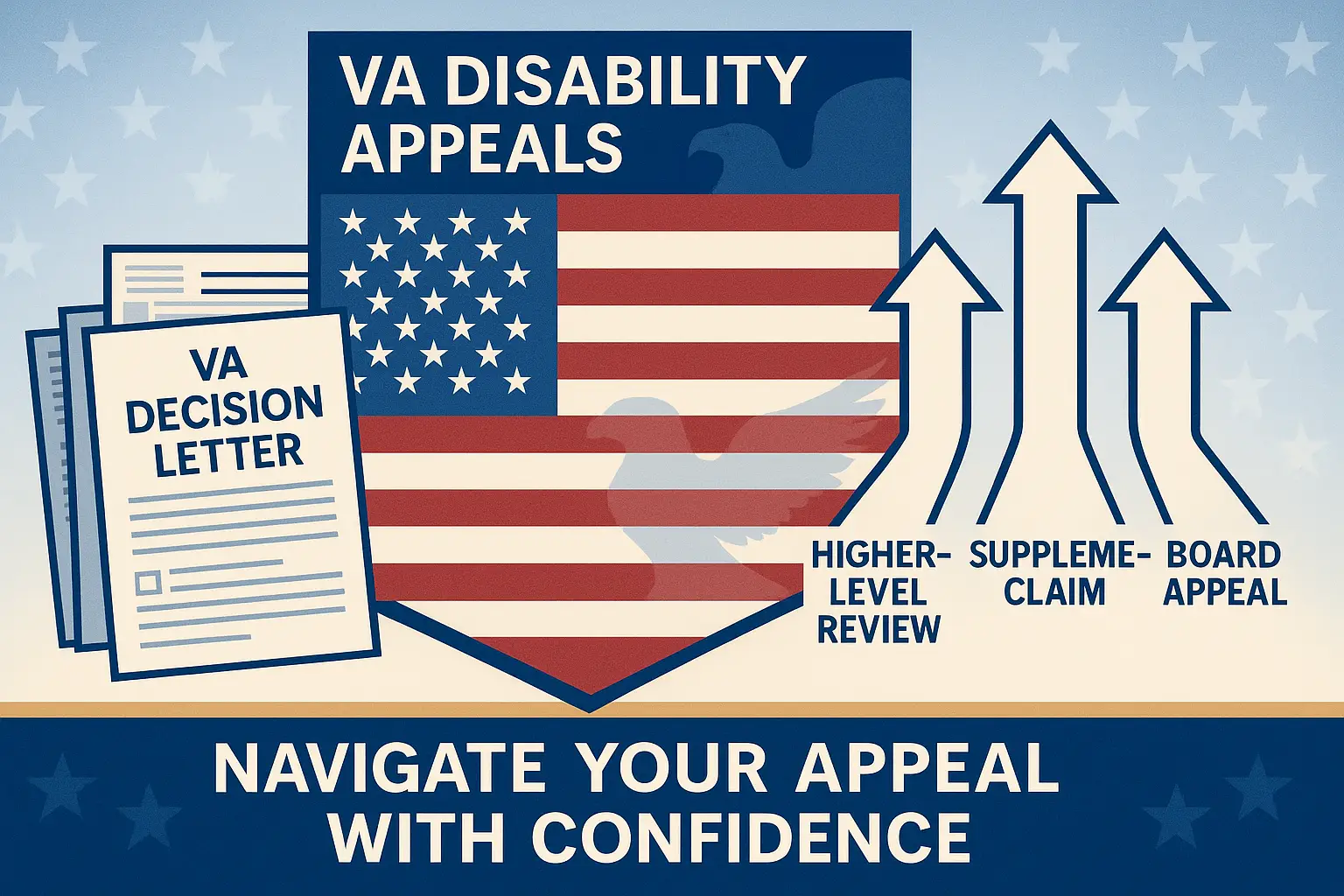
A VA disability appeal is the formal process veterans can use when they disagree with a VA decision on their disability compensation. It provides a pathway to challenge determinations about service-connected conditions, disability ratings, or effective dates that may not accurately reflect the veteran’s situation.
The Veterans Appeals Improvement and Modernization Act of 2017 transformed the appeals process into a more streamlined system. Implemented in 2019, it introduced three decision review options: Higher-Level Review, Supplemental Claim, and review through the Board of Veterans Appeals. These options give veterans more control and flexibility in pursuing a fair outcome.
Appeals exist to protect the rights of veterans who rely on VA benefits. By offering multiple routes to address disagreements, the system ensures that every veteran can present evidence, request further review, or seek a judgment from an independent Veterans Law Judge.
What Is a VA Disability Appeal?
A VA disability appeal is a legal process that allows a veteran to challenge a VA decision about disability compensation. When a claim is denied, the assigned rating is too low, or the effective date is incorrect, the veteran has the right to appeal. This ensures that mistakes or oversights in the original review can be corrected.
Veterans' appeals focus on several common issues:
- Service-connected conditions: A veteran may need to prove that an illness or injury is directly related to military service.
- Disability ratings: Appeals often arise when the rating percentage assigned does not reflect the severity of the medical condition.
- Effective dates: Veterans may dispute the start date to calculate disability compensation.
- Eligibility determinations: Appeals may also involve individual unemployability decisions or dependency benefits.
The appeals process is designed to protect veterans’ rights and provide multiple decision review options. Whether the issue involves insufficient evidence, a disagreement over medical findings, or a misunderstanding of veterans' law, the system offers pathways to request additional reviews. Each appeal ensures that a claim receives careful consideration and that the veteran can submit evidence, request assistance, or take the case to a higher authority.
Eligibility for a VA Disability Appeal
Not every situation qualifies for a VA disability appeal. Veterans and their families must meet specific requirements before filing. These rules ensure that appeals are based on valid disagreements with an official VA decision.
To be eligible for an appeal, the following conditions must be met:
- You must have received a VA decision letter: The appeal begins only after a formal decision regarding a disability compensation claim is issued.
- You must disagree with a VA decision: There needs to be at least one part of the decision—such as service connection, disability rating, or effective date—that you believe is incorrect.
- You must file within the one-year deadline: Appeals must be submitted within one year of the date on the decision letter. Missing this deadline can result in losing the right to appeal.
- You must have proper claimant status: Appeals may be filed by the veteran, an authorized representative, a surviving spouse, or another eligible dependent.
Meeting these criteria is the first step in the appeals process. Once eligibility is established, a veteran can choose from one of three decision review options: Higher-Level Review, Supplemental Claim, or an appeal to the Board of Veterans Appeals.
Types of Veterans Appeals: Three Decision Review Options
Under the Appeals Modernization Act, veterans may choose from three different decision review options when disagreeing with a VA decision. Each option has its own rules, timelines, and best use cases. Understanding these choices helps veterans select the path that best fits their situation.
Higher-Level Review: Requesting a New Decision Review
A Higher-Level Review allows a more experienced VA employee to re-examine the original claim. The reviewer examines the same evidence previously submitted but applies a fresh perspective to determine whether the VA decision was correct.
Key points about Higher-Level Review:
- No new evidence allowed: The review is strictly based on the information already in the claim file.
- Senior reviewer assigned: The review is handled by a VA employee who was not part of the original decision.
- Optional informal conference: Veterans may request a phone conference to explain why they believe the decision should be changed.
- Timeline expectations: The VA’s target for completion is around 125 days, though actual time may vary.
- How to file: Veterans use VA Form 20-0996 to request this review.
This option is best for cases in which a veteran believes the VA made a mistake in interpreting the existing evidence or applying veterans' law.
Supplemental Claim: Submitting New and Relevant Evidence
A Supplemental Claim is the best option when a veteran has additional evidence not considered in the original review. The VA will reassess the claim based on this new and relevant evidence.
Key points about a Supplemental Claim:
- Requirement for new and relevant evidence: This can include medical records, service records, or lay statements that were not part of the original claim.
- Duty to assist: The VA may help gather federal records and medical examinations if necessary.
- Effective date protection: If granted, the appeal may keep the original effective date from the first claim.
- Timeline expectations: The VA’s target for completion is around 125 days, depending on case complexity.
- How to file: Veterans use VA Form 20-0995 for this option.
A Supplemental Claim is most effective when a veteran can provide strong additional evidence linking their condition to military service or showing the severity of their disability.
Board of Veterans Appeals: Hearing Before a Judge
The Board of Veterans Appeals allows a case to be reviewed by a Veterans Law Judge in Washington, D.C. This is the most formal option and is often chosen when the veteran wants an independent legal review.
Key points about the Board of Veterans Appeals:
- Three hearing options are available:
- Direct Review: The judge makes a decision based on existing evidence without additional submissions.
- Evidence Submission: Veterans may provide new evidence for the judge to consider.
- Hearing: Veterans may present their case in person, by videoconference, or by phone.
- Direct Review: The judge makes a decision based on existing evidence without additional submissions.
- Independent legal review: The judge is not connected to the original VA decision.
- Timeline expectations: Direct reviews may take about a year, while hearings and evidence submission options take longer.
- How to file: Veterans use VA Form 10182 for this process.
This option provides the highest level of review and can be critical for veterans who want their appeal heard by a judge with authority in veterans' law.
Step-by-Step Appeals Process for VA Disability
The VA disability appeals process follows a series of steps designed to give veterans clear options for seeking review of a VA decision. Each stage requires careful attention to deadlines, forms, and supporting evidence.
Steps in the Appeals Process
- Review your VA decision letter: This letter explains what the VA decided, the reasons behind the decision, the evidence considered, and your rights to appeal. Reading it carefully is essential before moving forward.
- Choose your appeal option: Veterans may select Higher-Level Review, Supplemental Claim, or an appeal to the Board of Veterans Appeals. The choice depends on whether you have new evidence, want an independent review, or believe the VA misapplied existing information.
- Complete the correct form:
- VA Form 20-0996 for Higher-Level Review
- VA Form 20-0995 for Supplemental Claim
- VA Form 10182 for Board Appeal
- VA Form 20-0996 for Higher-Level Review
- Gather supporting documentation: Collect medical records, service records, lay statements, or other relevant information. If filing a Supplemental Claim or Board Appeal, you may need to provide new and relevant evidence.
- Submit your appeal: You may file your appeal online at VA.gov, mail your form to the VA, deliver it in person at a regional office, or submit it through an accredited representative.
- Track your status: Veterans can check the progress of their appeal by logging into VA.gov or calling the VA hotline. Regularly monitoring updates ensures you stay informed about timelines and requests for additional information.
This process gives every veteran the right to continue pursuing benefits and ensures that claims receive the review they deserve.
Documentation and Evidence Requirements in VA Appeals
Every VA disability appeal requires certain forms and supporting materials. The correct documentation helps prevent delays and ensures that the VA has enough information to complete the decision review. The requirements vary depending on the appeal option selected.
Required for All Appeals
- VA decision letter: A copy of the decision you are challenging must be included.
- Completed appeal form: Veterans must use the correct form for their chosen appeal option.
- Statement of issues: Clearly identify the parts of the decision you disagree with, such as service connection, rating percentage, or effective date.
- Representation forms, if applicable: Veterans who use an accredited attorney, claims agent, or Veterans Service Organization must submit a power of attorney form.
Higher-Level Review Requirements
- No new evidence allowed: Veterans cannot submit additional evidence.
- Optional informal conference request: A veteran may ask for a phone conference to explain why the decision should be reconsidered.
- Specific error identification: Veterans should highlight errors in the original decision based on existing records.
Supplemental Claim Requirements
- New and relevant evidence: This may include updated medical records, service records not previously considered, or lay statements from family and fellow service members.
- Connection to the claim: Veterans must show how the new information directly supports the disability or service connection being appealed.
- Supporting medical documentation: Private healthcare records or test results are often necessary.
Board of Veterans Appeals Requirements
- Choice of review option: Direct Review, Evidence Submission, or Hearing must be specified.
- New evidence, if applicable: Veterans who select Evidence Submission or Hearing must include any additional records.
- Hearing preference form: Required if the veteran requests to appear before a Veterans Law Judge.
By submitting complete and well-organized evidence, veterans increase their chances of a favorable outcome and reduce the likelihood of delays in the appeals process.
VA Disability Appeal Timelines and Expectations
The time it takes to complete a VA disability appeal depends on the type of decision review chosen and the complexity of the case. While the VA sets target completion times, actual processing often varies based on the evidence submitted, the number of pending cases, and whether a hearing is requested.
Average Timelines by Appeal Type
- Higher-Level Review: The VA aims to complete this review in about 125 days, making it the fastest appeal path since no new evidence is allowed.
- Supplemental Claim: The target timeline is also about 125 days, though cases may take longer if new and relevant evidence requires extra development.
- Board Appeal – Direct Review: Decisions usually take around 365 days, as the Veterans Law Judge reviews only the existing records.
- Board Appeal – Evidence Submission: Processing takes longer than a direct review because the judge must consider additional evidence before making a decision.
- Board Appeal – Hearing: This is the slowest option because scheduling and holding a hearing adds significant time to the process.
Important Considerations
- One-year deadline: Veterans must file their appeal within one year of the original VA decision letter.
- Case complexity: Submitting extensive medical records, requesting a hearing, or providing additional evidence can lengthen the process.
- Status tracking: Veterans can check their appeal status online at VA.gov or by calling the VA for updates.
Understanding these timelines helps veterans plan, manage expectations, and avoid missed deadlines during appeals.
Representation and VA Benefits Support Options
Veterans are not required to handle the appeals process alone. Representation can provide necessary guidance, ensure paperwork is completed correctly, and help gather evidence to strengthen a claim. The VA recognizes several types of accredited representatives who may assist veterans during a disability appeal.
Types of Representation
- Veterans Service Organizations (VSOs): Groups such as the American Legion, Veterans of Foreign Wars (VFW), and Disabled American Veterans (DAV) provide free representation. These organizations have experienced staff who understand the VA benefits system and can help prepare and submit appeals.
- Accredited attorneys: Lawyers accredited by the VA can represent veterans in appeals. They may charge fees only after an initial VA decision has been issued. Attorneys often provide in-depth knowledge of veterans' law and can represent clients before the Board of Veterans Appeals.
- Accredited claims agents: Non-attorney representatives with VA accreditation may assist with appeals. They are trained in the VA claims and decision review process and may offer specialized guidance.
How to Appoint a Representative
- VA Form 21-22: This is used to appoint a Veterans Service Organization as your representative.
- VA Form 21-22a: This is used to appoint an accredited attorney or claims agent.
Representation is not required, but many veterans find that experienced advocates help them navigate the appeals process more effectively. Support from these representatives can reduce stress and improve the chances of receiving the benefits a veteran deserves.
Common Issues in VA Disability Appeals and Tips for Success
Many VA disability appeals are delayed or denied because of common mistakes or missing information. Understanding these challenges and taking proactive steps can help veterans avoid setbacks and improve their chances of success.
Common Issues in VA Appeals
- Insufficient medical evidence: Claims may be denied if there is inadequate medical documentation to prove the condition is service-connected.
- Missed deadlines: Failing to submit an appeal within the one-year window after a VA decision letter results in lost appeal rights.
- Incomplete documentation: Missing forms, outdated records, or lacking supporting information can slow down the process.
- Failure to attend medical exams: Skipping a required VA medical appointment often leads to unfavorable decisions.
- Submitting duplicate evidence: Repeatedly submitting the same records without new and relevant evidence does not strengthen a claim.
Tips for a Successful VA Disability Appeal
- Act promptly: File your appeal as soon as possible rather than waiting until the deadline approaches.
- Be specific: Clearly state what part of the VA decision you disagree with, such as the rating percentage or effective date.
- Organize your evidence: Arrange medical and service records in a logical order to make it easier for reviewers to understand your case.
- Seek assistance: Consider working with a VSO, attorney, or accredited claims agent to guide you through the appeals process.
- Stay informed: Track the status of your appeal online or by phone and respond quickly to any VA requests for information.
- Keep records: Maintain copies of every form, letter, and piece of evidence submitted to the VA.
Veterans can make the appeals process smoother and improve the likelihood of a favorable outcome by anticipating common problems and following best practices.
Resources and Contact Information for Veterans Appeals
Veterans have access to several official resources to get help, submit forms, or check the status of an appeal. Using these channels ensures that information is accurate and up-to-date.
VA Contact Information
- VA Benefits Hotline: Veterans can call 1-800-827-1000 for disability compensation and appeal status.
- Hotline Hours: The hotline is available Monday through Friday, from 8:00 a.m. to 9:00 p.m. Eastern Time.
- Board of Veterans Appeals Address: Veterans can send correspondence to the Board of Veterans’ Appeals, P.O. Box 27063, Washington, D.C. 20038.
- Board of Veterans Appeals Phone: Veterans can call 1-800-923-8387 for questions about Board appeals.
Online Resources
- VA.gov Appeals Section: Veterans can visit VA.gov to access appeals forms, filing instructions, and status updates.
- eBenefits: Veterans can use the eBenefits portal to manage disability compensation claims and track appeals online.
- VA Mobile App: Veterans can download the VA mobile app to check appeal status and access VA benefits information on mobile devices.
Key Forms
- VA Form 20-0995: This form is required to file a Supplemental Claim when submitting new and relevant evidence.
- VA Form 20-0996: Veterans complete this form to request a Higher-Level Review of a previous VA decision.
- VA Form 10182: This form is used to request a Board of Veterans Appeals review, including direct review, evidence submission, or a hearing.
- VA Form 21-22: This form authorizes a Veterans Service Organization to act as the veteran’s representative.
- VA Form 21-22a: This form designates an accredited attorney or claims agent to provide representation in the appeals process.


