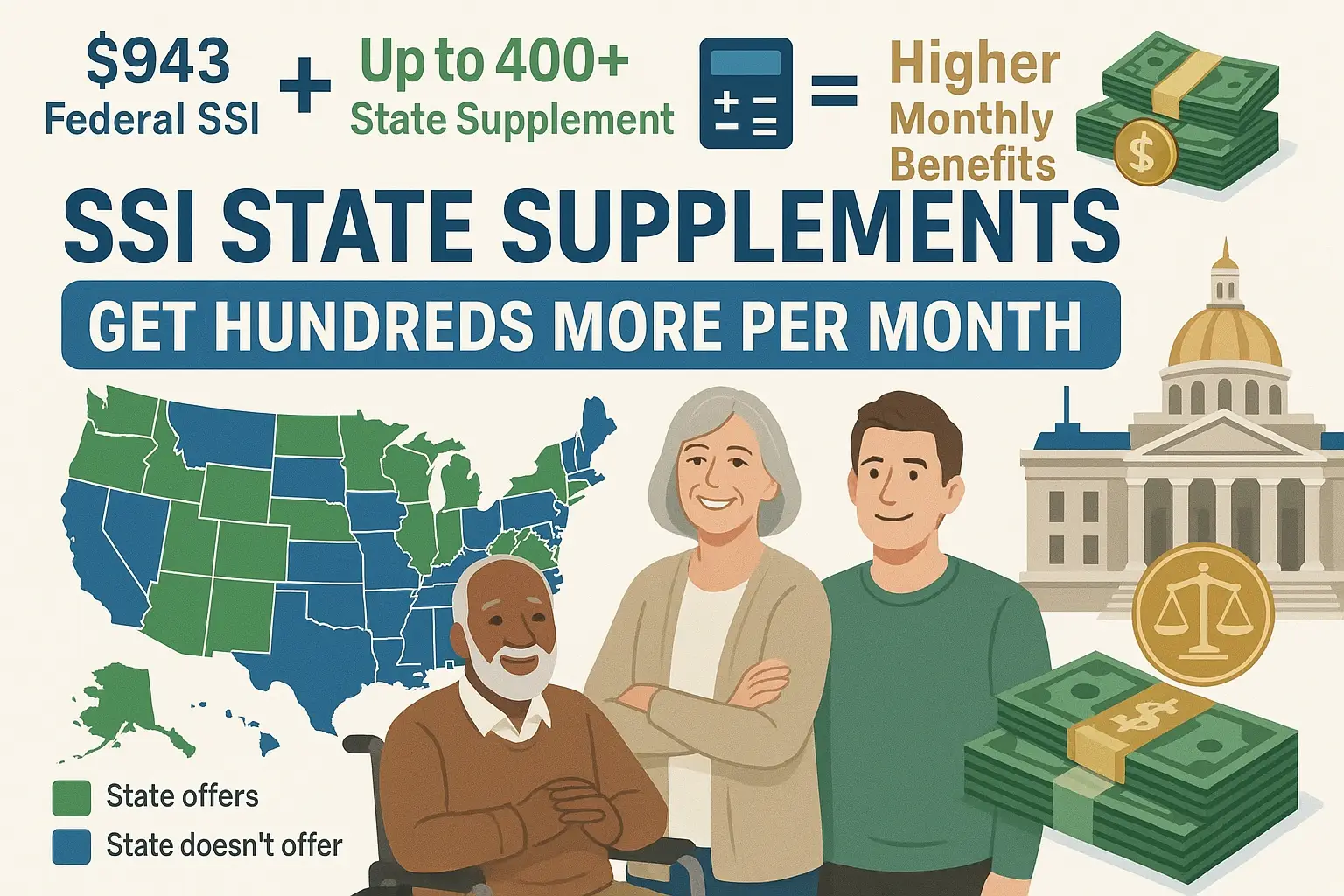
In 2024, the average federal Supplemental Security Income (SSI) payment for individuals is $943 per month. Yet, many people receive far less than they need to cover rent, food, and doctor bills. Fortunately, most states offer SSI state supplements—extra monthly payments that boost your federal benefit. Some states provide over $400 additional support, meaning eligible SSI recipients could access hundreds more in monthly income.
These supplemental payments help people with limited income and resources keep up with rising health costs, prescription drugs, and other basic needs. Administered by the Social Security Administration or state agencies, these programs pay monthly benefits to ensure that seniors 65 or older, children with disabilities, and other eligible individuals can live with greater stability. Missing this extra money could mean struggling to cover essentials or relying on credit for medical expenses.
Acting quickly matters. If you delay applying or provide incomplete documentation, you risk painful processing delays or even losing months of benefits you could have received. You can maximize your payments and protect your financial well-being by understanding the SSI program, checking your eligibility requirements, and working with your local Social Security office or state agency. The sooner you confirm eligibility, the sooner you can receive SSI supplements and reduce the stress of unpaid bills and other health costs.
What Are SSI State Supplements?
SSI state supplements—sometimes called State Supplemental Payments (SSP)—are extra monthly benefits paid by states to people who already receive Supplemental Security Income (SSI). These programs are separate from federal SSI but work alongside it to increase your monthly income. Unlike federal SSI, the U.S. Treasury funds state resources to finance supplements. Their purpose is simple: help SSI recipients meet essential needs such as rent, utilities, and food, especially in areas with higher living costs. Some states even provide higher payments for people in assisted living facilities or who face other health costs.
The Social Security Administration (SSA) administers these supplements in many states, ensuring they are paid with federal SSI benefits on the same schedule. Other states choose to run their own SSP program through local social services agencies, which may require a separate application process. Understanding these supplemental payments is crucial. They can mean hundreds of dollars in extra monthly benefits, helping those with limited income cover doctor bills, prescription drugs, and daily expenses without falling behind. Failing to claim them could mean leaving money on the table every single month.
Why SSI State Supplements Matter
SSI state supplements can make the difference between financial stability and hardship for individuals with limited income. These programs significantly boost federal SSI benefits, helping cover essential expenses.
Here’s why supplemental payments are so important:
- Coverage for essential needs: Extra funds can help pay rent, utilities, food, and health-related expenses that federal SSI alone might not cover.
- Better protection for your health: Supplements can offset the cost of prescription drugs, doctor visits, and medical care, preventing bills from piling up.
- Relief from financial stress: Higher monthly benefits give you more breathing room to focus on your health, family, and daily responsibilities instead of unpaid bills.
- Fewer missed opportunities: Applying on time and submitting complete documentation ensures you don’t lose out on months of benefits.
- Support for independence: Consistent cash benefits allow recipients to remain active in their communities and maintain a better quality of life.
Acting quickly ensures you receive SSI state supplements as soon as possible and avoid losing money you may be entitled to.
Eligibility Requirements for SSI State Supplements
Before receiving SSI state supplements, you must qualify for federal Supplemental Security Income (SSI). Eligibility is based on income, resources, age, disability status, and living situation. Understanding these rules ensures you don’t miss out on monthly benefits to which you may be entitled.
Federal Eligibility Criteria
To qualify for the federal SSI program, you must meet one of the following:
- Age 65 or older: Seniors with limited income and resources may qualify for SSI and receive additional state support.
- Disabled or blind: Adults or children with qualifying disabilities, as defined by the Social Security Administration, may be eligible even if younger than 65.
- Citizenship or legal status: You must be a U.S. citizen, a lawfully admitted permanent resident, or a certain armed forces member and their families.
- Work and tax history: Sometimes, a family member’s prior work or paid Social Security taxes may help determine eligibility.
State-Specific Requirements
States may impose additional criteria:
- Residency: You must maintain a permanent residence in the state providing the supplement and intend to stay there.
- Living arrangements: Payments can vary depending on the living situation—independent housing, shared housing, community care facilities, or public institutions.
- Other factors: Some states offer higher supplements to people with certain medical conditions or those who pay high health costs.
Income and Resource Limits
For 2024, federal SSI limits are:
- Resources: $2,000 for individuals, $3,000 for couples.
- Income includes wages, pensions, and other income sources. Some states may allow slightly higher limits for the SSP program or disregard certain income when calculating payments.
How SSI State Supplements Work
SSI state supplements are designed to add to your federal SSI payment, giving you a higher total monthly income. Once you are approved for federal SSI, the state supplement is either added automatically (in SSA-administered states) or paid separately if your state manages its own program.
The supplemental payments vary widely and are influenced by several factors, including where you live, living arrangements, marital status, and other income sources. These payments are intended to help cover health costs, prescription drugs, and basic living expenses that federal SSI alone may not fully meet.
Below is an example of how federal and state benefits combine to boost your total monthly benefits:
Understanding how these amounts work together is key to maximizing your payments and ensuring you receive the monthly money you are entitled to.
States That Offer or Do Not Offer Supplements
Where you live significantly affects whether you can receive SSI state supplements. Most states provide some form of additional cash benefits, but a few do not. Knowing which category your state falls into can help you plan your monthly benefits and avoid surprises.
States Without Supplements
The following states and territories do not provide any supplemental payments to SSI recipients:
- Arizona
- Arkansas
- Mississippi
- North Dakota
- Tennessee
- West Virginia
- Northern Mariana Islands
If you live in one of these areas, your total monthly income will be limited to the federal SSI amount unless you qualify for other programs like Medicaid or SNAP.
SSA-Administered vs. State-Administered Programs
How to Apply for SSI State Supplements
Applying for SSI state supplements starts with qualifying for federal Supplemental Security Income (SSI). Once approved, your eligibility for supplemental payments is either automatically determined (in SSA-administered states) or handled separately by your state.
Step-by-Step Process
- Apply for Federal SSI: Submit your application through the Social Security Administration online at SSA.gov, by phone, or at your local Social Security office. Provide proof of age, citizenship, and medical condition.
- Confirm State Requirements: If you live in a state that runs its own program, check whether a separate application is needed—contact state social services or the department handling disability programs.
- Prepare Documentation: Gather proof of permanent residence, income and resources, and living arrangements. Include medical records if applying based on disability.
- Follow Up Promptly: Track your application status and respond to requests for additional information to avoid delays.
Some states also provide supplements for children with disabilities, people staying in community care facilities, or those with high medical costs. Applying early ensures you receive your monthly benefits as soon as possible and reduces the risk of lost payments.
Payment Timing and Factors Affecting Amounts
Several important factors affect the timing and amount of your SSI state supplements. Understanding these will help you plan your monthly income and avoid surprises.
Payment Schedule
- SSA-Administered Supplements: Paid on the same day as your federal SSI payment, usually on the first of the month.
- State-Administered Programs: May follow a different schedule, and payments can arrive separately from federal SSI.
Factors That Influence Payment Amounts
- Living arrangements: The amount you receive can vary depending on whether you live independently, in shared housing, or in a community care facility.
- Hospital stays or public institution care: Payments for months spent in medical facilities may be reduced.
- Spouse or family income: Other income sources can lower your supplement amount.
- Exceptional circumstances: Certain medical costs or state policies may increase your supplement.
Tracking these factors ensures you get the proper monthly payment and avoid unexpected reductions.
Interaction with Other Benefits
Receiving SSI state supplements can also affect—or work together with—other benefit programs. Understanding these interactions can help protect your monthly benefits and avoid losing critical coverage.
- Medicaid and Medical Assistance: Most SSI recipients automatically qualify for Medicaid or state medical assistance programs. State supplements typically do not affect your Medicaid eligibility, allowing you to keep access to doctor visits, hospital care, and prescription drugs.
- SNAP and Food Benefits: SSI recipients are often automatically eligible for food assistance through SNAP. However, when calculating benefit amounts, your state supplement counts as income, which may slightly reduce your monthly food benefits.
- Housing and Other Programs: State supplements can affect income-based programs such as housing assistance or energy aid. Always report changes in other income or supplements to avoid overpayments and interruptions to your benefits.
SSI state supplements can add hundreds of dollars to your monthly benefits, giving you the financial security to cover rent, food, and doctor bills without extra stress. Most states offer these supplemental payments, but eligibility rules and amounts vary.
Acting quickly matters—delaying your application or missing documentation could mean losing months of expenses you may be entitled to. Take control of your financial stability today by confirming your eligibility for SSI supplements and confirming your state’s requirements. The sooner you apply, the sooner you can receive SSI and protect your monthly income.