Filing for Supplemental Security Income (SSI) can feel overwhelming, especially if you depend on those monthly cash benefits to pay for food, rent, and other essentials. The process can be confusing, and mistakes can delay payments you need or even lead to denials. Knowing how to apply for SSI correctly can save you stress, time, and money.
SSI is a federal income support program that helps eligible individuals who are aged, blind, or disabled and have limited income and resources. Unlike Social Security retirement or Social Security Disability Insurance (SSDI), the SSI program is funded by general tax dollars, not Social Security taxes. The Social Security Administration (SSA) manages this program and sets the rules determining who qualifies, how much you receive, and when you start getting benefits.
This guide will walk you through the entire application process step by step. You’ll learn what documents to gather, how to apply online or in person, and how to avoid common mistakes that could hold up your first payment. Whether applying for yourself or helping a spouse or child, taking action early is key. Missing deadlines or submitting incomplete forms could mean waiting months for money you’re entitled to receive.
Understanding Supplemental Security Income (SSI)
Supplemental Security Income (SSI) is a federal program that provides monthly money to help pay for basic needs like food, clothing, and shelter. It is specifically designed for people who are elderly, blind, or living with disabilities and who have limited income and resources.
SSI is not the same as Social Security Disability Insurance (SSDI), which is based on work history and FICA contributions. Many people are eligible for both and can receive concurrent benefits. Understanding SSI and SSDI can help you choose the right programs.
Table 1: SSI vs SSDI Comparison
SSI Eligibility Requirements
Before starting the application process, you must confirm your eligibility for SSI. The Social Security Administration (SSA) has strict rules for who can receive these cash benefits. Meeting the requirements will help avoid delays and reduce the chance of being found ineligible later.
Age, Disability, and Blindness Requirements
You may qualify for SSI if you are:
- Aged 65 or older
- Blind (20/200 vision or less in your better eye, or a minimal visual field)
- Living with a disability that prevents you from working and is expected to last at least 12 months or result in death
Children may also be eligible if they have severe functional limitations and meet the exact duration requirements.
Income and Resource Limits
You must have limited income and resources to receive SSI.
- Resource limits: $2,000 for an individual, $3,000 for a couple
- Income limits: Money from jobs, other programs, or spouse support counts toward the limit. SSA subtracts specific exclusions before calculating eligibility.
Citizenship and Residency Rules
Applicants must be U.S. citizens, residents, or lawfully admitted noncitizens with permanent residence status. You must live in one of the 50 states, DC, or the Northern Mariana Islands and not be absent for 30+ consecutive days.
Step-by-Step SSI Application Process
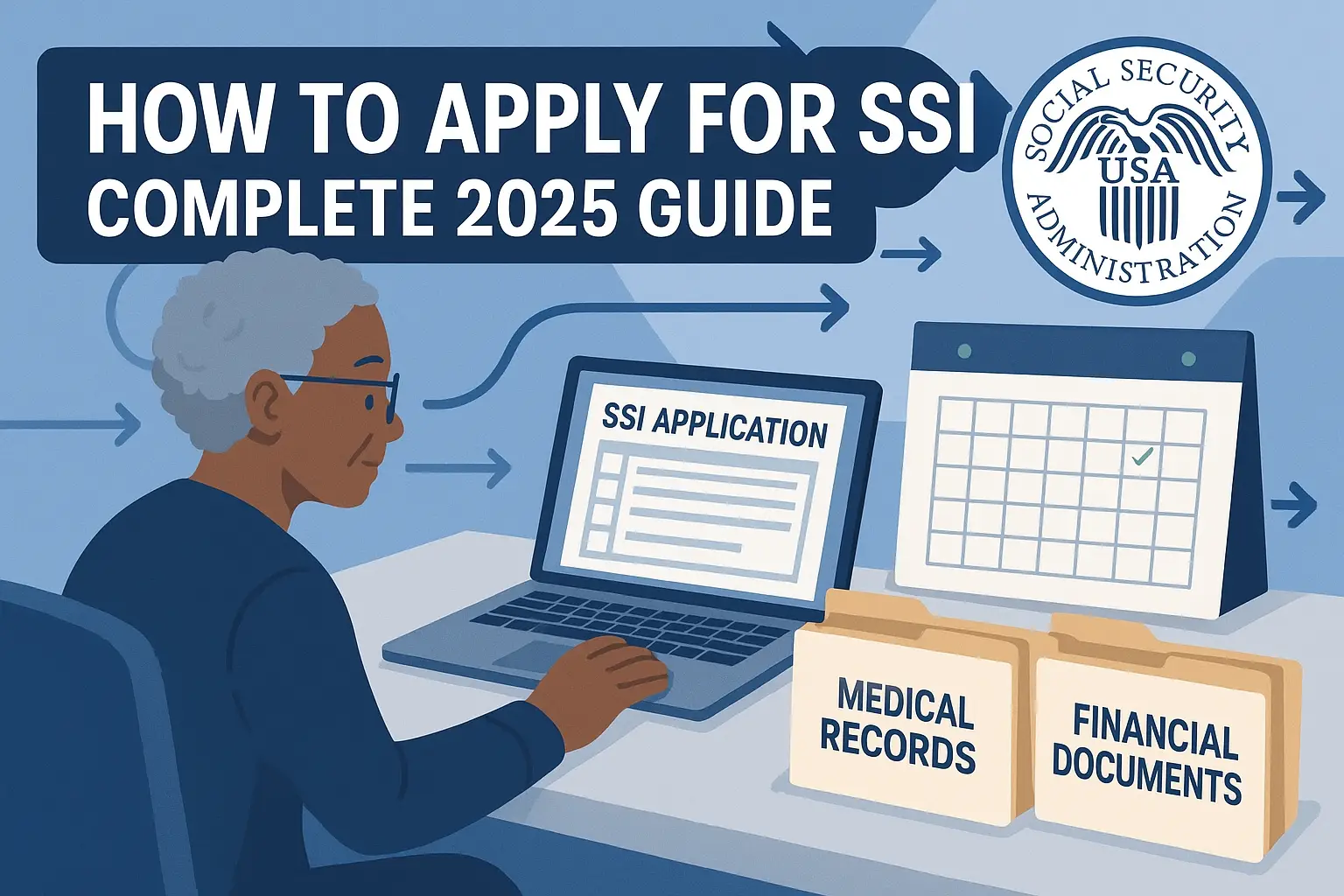
Once you’ve confirmed you’re eligible, it’s time to start the application process. These steps will help you avoid costly mistakes, reduce processing time, and begin your payment as soon as possible.
Step 1: Prepare Your Personal Information
Gather essential details, including your Social Security number, proof of age, and citizenship or immigration status. Having these ready ensures a smoother process.
Step 2: Collect Financial Documents
Provide bank statements, pay stubs, and any proof of unearned income (pensions, other programs, or support from a spouse). SSA uses this information to check your income and resources.
Step 3: Gather Medical Records
If you are disabled or blind, list your doctors, hospitals, treatment dates, and prescriptions. These records help SSA determine if you meet the medical definition of disability.
Step 4: Choose How to Apply
You have several options to file your application:
- Apply Online: Visit SSA.gov to complete your application. This is the fastest and most accurate method.
- Apply by Phone: Call 1-800-772-1213 to start your claim.
- Visit Your Local Social Security Office: Make an appointment to apply in person if you prefer direct help.
Step 5: Submit and Keep Copies
Once you complete the forms, submit them to SSA and keep a copy for your records. This helps track what you sent in case of any changes or requests.
Step 6: Check Your Application Status
You can check the status of your claim online or by phone. To avoid delays, respond quickly to SSA requests.
Tip: File as soon as possible. SSA cannot pay benefits for months before your filing date, so early action means earlier cash benefits.
Required Documents Checklist
Having the correct paperwork ready will speed up your application and prevent unnecessary delays. The Social Security Administration will tell you precisely what you need, but here’s a list to help you prepare.
Identity and Citizenship Documents
- Social Security card or number assignment letter
- Birth certificate, passport, or naturalization certificate
- Proof of permanent residence or immigration status if you are a qualified noncitizen
Financial Records
- Pay stubs, tax returns, and benefit award letters
- Bank statements showing money on deposit
- Documentation of other resources, such as life insurance, stocks, or vehicles
Medical Evidence
- Doctor’s names, addresses, and phone numbers
- Dates of visits, hospital stays, and prescriptions
- Any recent test results or medical reports used to support your disability claim.m
Living Arrangement Proof
- Lease, deed, or property tax bill for your home
- Names and members of your household
- Average monthly living costs such as rent, utilities, and food
Submitting originals or certified copies helps SSA quickly determine your eligibility. Keep copies of everything for your own records.
Common Mistakes That Delay SSI Benefits
Even a small error on your application can result in delays, overpayments, or being denied entirely. Avoiding these pitfalls can save you months of waiting for your first payments.
- Incomplete or Missing Forms: Leaving sections blank or forgetting to sign can cause SSA to reject your claim. Double-check every page before you file.
- Incorrect Income Reporting: Failing to include specific income sources or household support can make you appear ineligible, which can stop or reduce your benefits.
- Late Filing: Waiting too long to apply means losing months of cash benefits you could have received.
- Failure to Respond Quickly: If SSA asks for more documents and you delay, your claim can be paused.
Remember, SSA offers free help to complete your forms and answer questions. Avoiding these easily preventable mistakes keeps costs down and gets you approved faster.
What to Expect After You Apply
After you submit your application, SSA will review your information, check your income and resources, and verify medical records if you are applying based on disability. This process may include follow-up calls or requests for more documents, so stay ready to respond quickly. The time it takes to receive a decision depends on how you applied and whether your documents were complete. Most applicants hear back within a few months, but choosing electronic filing can save valuable time.
Table 2: Average SSI Processing Times
Appealing a Denial
If your SSI application is denied, you still have options. The Social Security Administration has a structured appeals process that allows you to have your case reviewed at several levels. Acting quickly is critical, as you generally have 60 days from the date on your notice to file your appeal.
Four Levels of Appeal
- Reconsideration: SSA re-examines your claim, looking at all evidence, including any new information you submit.
- Hearing: If denied again, you can request a hearing before an Administrative Law Judge in person or by phone/video.
- Appeals Council: If you disagree with the judge’s decision, you may request review by the Appeals Council.
- Federal Court: The final step is filing a lawsuit in U.S. District Court.
Appeals must be filed in writing or online. Meeting all deadlines ensures your case is handled promptly and based on all available evidence.
Additional Programs and Support
Getting approved for SSI can open the door to other programs that provide valuable assistance. Most recipients automatically qualify for Medicaid, which covers doctor visits, prescriptions, and hospital care. You may also become eligible for SNAP (food assistance) and specific state public institution programs that help with housing or utilities. If you need more support, contact your local Social Security office or community nonprofits to find additional services. Taking advantage of these programs can help you maintain your home, reduce costs in the long term, and create a more stable financial future for you and your family.