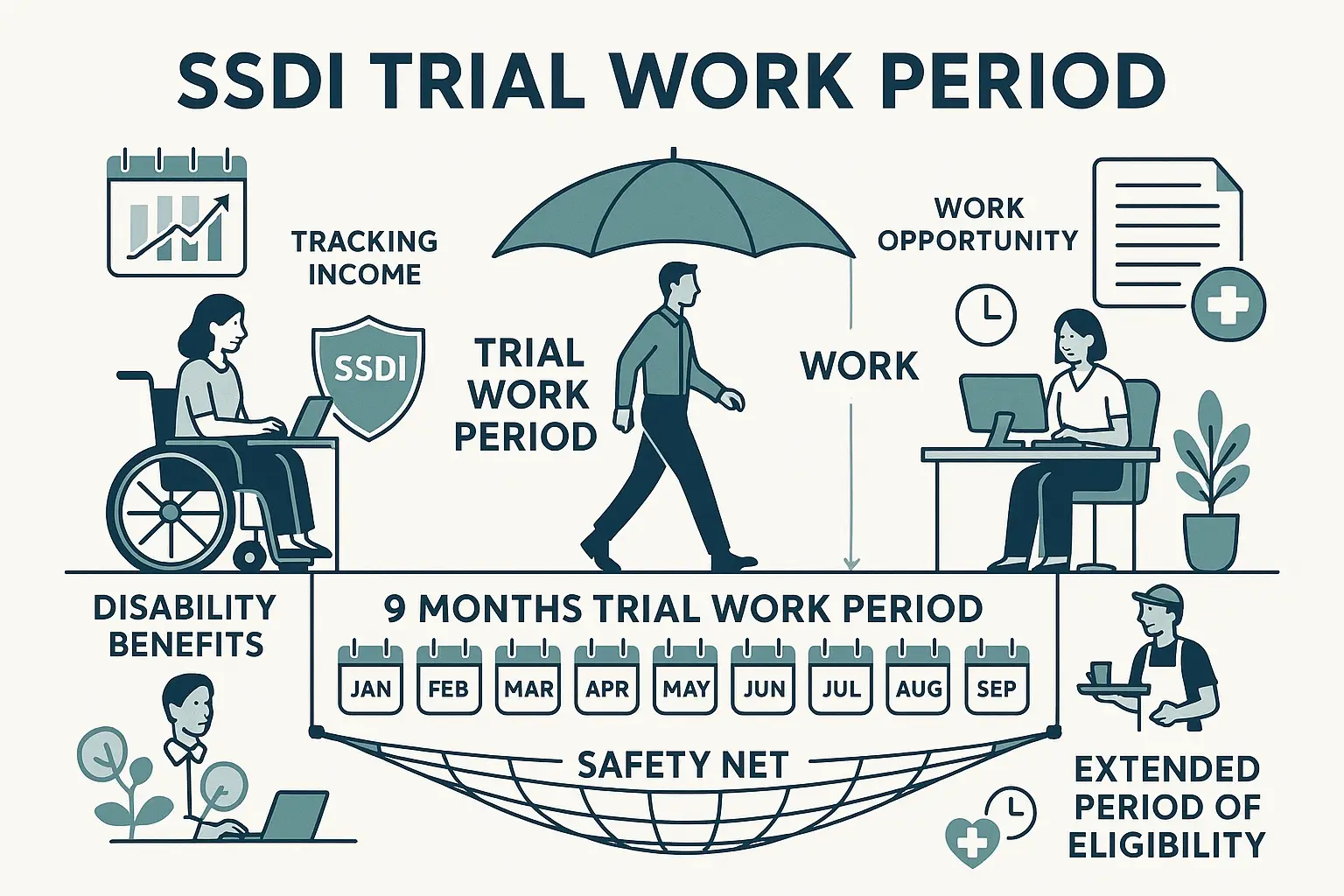
The SSDI Trial Work Period provides people with disabilities a structured opportunity to test employment without losing vital benefits. It offers nine months of work attempts where beneficiaries can still receive full Social Security Disability Insurance. This program reduces financial risk and creates flexibility for those exploring career possibilities. Allowing consistent income builds confidence and stability while ensuring benefits remain accessible.
During the Trial Work Period, Social Security protects access to disability benefits even as income levels temporarily rise. Beneficiaries keep receiving their monthly payments regardless of earnings, as long as they follow reporting requirements. This safety net encourages individuals to seek meaningful employment opportunities without fear of sudden benefit termination. It ultimately provides reassurance that work attempts won’t erase years of hard-earned disability protections.
The program helps people explore part-time or full-time jobs, ensuring they evaluate their capacity for sustainable employment. However, incorrectly tracking income or mismanaging the reporting process can create serious overpayments. Such mistakes may also disrupt Medicaid or Medicare access, creating stress and unexpected financial hardship. Careful planning and strict compliance with program rules safeguard benefits while maximizing employment opportunities.
Understanding the Trial Work Period for Social Security Disability Benefits
The SSDI trial work period allows SSDI beneficiaries to test employment while keeping full SSDI benefits active. During nine TWP months, people with disabilities can explore work activity without losing their SSDI cash benefit. This program from the Social Security Administration provides a safety net while individuals assess their ability to work. It supports a smoother transition back into the workforce while maintaining crucial social security disability insurance.
The trial work period is vital for individuals managing a disabling impairment while pursuing part-time or full-time employment. Beneficiaries can earn above substantial gainful activity levels and still receive Social Security disability benefits. However, monthly earnings must be reported accurately to the Social Security Administration (SSA) to protect eligibility. Failing to comply can disrupt benefits, jeopardize healthcare coverage, or create financial overpayments.
Beneficiaries must report gross earnings, self-employment income, and job details during trial work months. This ensures the Social Security Administration accurately tracks eligibility and prevents unnecessary disruptions. After nine months, an extended period of eligibility offers continued support if earnings fall below limits. Careful reporting safeguards disability benefits while encouraging people with disabilities to test employment without losing vital security disability insurance SSDI protections.
Types and Phases of Work Incentive Programs in Social Security Disability
Work incentive programs in Social Security Disability provide structured stages that help people with disabilities test work ability while maintaining essential protections. These phases ensure that SSDI beneficiaries receive continued support, healthcare access, and a safety net even while their income and employment situations change.
- Trial Work Period: The trial work period allows nine trial work months within a rolling 60-month window.
- Eligibility Trigger: It begins when monthly earnings exceed the set threshold or when self-employment hours surpass 80 in a month.
- Benefit Continuation: During this trial period, beneficiaries still receive full SSDI benefits regardless of high income.
- Extended Period of Eligibility: A 36-month extended eligibility period begins after the TWP.
- Income Evaluation: Benefits depend on whether gross earnings stay below or rise above the substantial gainful activity level.
- Protection Provided: This phase safeguards social security disability benefits when income fluctuates monthly.
- Medicare Continuation: Medicare coverage continues for at least 93 months following the end of the TWP.
- Healthcare Security: This continuation ensures people with disabilities maintain necessary medical coverage while exploring employment.
- Work Flexibility: Beneficiaries can attempt full-time work without losing immediate healthcare access.
- Expedited Reinstatement: Expedited reinstatement allows benefits to restart quickly within five years after benefits stop.
- Medical Protection: It supports SSDI beneficiaries who must stop working because of their medical condition returning.
- Program Goal: This process prevents the need for a new application while promptly restoring financial support.
These work incentive phases offer a balanced pathway, allowing individuals to reenter employment while protecting their Social Security disability insurance.
Why the SSDI Trial Work Period Matters for Social Security Disability Benefits
The SSDI trial work period allows SSDI beneficiaries to test employment without losing their full SSDI benefits. This program supports people with disabilities by encouraging work activity while maintaining essential social security disability insurance. It strengthens financial independence by letting beneficiaries earn income while receiving SSDI cash benefit payments. Beneficiaries also gain a safety net that ensures Medicare coverage continues beyond the trial period.
The trial work period includes an extended period of eligibility that protects long-term benefits if earnings fall below limits. It also provides a grace period for individuals to safely transition back into the workforce. However, ignoring TWP rules may result in overpayments and repayment demands from the Social Security Administration. Such mistakes could also permanently cause the loss of social security disability coverage and healthcare support.
Our Simple 4-Step Process for Managing SSDI Benefits
Managing SSDI benefits becomes easier when you follow a structured four-step process. This approach ensures compliance with Social Security Administration rules and protects long-term access to disability benefits.
- Case Assessment: We review your SSDI benefits and employment situation. We clearly outline risks under the social security disability insurance SSDI.
- Eligibility & Needs Analysis: We determine if you qualify for the trial work period or extended eligibility period. We identify protections like impairment-related work expenses that safeguard your monthly earnings.
- Document Preparation & Filing: We prepare and submit accurate reports directly to the Social Security Administration SSA. We protect continued access to disability benefits while you engage in work activity.
- Ongoing Support & Updates: We track your grace period, TWP months, and extended period status. We ensure expedited reinstatement options remain available if your disabling impairment forces you to stop working.
This four-step process gives SSDI beneficiaries a reliable safety net while testing their ability to work without losing essential benefits.