A request for reconsideration is the first formal step in the Social Security appeals process following a denial of disability benefits. It allows applicants to have their claims reviewed by new examiners who are not involved in the initial decision. This process ensures a fair and unbiased review of the applicant’s medical and work information. The goal is to correct any oversight or missing evidence from the original evaluation.
Receiving an initial denial of disability benefits is a common occurrence, and most applicants experience it before their benefits are approved. The Social Security Administration often denies claims due to incomplete documentation or insufficient medical proof. Understanding this pattern helps applicants stay patient and persistent. Reconsideration presents a genuine opportunity to present stronger, updated evidence in support of disability eligibility.
This article guides readers through the complete reconsideration process, from eligibility to accurately filing the necessary forms. It explains timelines, Form SSA-561, and key documents needed for a successful appeal. Readers will learn how to prepare an effective appeals letter and strengthen their case. By following these steps with persistence and attention to detail, applicants improve their chances of winning their first appeal.
Eligibility Requirements for Disability Benefits
Understanding who qualifies for Social Security Disability Insurance (SSDI) and Supplemental Security Income (SSI) is essential before starting a request for reconsideration. The Social Security Administration (SSA) carefully reviews each applicant’s work history, income, and medical qualifications to determine eligibility for disability benefits. This evaluation ensures that only those who meet the established standards for medical and financial need are approved for assistance. Applicants who understand these standards are better prepared to navigate the reconsideration process successfully.
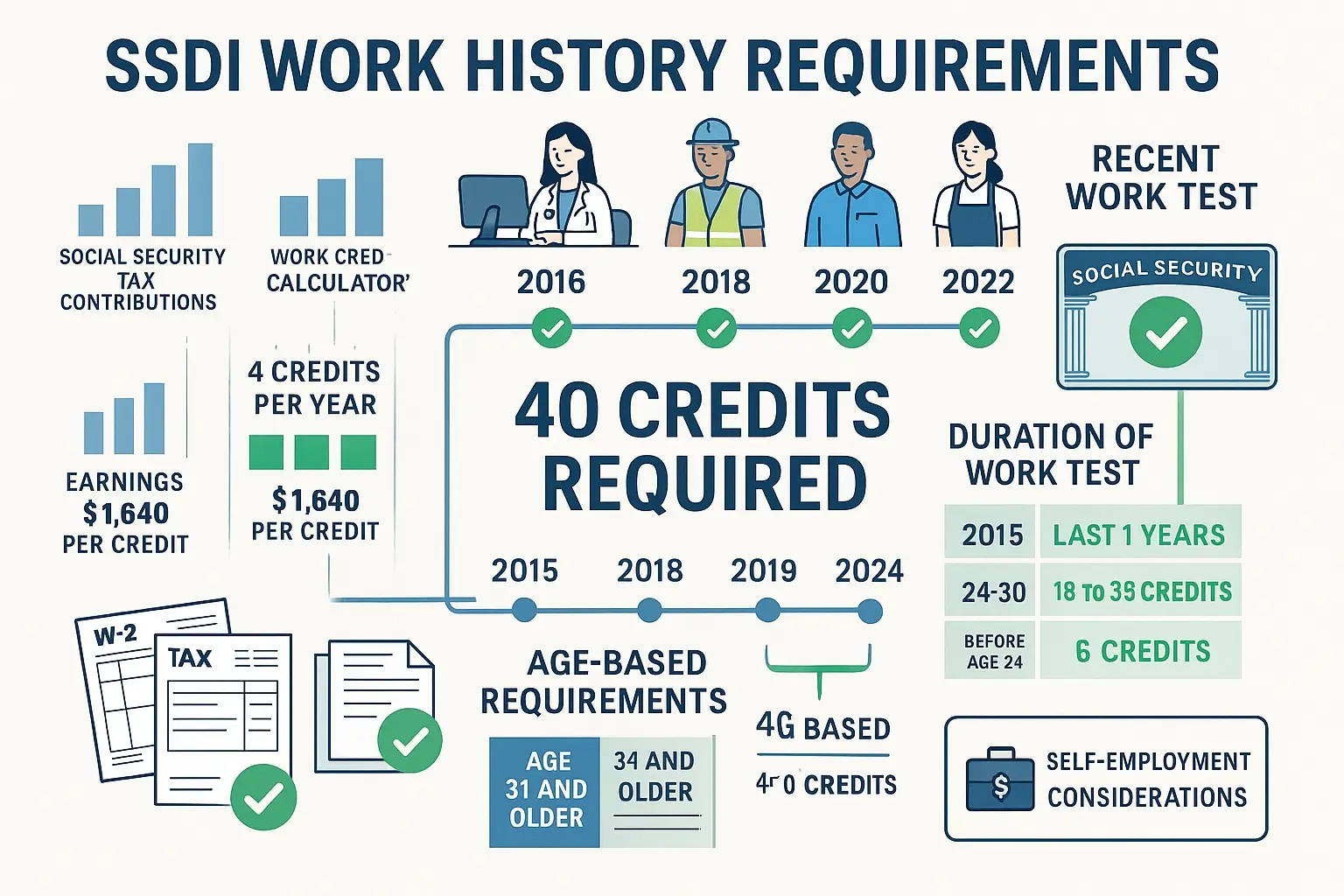
- Work History and Contribution Criteria: The SSA requires a consistent work history showing that the applicant has paid into Social Security Disability Insurance through payroll taxes. To qualify for SSDI benefits, individuals must earn enough work credits by working in positions covered under the Social Security system. During the reconsideration process, these credits are verified to confirm that applicants have a sufficient employment record before proceeding with the SSDI reconsideration appeal. Applicants who became disabled at a younger age may qualify with fewer credits under special SSA rules, making it possible for younger workers to still access disability benefits.
- The 20/40 Rule Explained: The SSA applies the 20/40 rule to determine whether a claimant has worked long enough to qualify for disability benefits. This rule requires that applicants earn at least 20 credits within the 40 quarters—typically 10 years—before the onset of the medical condition. When filing a reconsideration request, this rule helps ensure that the applicant has maintained recent employment in a Social Security-covered work setting. Applicants under the age of 31 may qualify with fewer credits, depending on their age and work history, ensuring fairness across all age groups.
- Substantial Gainful Activity (SGA) Thresholds: The SSA uses significant gainful activity (SGA) thresholds to determine whether a person is performing enough work to be considered employed. In 2025, earning more than $1,620 per month ($2,700 for individuals who are blind) generally disqualifies an applicant from receiving Social Security disability benefits. These thresholds ensure that only individuals unable to sustain meaningful employment due to their disability qualify for SSDI benefits. When preparing an appeals letter or completing Form SSA-561, it is essential to reference the most current SGA limits to avoid processing delays.
- Medically Determinable Disability Requirements: The SSA defines disability as a medically determinable impairment proven through verifiable medical evidence. Acceptable proof includes medical records, test results, and a residual functional capacity assessment that demonstrates how the condition limits one’s ability to work. During disability reconsideration, examiners will review additional medical records and documentation to confirm that the applicant’s medical condition meets SSA’s strict standards. Submitting complete and organized medical documentation during the initial claim and reconsideration stages greatly improves the likelihood of receiving a fully favorable decision.
Meeting these eligibility requirements is crucial to a successful SSDI appeal. Providing accurate medical information, a complete work history, and strong supporting evidence ensures that fewer claims are denied during the reconsideration decision phase. Applicants who understand and prepare for these requirements early significantly improve their chances of approval during their first appeal for disability benefits.
What Is a Request for Reconsideration in the Appeals Process
Understanding how a request for reconsideration works is essential for anyone navigating the Social Security appeals process. This stage serves as the applicant’s first appeal after a denial of Social Security disability benefits, providing them with an opportunity to have their case reviewed again. A request for reconsideration is the formal step to challenge SSA’s decision without having to file a new initial application. It ensures applicants can correct any mistakes or submit missing supporting evidence that may have influenced the original denial letter, keeping their appeal active within the reconsideration process.
Definition and Purpose
A request for reconsideration enables individuals to seek a new review of their case by the Social Security Administration (SSA) after being denied SSDI benefits or Supplemental Security Income (SSI) benefits. It serves as a procedural safeguard, ensuring applicants have the right to contest SSA’s decision when they believe the initial application was improperly evaluated. The process begins when a claimant files Form SSA-561, signaling the start of the first appeal within the broader appeals process. Understanding how to file a request for reconsideration correctly and completely helps protect the applicant’s rights and prevents unnecessary delays.
New Review by Different Examiners
During this stage, the case is assigned to new examiners who were not involved in the initial denial. These examiners independently review the applicant’s medical records, work history, and other medical information to ensure a fair evaluation. The Social Security Administration structures this step to eliminate any bias and maintain transparency in the reconsideration decision. This second look offers applicants a genuine opportunity to strengthen their reconsideration request before proceeding to a disability hearing or an administrative law judge, if necessary.
Adding New Evidence
At this stage, applicants can submit new evidence or additional medical records that were not available during the first review. They may also include an updated appeals letter explaining how their medical condition meets the SSA’s disability criteria. Submitting medical documentation, such as a residual functional capacity assessment or specialist reports, can significantly enhance the claim’s strength. This option ensures that claimants can supplement their files with the most current medical evidence and demonstrate ongoing disability limitations before the SSA reaches a reconsideration decision.
Fairness in the Disability Reconsideration Phase
The disability reconsideration phase promotes fairness and accuracy throughout the appeals process. Independent examiners review both the original claim and additional evidence to ensure that the SSA denies only those cases that genuinely fail to meet eligibility standards. Applicants who actively engage in this process—submitting complete documentation and maintaining clear communication—significantly improve their chances of approval. This stage highlights the SSA’s commitment to offering every applicant a fair and unbiased review before proceeding to further levels, such as an administrative law judge, appeals council, or district court.
Types of Disability Reconsideration
- A medical reconsideration applies when the SSA denies a claim based on medical reasons related to a person’s disability. These cases are reviewed by the state Disability Determination Services (DDS), which reevaluates all medical evidence and any new documentation submitted during the reconsideration process. The reviewers focus on verifying whether the applicant’s medical condition meets SSA’s strict standards for Social Security Disability (SSDI) benefits. Submitting updated medical records or detailed physician statements can make a decisive difference in the reconsideration request.
- A non-medical reconsideration applies to cases involving issues unrelated to the disability determination, such as income, work history, or benefit overpayments. These reviews are handled by SSA staff who focus on administrative and financial eligibility rather than medical qualifications. Applicants must ensure that all forms—especially Form SSA-561—are completed correctly, signed, and submitted within the filing window to avoid complications such as excessive attempts or submission errors. Providing detailed information and timely documentation helps the SSA reach an accurate and efficient reconsideration decision.
Both medical and non-medical reconsiderations fall under the appeals process managed by the Social Security Administration. Each serves as an essential step before advancing to higher levels, such as a disability hearing, a review by an administrative law judge, or a review by an appeals council. Together, they ensure that claimants receive complete due process and a fair chance to have their disability benefits approved before proceeding to further proceedings at the district court level if needed.
The 60-Day Deadline and Good Cause in the Appeals Process
The Social Security Administration (SSA) gives applicants only 60 days to file a request for reconsideration after receiving a denial letter. This strict deadline ensures that appeals move forward efficiently within the appeals process. SSA assumes applicants receive their notice five days after the date on the letter, known as the “five-day mailing” rule. Applicants who miss this filing window risk losing their right to appeal and will need to restart the application process from the beginning.
In certain situations, the SSA may accept a late filing if the applicant demonstrates good cause. Valid reasons include serious illness, hospitalization, death in the family, or an SSA employee giving incorrect instructions. Other acceptable causes include lost mail or unavoidable emergencies that prevented timely submission. Filing on time preserves the applicant’s right to advance their case to an administrative law judge and possibly to the appeals council for further review.
How to File Your Request for Reconsideration (Form SSA 561)
Filing a request for reconsideration is a crucial step following a denial from the Social Security Administration (SSA). The official document used for this process is Form SSA-561, which allows you to formally challenge the SSA’s decision. This form can be submitted either online or on paper, depending on your access and preference. Completing it correctly ensures that your appeal progresses smoothly through the appeals process.
Purpose of Form SSA-561
- The Form SSA-561 serves as the official record of your reconsideration request following a denial letter from the SSA.
- This form initiates the first stage of appeal for applicants seeking to have their claim reviewed by different examiners.
- It is essential for both Social Security Disability Insurance (SSDI) and Supplemental Security Income (SSI) applicants.
- Completing this form accurately preserves your right to appeal and proceed to further review stages if necessary.
Submission Options
- You may file your request for reconsideration using the SSA’s online appeal portal or submit it manually via paper forms.
- Online filing offers speed and convenience, while paper filing is suitable for applicants without digital access.
- Both submission options require you to provide accurate and up-to-date personal, medical, and contact information.
- Timely submission ensures your appeal remains valid within the 60-day deadline.
Online Filing (Recommended)
Filing Through the SSA Portal:
- You can file online through the SSA’s official appeal website at www.ssa.gov/disability/appeal.
- The online portal guides you through the request for reconsideration process step by step, ensuring all sections are complete.
- You can upload supporting evidence, such as medical records or new documentation, directly within the online form.
- The process typically takes 40–60 minutes to complete, depending on the complexity of your case.
Benefits of Filing Online:
- Applicants receive an instant confirmation receipt showing the exact date and time of submission.
- You can track your appeal status at any time through your My Social Security account.
- Online filing reduces the risk of lost mail or incomplete forms, which can delay the disability reconsideration process.
- It also allows for faster communication between applicants, SSA offices, and case examiners.
Why Online Filing Prevents Delays:
- The SSA automatically stores and timestamps all online submissions, protecting applicants from missed deadlines.
- Uploaded medical documentation becomes immediately available to decision reviewers.
- This efficient digital system minimizes administrative errors that could postpone your reconsideration decision.
- Filing online ensures a more transparent and streamlined appeals process.
Paper Filing with Form SSA and Supporting Documents
Completing Required Forms:
- Applicants filing by mail must fill out Form SSA-561 (Request for Reconsideration) as the main appeal document.
- You must also include Form SSA-827 (Authorization to Disclose Information) so the SSA can access your medical records.
- If your case involves medical updates or work changes, include Form SSA-3441 (Disability Report – Appeal).
- Each form provides detailed fields to capture changes in your health or work since your initial application.
Submitting Paper Forms:
- Paper forms can be mailed, faxed, or hand-delivered to your local SSA office.
- You can find your local office using the SSA Office Locator at www.ssa.gov/locator.
- Always keep copies of all documents and note your submission date.
- If possible, request confirmation of receipt to verify your appeal was filed correctly.
Accuracy and Signature Requirements:
- Every form must be signed and dated correctly by the applicant or authorized representative.
- The SSA rejects unsigned or incomplete submissions, which can delay the appeals process.
- Review all sections carefully before mailing to ensure that your medical information, contact details, and claim number are accurate and complete.
- A properly completed and verified packet demonstrates professionalism and helps expedite your reconsideration decision.
Filing Form SSA-561 accurately—whether online or on paper—is the foundation of a successful request for reconsideration. Applicants who meet deadlines, provide thorough documentation, and follow SSA instructions carefully significantly increase their chances of securing a favorable outcome during the disability reconsideration stage.
Strengthening Your Disability Reconsideration Request
When filing a disability reconsideration, you must strengthen your case by presenting more evidence than what was initially submitted. The Social Security Administration (SSA) encourages applicants to gather updated medical evidence that clearly supports their disability claim. Collecting this information ensures that new findings, diagnoses, or treatments are considered during the review. Submitting complete and recent records can help establish a clearer picture of your ongoing medical condition.
You should also obtain statements from your doctors describing your current limitations and functional abilities in daily life and work. Adding non-medical evidence, such as your work history, daily activity reports, or statements from family members, adds context to your claim. Providing this supporting evidence demonstrates how your disability impacts your ability to engage in substantial gainful activity. Strengthening your file with detailed and credible documentation greatly increases your chances of success during your first appeal for social security disability benefits.
What Comes After Reconsideration: Administrative Law Judge, Appeals Council, and District Court
After the reconsideration decision, applicants still have multiple stages to pursue within the Social Security appeals process. These stages offer additional opportunities for claimants to secure disability benefits if the Social Security Administration (SSA) denies their reconsideration request. Each level provides a more comprehensive review of the evidence, beginning with the Administrative Law Judge (ALJ) hearing and progressing to the Appeals Council, and finally to the District Court, if necessary. Applicants who understand each stage can better prepare for the demands and expectations of the appeal.
Administrative Law Judge (ALJ) Hearing
The Administrative Law Judge conducts a formal disability hearing, during which applicants can present evidence, provide testimony, and clarify any inconsistencies in their case. The ALJ independently reviews medical records, work history, and any new supporting evidence submitted after the reconsideration process has been completed. Hearings may be held in person, by phone, or via video conference, depending on convenience and location. After reviewing all testimony and documentation, the hearing decision may be fully favorable, partially favorable, or unfavorable, depending on how well the evidence supports the claim.
Appeals Council Review
If the administrative law judge denies the claim, applicants may request a review by the Appeals Council. The Appeals Council examines whether the ALJ followed proper procedures and made an accurate decision based on the evidence. It may uphold, reverse, or remand the case for another hearing before a different judge. This review ensures fairness and accuracy within the disability benefits appeal process, providing claimants with another opportunity to have their case reconsidered.
District Court Review
When the Appeals Council either denies review or upholds the previous decision, applicants can file a civil lawsuit in District Court. This final appeal stage enables a federal judge to review the case for potential legal or procedural errors that may have occurred in earlier stages. Representation by an experienced disability lawyer at this point is highly recommended, as the process becomes more complex and formal. The court’s ruling is legally binding and represents the final resolution of the applicant’s federal disability benefits appeal.
Persistence is essential throughout the SSDI reconsideration appeal, as many applicants ultimately win approval during later stages. Maintaining detailed medical documentation, organized communication records, and consistent follow-up increases the strength of the claim. Each phase—from reconsideration to Administrative Law Judge to District Court—offers another opportunity to prove eligibility for Social Security Disability benefits. Staying determined, thorough, and proactive often leads to success, even after an initial denial.