Social Security Disability Insurance offers a vital safety net for individuals who cannot continue working because of severe illness or injury. It differs from welfare programs because eligibility depends on work history and payment of Social Security taxes. Workers earn this benefit through years of contributions to the Social Security system. SSDI can provide a consistent monthly income to cover essential living costs when illness interrupts employment.
The Social Security Administration manages SSDI and applies strict rules to determine who qualifies for these benefits. Applicants must provide strong medical evidence proving their condition prevents gainful employment. Detailed work history documentation is also necessary to confirm contributions to the Social Security system. Without accurate information, the SSA may quickly deny or delay approval.
Application mistakes often result in long waits, unnecessary stress, and financial hardship for struggling families. Missing forms, incomplete records, or vague medical reports commonly cause delays in processing. Even small errors can extend the review timeline by months or years. Preparing a careful and complete application gives disabled workers the best chance of timely approval.
Understanding SSDI and Disability Benefits Through the Social Security Administration
Understanding Social Security Disability Insurance (SSDI) requires knowing how the Social Security Administration manages disability benefits and enforces strict program rules.
- Insurance Program, Not Welfare: Social Security Disability Insurance (SSDI) is earned by workers who paid Social Security taxes through employment contributions.
- Protects Disabled Workers: SSDI benefits provide monthly benefits when a person becomes disabled before qualifying for Social Security retirement benefits.
- Strict Eligibility Requirements: The Federal Social Security Administration uses a strict definition of total disability and reviews medical conditions through Disability Determination Services.
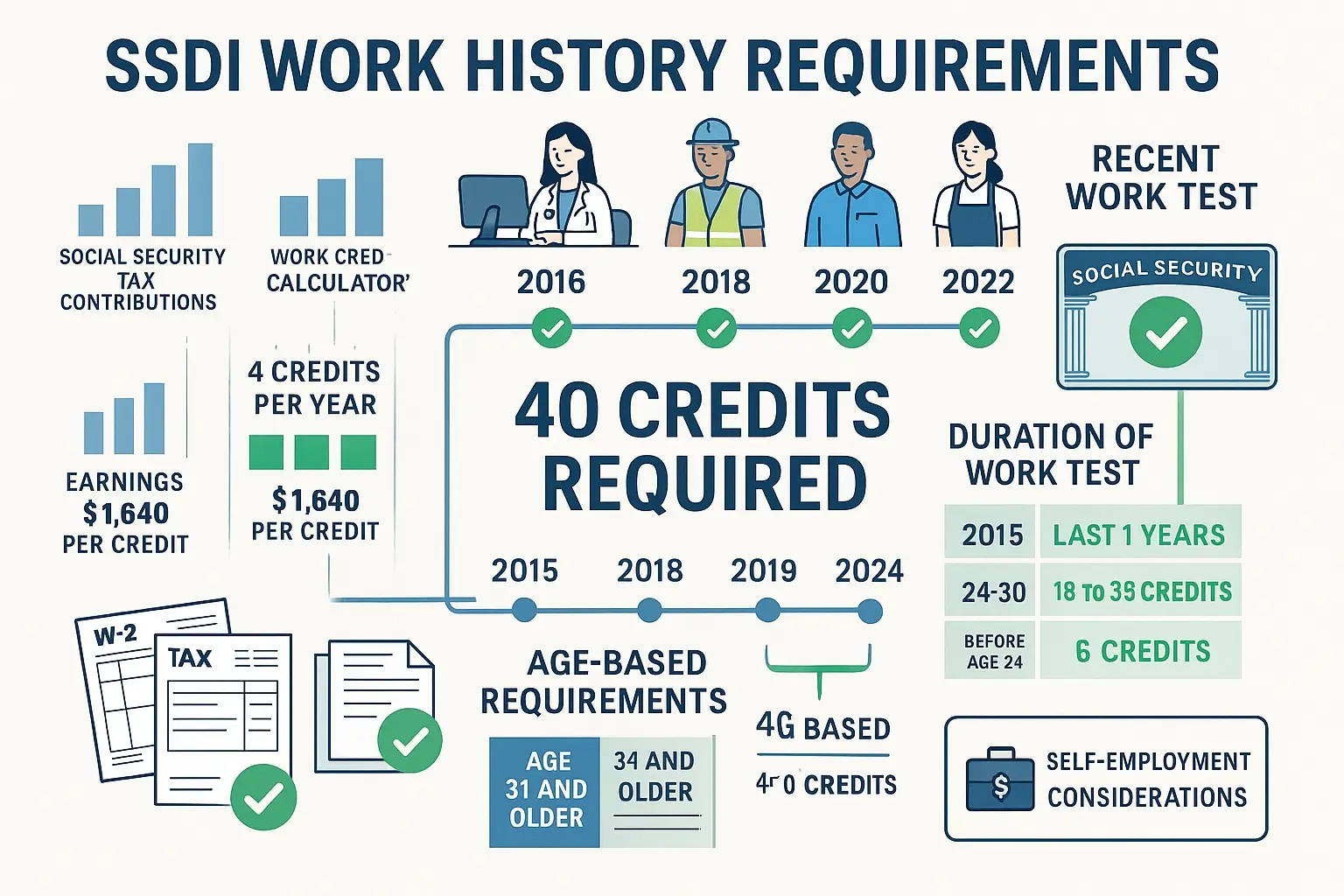
- Work Credits Matter: Eligibility depends on work history, the credits required, and whether the applicant has consistently paid Social Security taxes.
- Supplemental Security Income Option: People with limited income may be eligible for Supplemental Security Income (SSI) and disability benefits.
- Risks of Mistakes: Errors in the application process or online application can delay disability claims and reduce access to other resources.
- Common Scenarios: A worker with a child’s disability, a veteran with PTSD, or a nurse with multiple sclerosis may qualify.
- Support Beyond SSDI: Vocational rehabilitation services, survivors' benefits, and other programs support certain members of disabled families.
- Importance of Accuracy: Contacting a local Social Security office can help complete claims correctly and determine eligibility under program rules.
SSDI supports disabled individuals and their families, ensuring income replacement and access to additional resources when needed most.
Types of SSDI-Related Disability Claims and Short-Term Disability Options
Social Security Disability Insurance (SSDI) offers several claim types, each with unique eligibility requirements and benefits under the Social Security Administration.
- Standard SSDI Benefits: SSDI benefits rely on your work history and paid Social Security taxes, with Medicare eligibility beginning after 24 months.
- Supplemental Security Income (SSI): SSI benefits support disabled individuals with limited income. They are often paired with Medicaid instead of Medicare for healthcare coverage.
- Compassionate Allowances: This category fast-tracks disability claims for severe medical conditions like ALS, aggressive cancers, or rare genetic disorders.
- Disabled Adult Child Benefits: Certain members disabled before age 22 may qualify through a parent’s Social Security record, providing ongoing monthly benefits.
- Disabled Widow or Widower Benefits: Surviving spouses may be eligible for disability benefits based on their deceased partner’s work credits and earnings history.
- Short-Term Disability Options: Short-term disability programs differ from SSDI because they offer temporary coverage through private insurance or state-level programs.
Understanding these claim types helps disabled workers and family members determine eligibility, avoid mistakes, and access necessary benefits.
Why Addressing SSDI Disability Claims with the Federal Social Security Administration Matters
Addressing Social Security Disability (SSDI) claims with the Federal Social Security Administration secures financial support during unexpected medical hardship. It provides monthly benefits to disabled workers who can no longer maintain substantial gainful activity because of severe medical conditions. Approved applicants may also gain Medicare coverage after 24 months of receiving disability benefits. This support protects families from debt while ensuring access to essential healthcare.
Filing disability claims early with the Federal Social Security Administration increases the chance of timely approval and steady monthly benefits. Early action reduces the risk of financial instability caused by lengthy waiting periods. SSDI benefits automatically transition to Social Security retirement benefits once retirement age arrives. Acting quickly ensures stability, security, and a consistent income throughout your disability.
Our Simple 4-Step SSDI Application Process
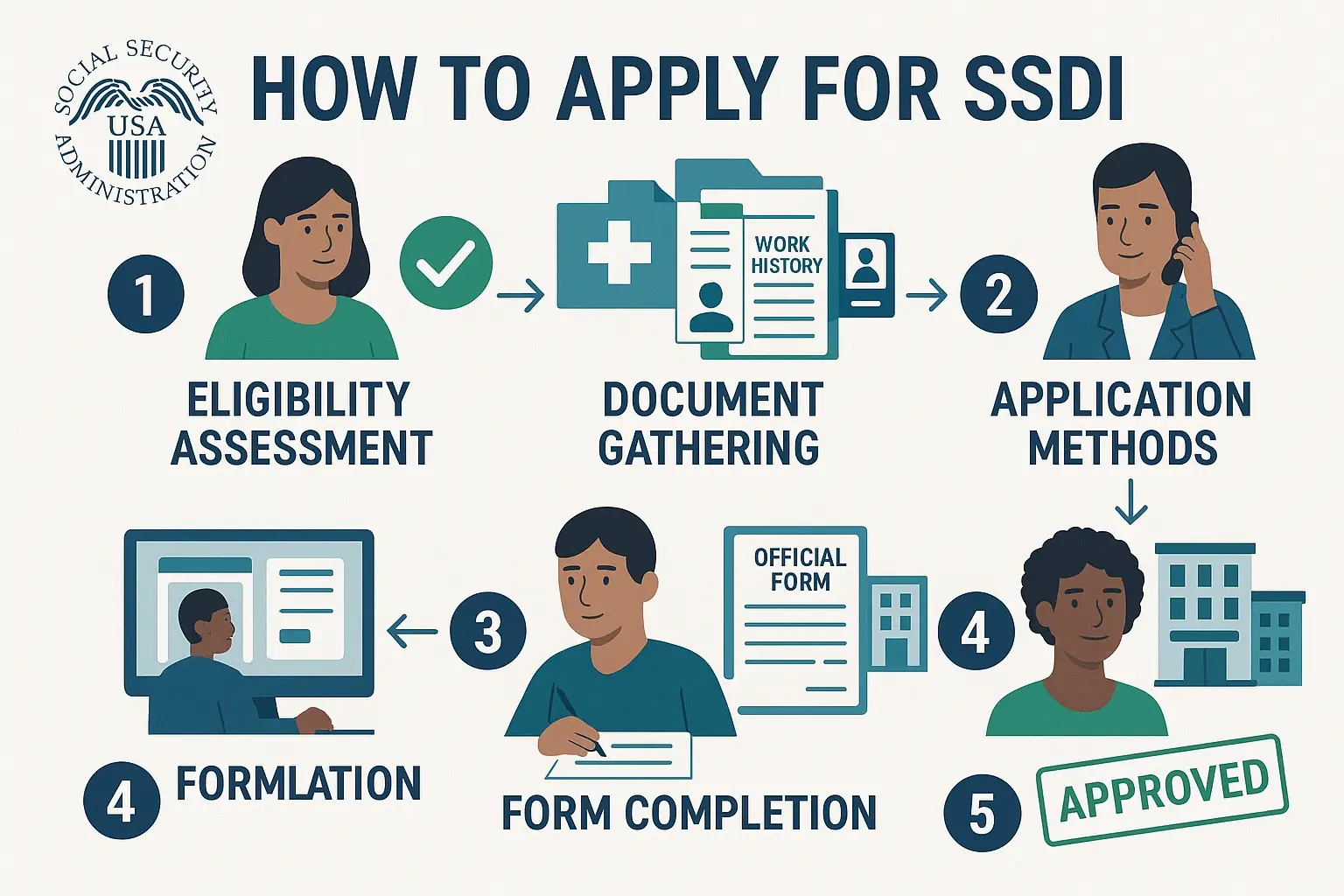
Our four-step Social Security Disability Insurance (SSDI) application process turns a complicated system into manageable, supportive stages.
- Case Assessment: We carefully review your medical condition and work history, explaining the likelihood of approval and identifying potential risks.
- Eligibility & Needs Analysis: We determine if you meet Social Security Administration rules for medical conditions and credits required for SSDI benefits.
- Document Preparation & Filing: We complete all required forms and assemble supporting evidence to ensure compliance with Social Security program rules.
- Ongoing Support & Updates: We monitor your disability claim, communicate with the SSA, and adjust strategy if circumstances change.
By guiding you through each step, we improve your chances of approval while reducing stress and avoiding unnecessary mistakes.