Social Security Disability Insurance (SSDI) provides financial assistance to individuals who are unable to work due to severe disabilities. It serves as an essential federal program that protects eligible workers and their families from income loss. To qualify, applicants must have a documented medical condition that meets Social Security’s strict definition of disability. They must also have accumulated sufficient work credits through previous employment covered by Social Security.
SSDI differs from Supplemental Security Income (SSI) because SSI benefits are need-based, focusing on limited income and resources. SSDI, however, depends on your employment history and the Social Security taxes you have paid. Other disability benefits, like veterans’ or private insurance programs, follow separate rules and eligibility criteria. Understanding these distinctions helps applicants determine which program best aligns with their situation and financial needs.
In South Carolina, SSDI supports workers who can no longer perform substantial work because of their disabilities. It ensures a consistent income to cover essential living expenses and healthcare needs. The benefits are directly funded by Social Security, which is supported by the individual’s prior payroll contributions. Through these earned credits, SSDI in South Carolina helps residents maintain financial stability when disabilities prevent them from continuing employment.
Eligibility Requirements for SSDI in South Carolina Disability Benefits
Understanding the eligibility requirements for SSDI in South Carolina is crucial for anyone planning to apply for Social Security Disability benefits. The Social Security Administration (SSA) carefully reviews each claim to ensure that applicants meet the required work credits, income thresholds, and medical conditions. Below are the essential criteria every applicant must understand before starting the application process. Meeting these standards helps ensure your claim for SSDI benefits is adequately supported and more likely to be approved.
- Work Credit Requirements: The SSA bases Social Security Disability Insurance (SSDI) eligibility on your work history and the number of work credits you’ve earned. You earn credits through jobs covered by Social Security, with one credit for a specific amount of annual earnings. Most people require at least 40 work credits, with 20 of these credits being recent. Your employer and the federal payroll system automatically record these credits, which determine your ability to receive benefits.
- Age-Based Credit Variations: The number of credits required depends on your age at the time the disability occurs, as outlined in the 20/40 Rule. For example, younger adults under 24 may qualify with fewer credits, while older workers must have more. The SSA examines your education, work history, and the date your disability began to calculate your eligibility. These factors ensure that both new and experienced workers can qualify for disability benefits under fair standards.
- Defining a Qualifying Disability: To qualify, a person must have a disability that prevents them from performing substantial work and is expected to last at least twelve months or result in death. The SSA evaluates medical documents, diagnoses, and other proof from licensed professionals to confirm your condition. It also considers whether your medical records show consistent treatment and how your condition affects your daily ability to work. Meeting the SSA’s strict definition ensures that only eligible applicants receive benefits under Social Security Disability Insurance (SSDI).
- Income Thresholds and Work Incentives: Applicants must fall below the SSA’s income requirements for substantial gainful activity (SGA). The Social Security Administration sets annual income limits to determine whether a person remains eligible for disability benefits. There are also work incentives allowing some beneficiaries to test employment while keeping their monthly payments active. These policies strike a balance between financial support and opportunities for South Carolina residents to safely re-enter the workforce.
Understanding these rules ensures that applicants in South Carolina prepare accurate documentation before submitting their file. Gathering medical records, verifying work credits, and confirming income requirements all improve approval chances. The Social Security Administration encourages applicants to apply online or visit a local office for guidance. Meeting all these conditions increases the likelihood of receiving Social Security benefits and long-term financial stability.
Qualifying Medical Conditions for Social Security Disability
Understanding which medical conditions qualify for Social Security Disability benefits helps applicants strengthen their case before submitting an application. The Social Security Administration (SSA) carefully reviews each claim to determine if a person meets the medical standards for Social Security Disability Insurance (SSDI). Medical records, documentation, and other proof of limited work ability must support each diagnosis. The following points outline key aspects of qualifying under SSA rules.
Common SSA-Approved Medical Conditions
The SSA lists a wide range of physical and mental medical conditions that qualify for Social Security Disability. Examples include heart disease, diabetes, arthritis, cancer, depression, and neurological disorders. Each condition must significantly limit your ability to perform basic work functions for at least twelve months. The Social Security Administration examines medical documents and diagnosis details to confirm the severity of your impairment.
Multiple or Combined Conditions
Applicants may still qualify if multiple medical conditions together create severe work limitations. For example, a person with diabetes and neuropathy may still be eligible even if neither condition alone qualifies. The SSA reviews how combined impairments affect your ability to work and daily functioning. Detailed medical records that include consistent evaluations and treatment histories strengthen your disability benefits claim.
Compassionate Allowances Program
The SSA’s Compassionate Allowances program speeds up approvals for applicants with clearly severe or terminal illnesses. Conditions such as ALS, pancreatic cancer, and advanced brain disorders qualify for expedited review. This program helps individuals receive benefits faster without lengthy processing delays. Applicants must still submit medical documentation, but the Social Security Administration often verifies eligibility automatically through existing records.
SSA’s Blue Book and Documentation Requirements
The SSA’s “Blue Book” outlines the medical conditions and criteria used to evaluate every Social Security Disability Insurance (SSDI) case. It specifies the tests, clinical findings, and other proof required for each condition. Applicants should ensure that their medical records include thorough notes, test results, and statements from their doctors. Submitting complete documentation improves your chances of approval for SSDI benefits or Supplemental Security Income (SSI).
Understanding these qualification criteria helps South Carolina applicants prepare accurate medical documentation before they apply online or through a local SSA office. Gathering full medical records and following Blue Book guidance ensures your case meets federal standards. Proper preparation enables the SSA to examine your claim efficiently and determine your eligibility quickly. This approach increases the likelihood of gaining Social Security benefits and long-term financial stability through SSDI in South Carolina.
How to Apply for SSDI in South Carolina and Supplemental Security Income (SSI)
Knowing how to apply for SSDI in South Carolina and Supplemental Security Income (SSI) helps applicants plan effectively and avoid delays. The Social Security Administration (SSA) offers several options for applying, including online, by phone, or in person. Each method requires specific documentation to verify eligibility, income, and medical evidence. The following guide outlines how to begin your Social Security Disability or SSI benefits application with confidence.
- Apply Online Through the SSA Website: Applicants can apply online at the official Social Security website for both Social Security Disability Insurance (SSDI) and Supplemental Security Income (SSI). The online portal enables users to complete their application process at their own pace, allowing them to save and return later if needed. Applicants can upload their medical records, work history, and other relevant documentation directly. Online filing helps South Carolina residents begin receiving SSDI benefits faster, thanks to reduced processing times.
- Phone and In-Person Application Options: Applicants who are unable to complete the online form can call the SSA’s toll-free number or visit a local Social Security office. Phone representatives can assist in scheduling an appointment, answering questions, or submitting initial forms. In-person applications enable individuals to provide documentation, such as proof of income, address, and work credits, directly to a caseworker. These options ensure accessibility for individuals without reliable internet or those who prefer speaking with an SSA representative.
- Required Documentation for the Application: The SSA requires several forms of documentation to verify eligibility for Social Security Administration (SSA) disability benefits. Applicants must provide valid identification, medical records, proof of work history, and any other proof supporting their disability claim. Information about jobs, employer details, education, and military service may also be needed. Ensuring all medical documents and financial statements are complete helps prevent delays in the review process.
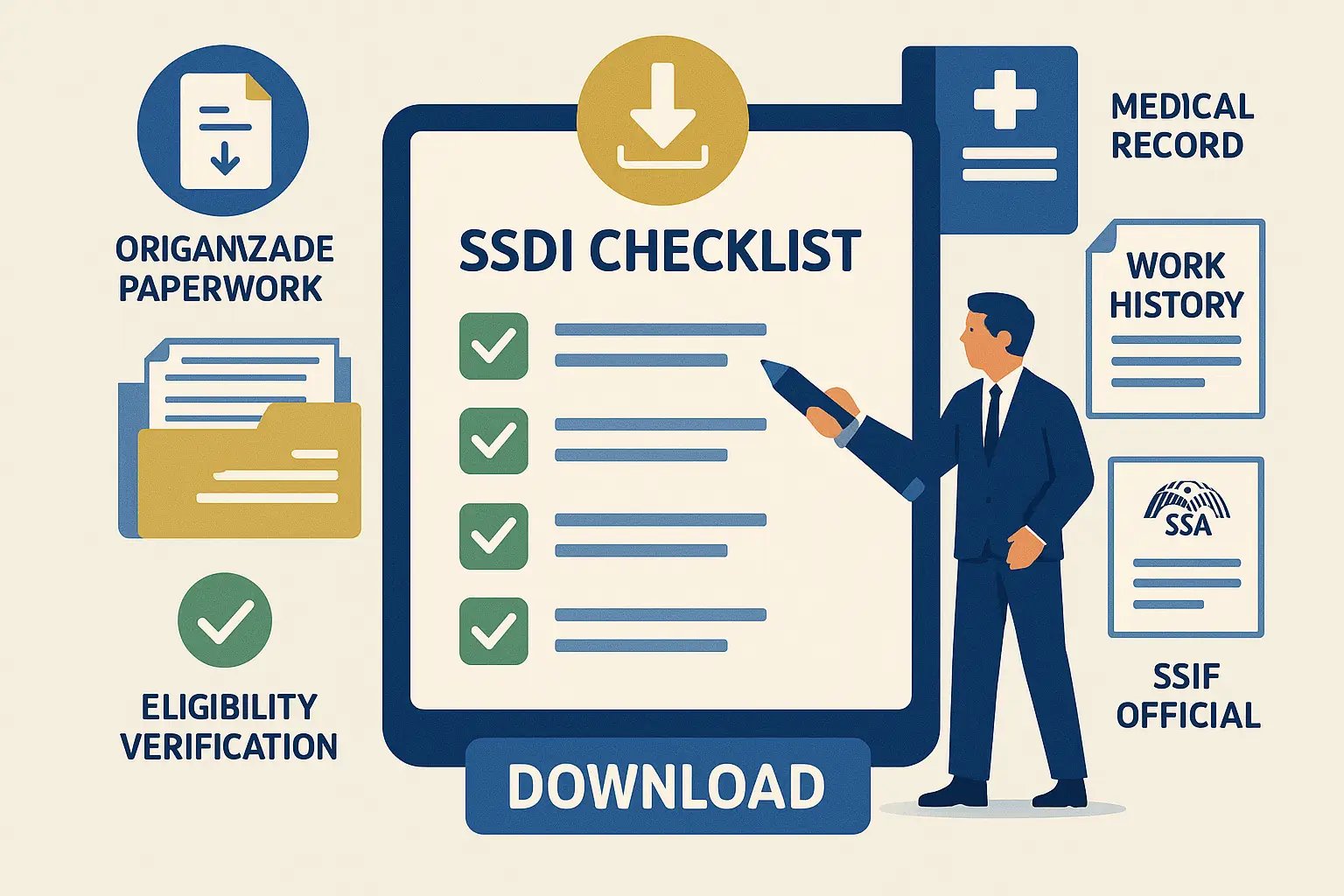
- Review the SSA’s Adult Disability Checklist: Before filing, applicants should review the SSA’s Adult Disability Checklist, which outlines every required form and medical documentation. This checklist helps applicants verify that all information, including income requirements and eligibility criteria, is accurate and up-to-date. Preparing these materials in advance ensures smoother communication with the Social Security Administration. Reviewing the checklist helps applicants avoid missing details that could affect approval or payment.
Understanding how to apply for SSDI in South Carolina and Supplemental Security Income (SSI) ensures you meet every requirement from the start. Submitting complete medical documents and accurate income information helps the SSA examine your claim efficiently. Whether applying online, by phone, or in person, accuracy and preparation are key. A well-prepared application file increases your chances of approval for Social Security Disability benefits and stable monthly payments.
South Carolina Social Security Offices for Disability Benefits
Knowing where to find Social Security offices in South Carolina is essential for residents seeking help with disability benefits. These offices assist individuals applying for Social Security Disability Insurance (SSDI) or Supplemental Security Income (SSI), answering questions and processing claims. Whether applicants prefer to apply online, by phone, or in person, understanding available locations and services ensures a smoother application process. The points below describe key details about local access, services, and alternative options.
Major Social Security Offices in South Carolina
The Social Security Administration (SSA) operates offices in major South Carolina cities, including Charleston, Columbia, Greenville, Spartanburg, and Myrtle Beach. Each office serves as a regional hub for handling Social Security Disability benefits and SSI benefits applications. Smaller offices in Aiken, Florence, and Rock Hill also provide complete assistance for disability claims. Applicants can locate the nearest office by visiting the SSA website and entering their ZIP code for accurate address information.
Available In-Person Services and Appointments
Local offices provide services such as filing for SSDI benefits, submitting medical documents, or updating personal information. Applicants can also request replacement cards, check eligibility, or schedule a hearing for denied claims. While walk-ins are accepted, scheduling an appointment ensures faster service and shorter wait times. Staff can also assist applicants in gathering medical records and verifying income requirements to facilitate a seamless application process.
Online and Remote Claim Management
Residents can apply online for Social Security Disability Insurance (SSDI) and Supplemental Security Income (SSI) through the official SSA portal. The online system enables users to securely upload documentation, check claim status, and track monthly payments. Applicants can also use their Social Security account to update contact information, view payment history, or report work incentives. These digital services enable South Carolinians to manage their disability benefits efficiently, eliminating the need for in-person office visits.
Phone and Mail Service Options
The SSA offers toll-free phone assistance for individuals who are unable to visit or apply online. Applicants can call 1-800-772-1213 for general inquiries about Social Security benefits or 1-800-325-0778 (TTY) for assistance for individuals who are deaf or hard of hearing. Many disability benefits actions can also be handled by mail, such as submitting other proof or requesting updates. These options help individuals in remote locations or those unable to travel maintain progress on their claims.
Understanding the role of Social Security offices in South Carolina ensures residents choose the most convenient way to manage their disability benefits. Whether you plan to visit in person, apply online, or contact the SSA by phone, preparation and complete documentation are key. Knowing your nearest office and available services saves time and reduces delays. With these options, South Carolinians can confidently move forward with their Social Security Disability and SSI benefits applications.
The SSDI Application Review Process for South Carolina Residents
Understanding how the SSDI application review process works in South Carolina helps applicants know what to expect after filing a claim. The Social Security Administration (SSA) and the South Carolina Disability Determination Services (DDS) collaborate to evaluate applications. Each stage involves a thorough examination of medical records, financial documentation, and work history. The following points outline the review process and guide residents on how to stay informed throughout the evaluation.
- How DDS Reviews Each Claim: The South Carolina Disability Determination Services (DDS) receives and reviews all Social Security Disability Insurance (SSDI) and Supplemental Security Income (SSI) applications. Examiners verify that the applicant meets non-medical requirements, such as sufficient work credits and income limits. They then assess medical documentation, including test results and physician statements, to determine the severity of the disability. DDS staff coordinate with healthcare providers to gather complete evidence before issuing a decision.
- What Examiners Evaluate in Medical Records: DDS examiners examine medical records to determine whether the applicant’s medical conditions meet Social Security Disability criteria. They look for consistent diagnoses, detailed treatment notes, and objective test results that confirm the inability to work. Medical documents must include ongoing care, responses to treatment, and physician opinions about functional limitations. Comprehensive evidence helps the examiner decide whether the applicant qualifies for SSDI benefits under federal rules.
- Consultative Exams and When They’re Required: If medical evidence is incomplete, the DDS may schedule a consultative examination with an approved doctor. This exam helps clarify the applicant’s diagnosis, physical limitations, or mental capacity. Applicants attend these exams at no cost, and results are sent directly to the Social Security Administration. The DDS uses this information to fill gaps in existing medical documentation and ensure fair evaluation.
- Processing Times and Checking Application Status: The average processing time for SSDI in South Carolina is approximately three to five months, depending on the complexity of the case. Applicants can check their claim status by logging into their Social Security account or calling their local office. The SSA also provides updates by mail once key review stages are completed. Staying in contact with the DDS helps applicants respond quickly to any requests for additional proof or documentation.
Understanding the SSDI application review process allows applicants to prepare accurate medical records and respond promptly to agency communications. Submitting thorough documentation at the start reduces delays and avoids unnecessary consultative exams. Applicants who stay informed and organized improve their chances of approval. With careful preparation, residents of South Carolina can navigate the Social Security Disability Insurance process more effectively and receive benefits sooner.
Appeals Process for Social Security Disability
Understanding the appeals process for Social Security Disability helps applicants in South Carolina stay informed and persistent after a denial. The Social Security Administration (SSA) provides four appeal levels, each with distinct procedures and deadlines. Applicants must prepare complete medical documentation, submit new evidence, and follow strict timelines to protect their right to appeal. Below are the essential stages and preparation steps for achieving a fair decision.
Four Stages of the Appeals Process
The first stage, reconsideration, allows a different examiner to review your initial Social Security Disability Insurance (SSDI) or Supplemental Security Income (SSI) claim. If denied again, applicants proceed to a hearing before an Administrative Law Judge (ALJ). The third level, the Appeals Council, reviews legal or procedural errors in the ALJ’s decision. If the denial is still unresolved, the final option is to file a lawsuit in federal court, where a judge will review whether the SSA applied the law correctly.
Preparing for an ALJ Hearing in South Carolina
Applicants should review their medical records, gather new documentation, and practice explaining how their disability impacts their daily life. The ALJ hearing provides an opportunity to discuss your condition and limitations directly. It is crucial to request updated medical documents from providers and submit them before the hearing date. Bringing an attorney or representative who understands Social Security Disability law can strengthen your case and ensure your evidence is presented correctly.
Providing New Evidence and Staying Persistent
Each appeal stage allows applicants to submit new medical evidence, including doctors’ statements, treatment updates, or hospital records. Persistence is critical because many South Carolina claims are approved during reconsideration or hearings, not at the initial filing. The SSA expects applicants to continue medical care and maintain consistent documentation throughout the process. Demonstrating ongoing treatment and compliance with medical advice increases the chances of approval.
Timelines and Legal Representation Considerations
Applicants must file each appeal within 60 days of receiving a denial notice to avoid losing eligibility. Delays can result in dismissal, requiring a new application process to be initiated. Hiring a Social Security Disability attorney ensures deadlines are met and documentation is properly managed. Legal representation also helps applicants handle complex hearings, interpret SSA rules, and improve their likelihood of receiving benefits.
Understanding the Social Security Disability appeals process empowers applicants to take proactive steps toward approval. Submitting complete medical records, adhering to deadlines, and presenting strong evidence demonstrate genuine eligibility. Whether pursuing reconsideration or appearing before a judge, persistence and preparation make a significant difference. With the right guidance, South Carolina applicants can successfully navigate each stage of the appeal process and secure the disability benefits they deserve.
Tips for a Successful SSDI Application
Submitting a well-prepared SSDI application requires careful attention to detail and full documentation. Each applicant must ensure that all Social Security Disability requirements are met before submitting their application. The Social Security Administration (SSA) bases its decision on your medical records, employment history, and supporting evidence. The following tips outline how to enhance your application and increase your chances of approval.
- Keep Detailed Medical and Employment Records: Applicants should maintain complete medical records, including diagnosis, treatment plans, and doctors’ notes that show the extent of their disability. Updated medical documents help examiners understand how a condition limits work ability. Equally important are employment records that verify work history and prior Social Security contributions. These documents form the foundation of your Social Security Disability Insurance (SSDI) claim.
- Follow All Treatment Recommendations: The SSA expects applicants to follow prescribed treatments unless medically exempt. Attending regular appointments and following the physician's advice shows commitment to recovery. Missing treatments without valid reasons can affect your eligibility for SSDI benefits. Consistent compliance proves that the disability persists despite medical care.
- Provide Accurate and Consistent Information: Applicants should ensure all information matches across every application form, interview, and medical documentation. Discrepancies between statements, income reports, or medical evidence can delay or weaken your claim. The SSA cross-checks details with employers, healthcare providers, and Social Security records. Consistency builds trust and supports faster approval.
- Track Progress and Appeal if Necessary: Applicants can apply online and check their claim status through their Social Security account. Tracking progress helps identify requests for missing documents or additional proof. If denied, applicants should appeal immediately within the given timeframe. Many successful claims in South Carolina are approved during reconsideration or at hearings.
Following these steps ensures that your SSDI in South Carolina application meets the Social Security Administration’s strict standards. A complete, accurate, and well-documented file demonstrates eligibility and persistence. Applicants who maintain organized medical and employment documentation improve their chances of receiving disability benefits. With careful preparation and consistency, most people can achieve a positive outcome even if approval takes more than one review.