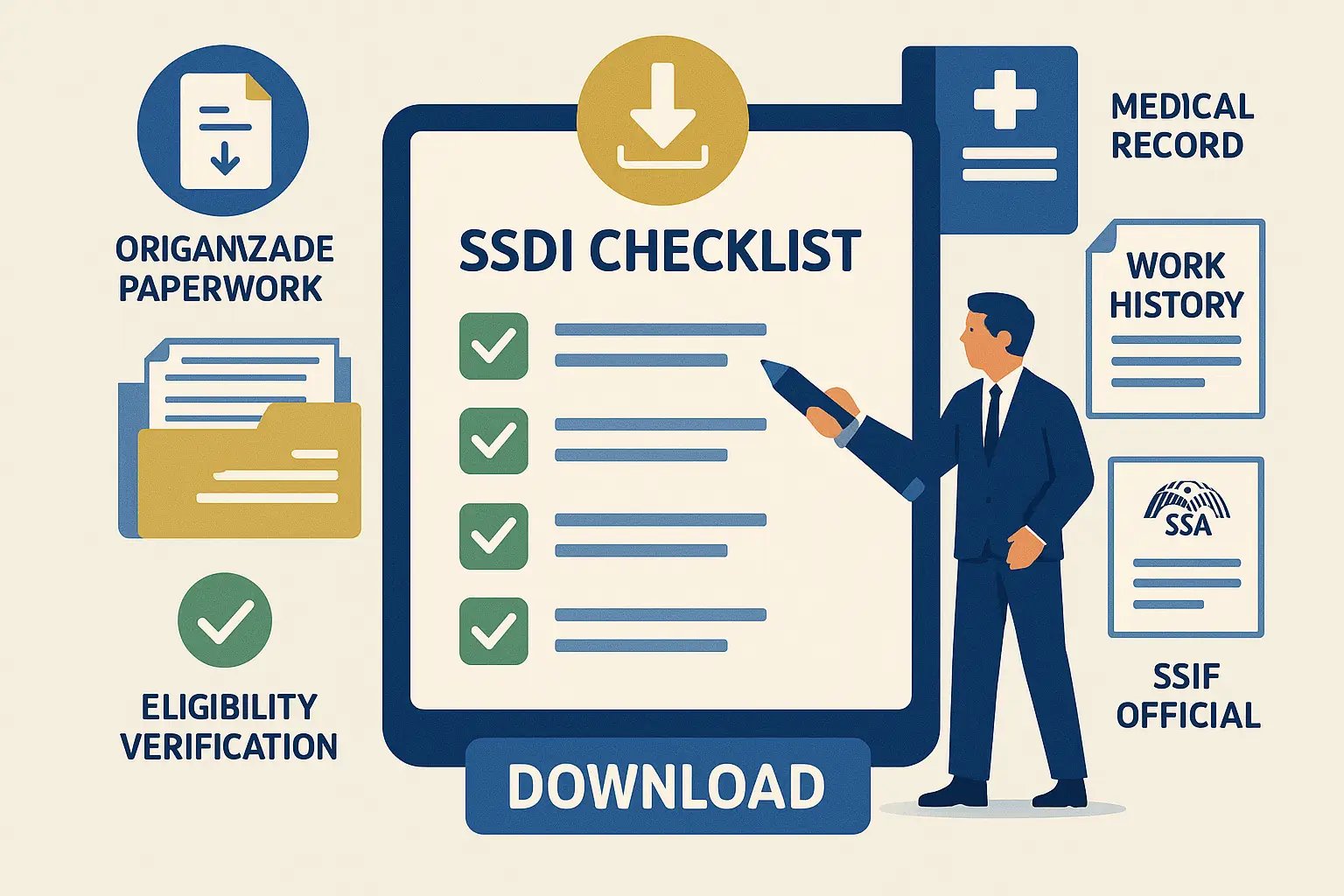
Social Security Disability Insurance (SSDI) helps individuals who are unable to work due to a serious medical condition. It provides monthly financial assistance based on a person’s work history and Social Security tax contributions. Many applicants find the process confusing because it involves detailed eligibility rules and extensive documentation. Understanding the system before applying helps avoid mistakes and delays in receiving disability benefits.
This guide explains the entire SSDI process specifically for North Carolina residents. It includes step-by-step instructions for submitting your application through various channels, such as online, by phone, or in person. North Carolina applicants will also learn about local offices, the role of Disability Determination Services, and available state resources. The goal is to make the process less intimidating and easier to navigate.
Readers will find detailed sections covering eligibility criteria, medical documentation requirements, and the Social Security Administration’s review process. The guide also explores how to apply online effectively and what medical records are necessary for approval. It discusses appeals, payment schedules, and how to maintain benefits after approval is granted. By following this structure, applicants can approach their Social Security Disability claim with confidence and clarity.
Eligibility Requirements for Social Security Disability and Qualifying Disability in North Carolina
Understanding the eligibility requirements for Social Security Disability Insurance (SSDI) in North Carolina is essential for applicants to prepare a comprehensive and compelling case. The Social Security Administration employs specific rules to determine eligibility for disability benefits, taking into account both medical and work-related factors. Below are the core criteria that every applicant must understand before submitting a disability claim or applying online through the SSA website.
Medical Eligibility: Meeting the Definition of a Qualifying Disability
- The Social Security Administration defines a qualifying disability as a severe medical condition that prevents a person from substantial gainful activity.
- This disability must be expected to last at least one year or result in death, as determined by medical evidence and test results.
- The Social Security Disability Insurance (SSDI) and Supplemental Security Income (SSI) programs both use the same federal standards to determine the severity of a disability.
- Conditions like Lou Gehrig’s disease (ALS) or pancreatic cancer often qualify under the Compassionate Allowances list for faster approval.
Work History and Work Credits: Proving Employment-Based Eligibility
- To qualify for SSDI in North Carolina, applicants must have sufficient work credits earned through past employment by paying Social Security taxes.
- Most people require 40 credits, with at least 20 earned within the ten years preceding their disability.
- Younger workers may qualify with fewer credits depending on their age and past work history.
- Each year, applicants earn credits based on their income, which the federal government uses to determine eligibility for SSDI benefits.
Substantial Gainful Activity: Measuring Work and Income Limits
- Substantial Gainful Activity (SGA) is the maximum monthly income a person can earn while still being considered disabled.
- In 2025, non-blind applicants must earn less than $1,620 per month, while blind applicants must earn under $2,700.
- Exceeding these limits may lead the SSA or Disability Determination Services (DDS) office to deny the claim.
- Maintaining income below SGA thresholds ensures continued qualification for Social Security Disability benefits.
Medical Records and Evidence: Strengthening Your Social Security Disability Claim
- Applicants must provide complete medical records from hospitals, doctors, and clinics that verify the extent of their disability.
- The Disability Determination Services DDS office reviews all medical evidence, including treatment notes, test results, and specialist reports.
- Consistent documentation helps prove that the condition limits the applicant’s ability to perform any type of past work.
- Providing accurate and detailed records increases the likelihood of being approved for SSDI benefits or SSI benefits.
Applying for Social Security Disability in North Carolina involves careful preparation and a clear understanding of SSA’s criteria. Each eligibility factor—from medical documentation to work credits—plays a critical role in securing disability benefits. By gathering comprehensive information before filing a claim or appeal, applicants can enhance their chances of approval and minimize unnecessary delays.
Qualifying Medical Conditions for Social Security Disability Benefits
Understanding which medical conditions qualify for Social Security Disability Benefits helps North Carolina residents prepare stronger claims. The Social Security Administration (SSA) utilizes a comprehensive resource known as the “Blue Book” to assess medical eligibility. This guide outlines how the SSA identifies severe impairments and determines who meets its strict standards for Social Security Disability Insurance (SSDI) and Supplemental Security Income (SSI) benefits.
The SSA Blue Book: Defining Qualifying Disabilities
- The SSA Blue Book lists medical conditions that automatically meet the federal government’s definition of disability.
- It provides criteria for evaluating how medical evidence supports a person’s claim for Social Security Disability benefits.
- Each section describes specific impairments and the level of severity required for approval.
- Applicants and healthcare providers use the Blue Book to determine whether a disability meets or equals a listed condition.
Key Medical Condition Categories: Understanding Eligibility
- The Blue Book categorizes qualifying disabilities into major categories, including musculoskeletal, mental, neurological, immune, cardiovascular, and respiratory disorders.
- Musculoskeletal disorders include back injuries, joint damage, and chronic pain that limit movement and the ability to work.
- Neurological and immune system disorders often involve conditions such as multiple sclerosis, lupus, or epilepsy that affect daily functioning.
- Mental disorders include severe depression, schizophrenia, and anxiety conditions that impact concentration and behavior.
Compassionate Allowances: Fast-Tracking Severe Disability Claims
- The Compassionate Allowances program enables the SSA to expedite the approval of claims for the most severe conditions.
- Diseases such as pancreatic cancer and Lou Gehrig’s disease (ALS) often qualify for expedited review.
- Applicants must still provide medical records that prove a diagnosis and treatment from credible healthcare sources.
- This program helps individuals with life-threatening illnesses receive disability benefits more quickly than through the standard claims process.
Using the Blue Book in North Carolina: Verifying Eligibility
- North Carolina residents can use the SSA Blue Book to assess whether their medical conditions meet eligibility criteria.
- Applicants should gather thorough medical evidence, including test results and physician statements, before applying.
- The Disability Determination Services (DDS) office in North Carolina uses this guide to review all submitted claims.
- Reviewing the Blue Book before filing ensures applicants understand what evidence the Social Security Administration expects.
Understanding the SSA Blue Book gives North Carolina residents a clear roadmap for proving a qualifying disability. By studying the listed conditions, preparing comprehensive medical documentation, and collaborating with healthcare providers, applicants can enhance their chances of approval. A well-documented claim supported by solid medical evidence remains the strongest path toward receiving Social Security Disability benefits.
How to Apply for SSDI in North Carolina and Submit a Disability Claim
Applying for Social Security Disability Insurance (SSDI) in North Carolina involves several steps that vary based on your preferred submission method. The Social Security Administration (SSA) offers multiple options to ensure accessibility for all applicants. Understanding each method helps applicants choose the most efficient way to file and avoid unnecessary delays in their disability claim.
Online Application: The Most Convenient Option
Applying for SSDI in North Carolina online through the official Social Security website is the fastest and most convenient way to do so. The online portal enables applicants to start, pause, and resume their application without losing progress. It also allows the secure upload of supporting medical records, work history, and financial documentation. Most people in North Carolina prefer this method because it eliminates the need to visit a local Social Security office or wait on hold for extended periods.
Phone Application: Accessible for Those Unable to Apply Online
Applicants who are unable to apply online can submit their disability claim by calling the SSA’s toll-free number at 1-800-772-1213. For individuals who are deaf or hard of hearing, the SSA provides a TTY number at 1-800-325-0778. The representative will schedule a phone interview to collect information about your medical conditions, work history, and income. This option is ideal for applicants with limited internet access or those who prefer direct assistance from a representative.
In-Person Application: Support from Local Social Security Offices
Applicants may also apply in person at a local Social Security office in North Carolina. This option allows face-to-face assistance from trained SSA staff who can help ensure the application is complete and accurate. It’s best to call ahead or use the SSA’s online office locator to confirm hours and make an appointment. Bringing all required documents—including identification, medical evidence, and employment history—helps streamline the process and prevent delays.
Preparing Before You Submit a Disability Claim
Before applying, gather the essential information, including your Social Security number, dates of employment, income records, and comprehensive medical records. Ensure that your medical records include current diagnoses, test results, and physician notes detailing your functional limitations. Having this documentation ready enables the Disability Determination Services (DDS) office to review your case more efficiently. Taking time to organize this information increases the likelihood of a complete and successful application for SSDI benefits.
Submitting an SSDI application in North Carolina requires preparation, accuracy, and a clear understanding of SSA procedures. By selecting the most suitable application method—online, by phone, or in person—and preparing all necessary documentation, applicants can reduce processing time and increase their chances of approval. A well-prepared application supported by solid medical evidence is the strongest foundation for a successful Social Security Disability claim.
North Carolina Social Security Offices for SSDI and Disability Benefits
Finding the right Social Security office is an essential step for residents applying for SSDI and disability benefits in North Carolina. The state has several central, regional, and community-based offices managed by the Social Security Administration (SSA). Each office offers in-person and phone assistance to applicants who need guidance on their disability claims, appeals, or document submissions.
- Central Social Security Offices (Serving North Carolina’s Key Cities): North Carolina has central Social Security offices in large metropolitan areas, including Charlotte, Raleigh, Greensboro, Durham, Winston-Salem, Fayetteville, Asheville, and Wilmington. These offices handle the majority of in-person Social Security Disability Insurance (SSDI) and Supplemental Security Income (SSI) applications. Applicants can submit supporting documents, update their personal information, and obtain answers to questions about the application process. Each central city office provides both appointment-based and walk-in services, depending on daily capacity.
- Regional and Community Offices (Expanding Access to Disability Services): Beyond the large cities, North Carolina also operates numerous regional and smaller community offices to ensure accessibility for residents in rural or suburban areas. Offices in towns like Hickory, Greenville, Salisbury, Goldsboro, Rocky Mount, Wilson, and New Bern provide the same level of service as larger centers. These regional offices assist applicants with filing new Social Security Disability claims, reporting medical evidence, and managing benefits inquiries. They are particularly valuable for individuals who reside far from urban centers but require timely access to SSA representatives.
- Using the SSA Online Office Locator (Finding Your Nearest Office): Applicants should use the SSA’s online office locator tool before visiting a local Social Security office. This digital tool provides the address, phone number, operating hours, and service availability for each office. It helps residents find the most convenient location for submitting their disability claims or SSDI applications. Checking the office locator ensures applicants avoid long travel distances or visiting an office that only handles limited services.
- When to Call Ahead or Visit In Person (Choosing the Best Approach): It is recommended to call ahead before visiting any Social Security office in North Carolina to confirm appointment availability and verify the required documentation. Applicants can contact the SSA’s national toll-free number at 1-800-772-1213 or use the TTY number 1-800-325-0778 if they are hearing impaired. Scheduling appointments minimizes wait times and ensures SSA staff can review medical records or answer questions about the Disability Determination Services (DDS) process. In-person visits are ideal when applicants need to submit physical documents, verify their identity, or clarify complex issues related to their disability claim.
Finding the appropriate Social Security office and preparing beforehand can make the SSDI application process smoother and more efficient. By using the online locator, calling ahead, and understanding the services available in each North Carolina location, applicants can save time and prevent avoidable delays in receiving their disability benefits.
The SSDI Review and Disability Determination Process
Understanding how the Social Security Administration (SSA) reviews each disability claim is crucial for applicants seeking SSDI benefits in North Carolina. The process involves multiple steps, including verification, evidence gathering, and evaluation by the state’s Disability Determination Services (DDS). Knowing what happens behind the scenes helps applicants set realistic expectations and prepare complete documentation.
Initial Review by the Social Security Administration: Confirming Eligibility
The SSA begins by reviewing each submitted disability claim to confirm that basic eligibility requirements are met. This step involves verifying the applicant’s Social Security number, work history, and determining whether sufficient work credits have been earned through past employment. The SSA also checks if the applicant is currently working above the Substantial Gainful Activity (SGA) limit, which could affect eligibility. Once the claim passes this initial screening, it is forwarded to the North Carolina Disability Determination Services (DDS) office for further evaluation.
Role of North Carolina’s Disability Determination Services (DDS): Conducting the Core Evaluation
The Disability Determination Services (DDS) office is responsible for making the medical decision on every Social Security Disability application in the state. DDS staff review the applicant’s medical records, treatment history, and statements from healthcare providers. They determine whether the applicant’s condition meets or equals a listing in the SSA Blue Book. The DDS also contacts doctors or hospitals directly if additional medical evidence or clarification is needed before a decision can be made.
Medical Evaluations and Consultative Exams: Verifying the Extent of Disability
If existing medical evidence is insufficient, the DDS may schedule a consultative examination (CE) with an independent physician. These exams allow the SSA to obtain objective data such as test results, imaging reports, or functional assessments. Examinations focus on how the applicant’s medical condition affects their ability to perform daily tasks and their previous work experience. The DDS uses this evidence to complete the disability determination, which forms the basis for either approving or denying benefits.
Timelines and Delays: Understanding the Review Duration
Most initial SSDI reviews in North Carolina take between three and five months, depending on the complexity of the case. Claims that require additional medical documentation or involve multiple conditions may take longer to process. Delays often occur when applicants fail to submit complete medical records or do not respond promptly to requests for additional information. Staying proactive and maintaining communication with the DDS or the local Social Security office can help reduce processing time and prevent avoidable setbacks.
The SSDI review and determination process in North Carolina is detailed and evidence-driven, emphasizing the importance of accurate information and complete documentation. By understanding each stage—from SSA’s initial screening to the DDS’s medical evaluation—applicants can better prepare their claims. A thorough, well-documented submission supported by substantial medical proof increases the likelihood of approval for Social Security Disability benefits.
Appeals Process for Denied Social Security Disability Claims
When a Social Security Disability claim is denied, applicants in North Carolina have the right to appeal the decision through a series of structured stages. The Social Security Administration (SSA) provides multiple levels of appeal, each offering new opportunities to present evidence and strengthen the case. Understanding how to navigate these stages can significantly increase the chances of eventual approval for SSDI benefits.
- The Four Appeal Stages (Reconsideration to Federal Court): The first stage, Reconsideration, involves resubmitting the claim for review by a new examiner at the Disability Determination Services (DDS) office. If the reconsideration results in another denial, applicants can request a hearing before an Administrative Law Judge (ALJ), where they can present additional medical evidence or witness testimony. The third level, an Appeals Council Review, examines whether the judge followed proper SSA procedures. The final step, a Federal District Court appeal, allows applicants to file a lawsuit if they believe the SSA made a legal or procedural error.
- Strengthening a Disability Claim During Reconsideration or Hearing: Applicants should take time to improve their disability claim by providing updated medical records, specialist statements, or new test results that confirm the severity of their condition. Submitting medical evidence that clearly demonstrates how the impairment prevents substantial gainful activity is critical. At the hearing level, applicants can also describe how their disability affects daily living and job-related tasks. Working closely with healthcare providers to prepare detailed documentation can significantly improve the chances of success during this stage.
- Timelines and Re-Review (How Appeals Are Processed): Each appeal level has strict time limits that must be followed. Applicants typically have 60 days from the date of receiving a denial notice to file for reconsideration or to request the next level of appeal. During reconsideration, the Disability Determination Services re-reviews all submitted evidence, along with any additional information provided. Delays often occur when applicants miss deadlines or fail to respond to requests for updated medical evidence, which can slow down the SSA’s review process.
- When to Seek Help from a Social Security Disability Attorney: Hiring a qualified Social Security Disability attorney can be beneficial, especially during hearings and higher appeal levels. Attorneys understand SSA regulations and know how to present evidence that meets the specific standards for disability determination. They can also manage communication with the SSA and ensure all deadlines and documentation requirements are met. Legal representation is often critical for applicants who have been denied more than once or are preparing for an Administrative Law Judge hearing.
Appealing a denied Social Security Disability claim in North Carolina requires persistence, organization, and strong documentation. By understanding the four stages, meeting deadlines, and presenting clear medical evidence, applicants can significantly improve their odds of approval. For those struggling with the process, working with an experienced attorney can provide the support and strategy needed to secure deserved SSDI benefits.
North Carolina Disability Resources and State Assistance Programs
North Carolina offers several state-supported programs designed to help residents with disabilities manage expenses and maintain access to essential benefits. These programs work in conjunction with Social Security Disability Insurance (SSDI) and Supplemental Security Income (SSI) to enhance financial stability and independence. The most notable among these is the NC ABLE Program, which allows qualified individuals to save money without jeopardizing their federal benefit eligibility.
The NC ABLE Program: Supporting Financial Independence for People with Disabilities
The NC ABLE Program (Achieving a Better Life Experience) enables individuals with disabilities to save and invest money without affecting eligibility for federal means-tested benefits. It allows account holders to contribute up to the annual federal limit while keeping savings exempt from most asset-based restrictions. Funds in an ABLE account can be used for qualified disability-related expenses, including education, housing, transportation, healthcare, and assistive technology. This program empowers individuals with disabilities to build financial security while maintaining access to essential disability benefits.
Maintaining SSI and Medicaid Eligibility Through ABLE Accounts
ABLE accounts offer a practical way for participants to save money without jeopardizing their SSI or Medicaid eligibility. Balances up to $100,000 are excluded from the SSI asset limit, preventing benefit suspensions for excess savings. The accounts also enable residents to receive Social Security Disability benefits while saving for future needs beyond daily expenses. Because funds in ABLE accounts are tax-advantaged and protected under federal law, they offer both flexibility and long-term financial stability for North Carolina residents with disabilities.
North Carolina Department of Health and Human Services (DHHS): Additional Support Programs
The North Carolina Department of Health and Human Services (DHHS) provides several programs that complement federal Social Security Disability initiatives. These include vocational rehabilitation services, developmental disability support, mental health programs, and community-based living assistance. DHHS also partners with local agencies to connect individuals to employment training, healthcare coordination, and resources for independent living. By combining state-level programs with SSDI benefits, the department helps residents maintain their health, autonomy, and quality of life.
North Carolina’s disability resources create a strong safety net for residents managing long-term medical or developmental conditions. Through the NC ABLE Program and DHHS initiatives, individuals can pursue financial independence while preserving eligibility for critical SSI, Medicaid, and Social Security Disability programs. Taking advantage of these opportunities can significantly enhance both the economic well-being and overall life stability of people with disabilities in the state.