
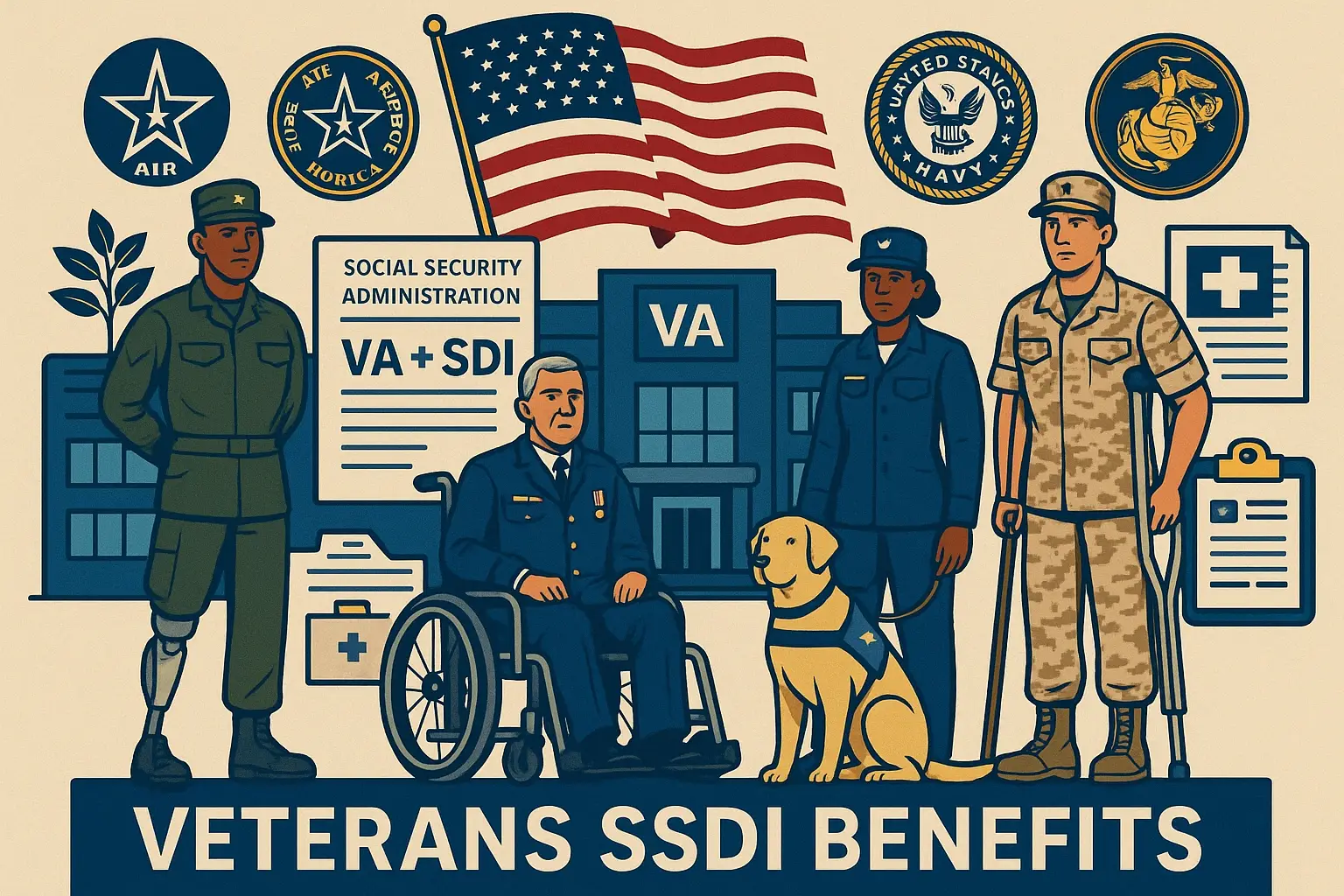
SSDI provides vital support for veterans who cannot continue employment due to severe health limitations. It offers monthly financial assistance that helps maintain basic living standards. Veterans who previously worked and paid into Social Security can apply for these benefits. This program directly addresses income gaps caused by long-term medical disabilities.
Veterans can qualify for SSDI and VA disability compensation for different purposes. VA benefits compensate for service-related conditions, while SSDI covers any severe disability preventing work. By receiving both, veterans can increase their overall financial stability. Each program has separate requirements and application processes that veterans must carefully follow.
Ignoring SSDI can lead to significant financial and healthcare consequences. Without SSDI, veterans risk losing access to Medicare after the mandatory waiting period. Income security also declines when additional monthly payments are unavailable. Applying for SSDI ensures veterans safeguard long-term health coverage and stable financial support.
Understanding SSDI for Veterans and Social Security Disability Benefits
SSDI is a type of social security disability insurance earned through paid social security taxes and a steady work history. Veterans with active military service may be eligible for SSDI benefits if a medical condition prevents work. The Social Security Administration applies a strict definition of disability that requires proof through medical records and work history. Veterans Affairs and the Department of Defense recognize that wounded warriors may receive expedited processing for an SSDI application.
Disabled veterans can qualify for both VA disability compensation and SSDI benefits at the same time. Receiving VA benefits does not prevent access to Social Security Disability Insurance (SSDI) or Supplemental Security Income (SSI) benefits. Veterans who file a disability claim should understand that the application process requires complete documentation and adherence to eligibility criteria. Ignoring available programs may cause loss of social security benefits, delayed healthcare access, and reduced financial support for family members.
Types of Benefits and Options for Veterans Under Social Security Disability Insurance SSDI
Veterans have multiple options under Social Security Disability Insurance (SSDI), each designed to recognize service and ensure access to disability benefits.
- Standard SSDI: Standard SSDI provides monthly disability benefits that depend on your work history and the strength of your disability claim.
- Military Service Credits: Military service credits increase eligibility because active duty service members between 1957 and 2001 earned extra Social Security credits.
- Wounded Warrior Program: The program offers expedited processing for veterans whose disability began during active duty after September 2001.
- Compassionate Allowances: Compassionate Allowances enable quick approval when medical records prove the presence of certain severe conditions on Social Security’s list.
- Concurrent Benefits: Veterans can receive VA and SSDI together, ensuring combined financial support without reducing the compensation rating of either program.
These benefit options show that veterans may be eligible for multiple programs that protect income, healthcare access, and long-term security.
Why SSDI and Social Security Disability Insurance May Be the Best Option for Veterans
SSDI provides monthly social security disability benefits that replace lost income when a disabled veteran cannot continue working. Veterans who qualify through work history and Social Security’s strict definition of disability gain critical financial protection. After 24 months, SSDI unlocks Medicare coverage, which supplements treatment already available through VA healthcare services. This combination ensures that veterans receive broader medical access and stronger long-term security.
Applying for SSDI allows veterans to secure Social Security and existing VA benefits without reducing their VA compensation. Auxiliary disability benefits also protect family members, giving spouses and children income support during financial hardships. SSDI shields veterans from financial strain and potential IRS or state consequences that arise from income instability. Choosing SSDI strengthens healthcare access, stabilizes household income, and provides lasting protection for veterans and their dependents.
Our Simple 4-Step Application Process for Social Security Disability
Applying for Social Security Disability does not have to feel overwhelming, because a structured process ensures every veteran gets proper support.
- Case Assessment: A case assessment reviews your disability claim and identifies whether you may be eligible for benefits.
- Eligibility & Needs Analysis: An eligibility analysis compares your VA compensation with Social Security disability insurance rules to confirm qualifications.
- Document Preparation & Filing: Filing includes all required SSA forms, supported by medical records, to strengthen your application process.
- Ongoing Support: Ongoing support monitors your social security disability case and provides continued updates until you decide.
This four-step process makes filing for social security disability straightforward, ensuring veterans receive the benefits and support they deserve.


