
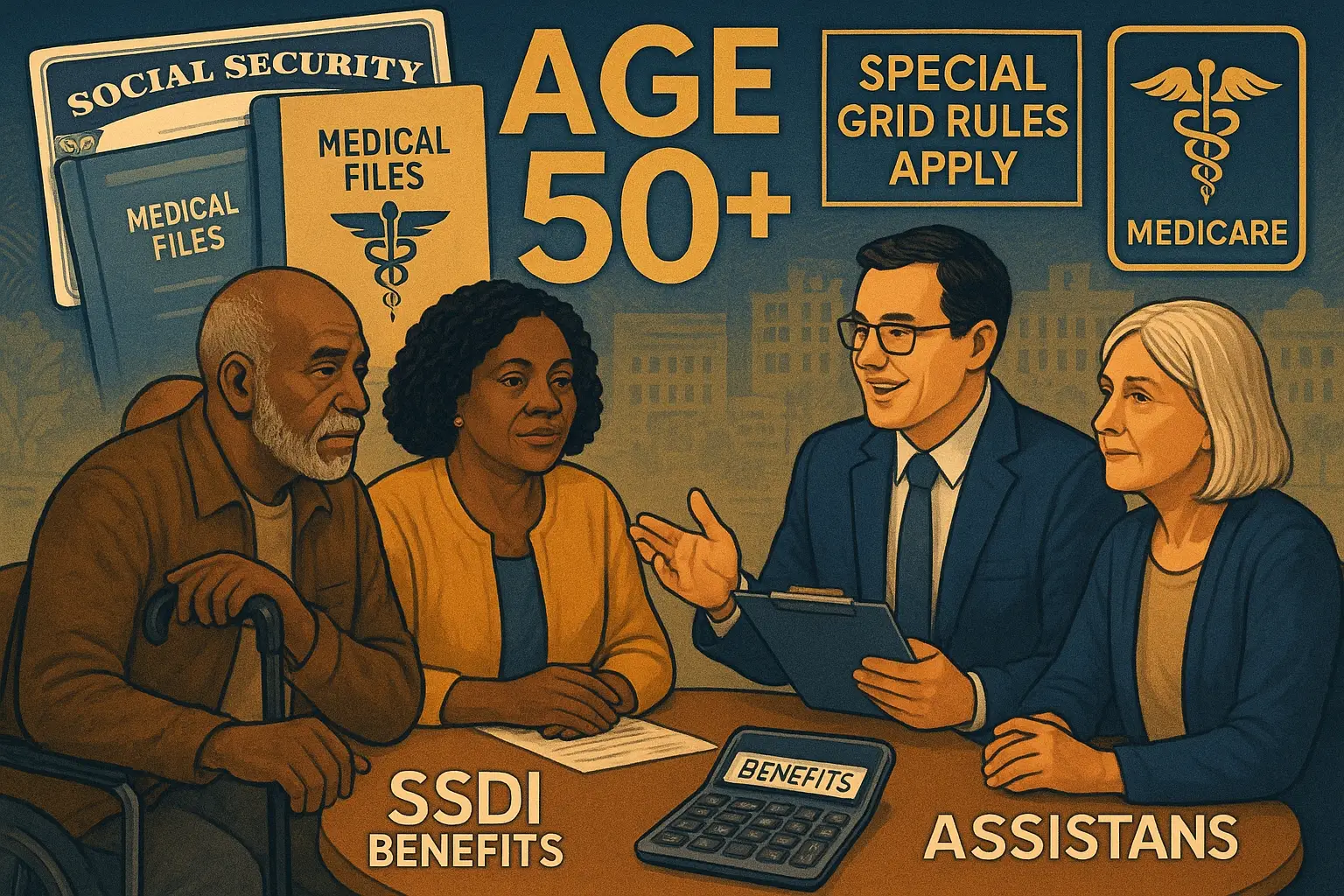
SSDI provides essential income support to workers who can no longer maintain employment due to severe health limitations. For individuals aged 50 or older, the system acknowledges that retraining or switching careers is often difficult. The Social Security Administration uses medical vocational rules that favor older applicants when evaluating disability claims. This approach ensures that workers with reduced adaptability still receive financial protection when employment becomes impossible.
The process for older workers accounts for their reduced ability to transition into new, less demanding occupations. At age 50 and beyond, vocational factors like age, education, and work history weigh heavily in approval decisions. This means applicants are not expected to suddenly shift into new professional fields. Instead, the SSA recognizes the unique barriers older workers encounter when disability strikes.
Failing to apply for SSDI when eligible can have serious consequences for financial stability and health coverage. Without benefits, applicants risk losing access to Medicare, which often becomes vital with advancing age. Families may also face financial hardship without the income replacement SSDI provides. Taking action promptly helps secure both personal stability and long-term family support.
Understanding SSDI for Older Workers
SSDI benefits provide crucial financial protection when a severe impairment prevents substantial gainful activity. For older workers, the Social Security Administration recognizes that limited transferable skills and advanced age make career changes unrealistic. When reviewing a disability claim, medical vocational guidelines evaluate residual functional capacity, work history, and past relevant work. In most cases, medical records and the limited ability to perform light work can help determine eligibility for Social Security disability benefits.
At age 50 and older, special rules and grid rules guide the disability process for disabled workers. The Social Security Administration considers education, skills, and the ability to adjust to other work in the national economy. If you cannot perform sedentary work or have past work experience, you may be eligible to receive disability benefits. Applying online ensures faster access to SSDI and SSI benefits, protecting income and essential health care coverage before retirement age.
Types and Options
The Social Security Administration uses special rules for older workers to determine eligibility for disability benefits after age 50. Below are the key types, age categories, program differences, and application paths for SSDI and SSI benefits.
- Types and Options: The SSA divides applicants into categories starting at age 50, each using specific medical vocational guidelines. Disability claims may qualify under rules for sedentary work or light work, depending on functional capacity. Applicants may apply for Social Security Disability Insurance, SSI benefits, or both, depending on income, medical condition, and work history. The disability process evaluates residual functional capacity, past relevant work, and transferable skills to determine eligibility.
- Age Categories: 50–54 (Closely Approaching Advanced Age): Approval is possible if the residual functional capacity limits an individual to light work or sedentary work, even if they retain some ability to work. 55–59 (Advanced Age): Special rules make approval more likely if older workers can only perform sedentary work, as the SSA recognizes limited adjustment.
Grid rules strongly favor claimants in the 60–66 (Closely Approaching Retirement Age) range because they assume very limited vocational adjustment to other work. These rules protect disabled workers whose medical records show severe impairment and the inability to perform past work.
- SSDI vs. SSI: SSDI is based on work credits and contributions, and SSDI benefits allow Medicare access after 24 months. SSI: A needs-based disability benefit for people with limited income and resources, often providing Medicaid coverage. Concurrent Benefits: Some applicants over age 50 may be eligible to receive disability benefits from both programs. SSI and SSDI benefits can maximize financial stability and health care coverage.
- Application Paths: Initial Application: Apply online, by phone, or at a local SSA office to start the disability claim process. Reconsideration & Appeals: Denied applicants can pursue reconsideration, hearings, and appeals as part of the structured application process.
- Expedited Programs: Severe impairments listed by the SSA qualify for faster disability claim approval. In most cases, the final step ensures that older workers can secure the benefits they deserve for their social security disability.
Understanding these options helps older workers apply confidently and secure the social security benefits needed for income and health care coverage.
Why Addressing SSDI for Over 50 Matters
Applying for SSDI after age 50 is critical because the Social Security Administration recognizes unique challenges older workers face. To determine eligibility, medical vocational guidelines evaluate residual functional capacity, past relevant work, and transferable skills. When advanced age limits adjustment to other work, grid rules favor approval for disability benefits. Filing a timely disability claim ensures access to income and essential health care coverage.
Addressing SSDI early protects eligibility for social security disability benefits and reduces the risk of repeated denials. Approval allows older workers to receive disability benefits while establishing eligibility for Medicare after 24 months. This stability helps families cover expenses when a severe impairment prevents substantial gainful activity. Proactive action ensures long-term financial security and reliable access to health care coverage.
Our Simple 4-Step Disability Process for Age 50
The Social Security disability process after age 50 uses special rules, and our structured approach helps maximize your approval chances. Here are the four steps that simplify your path toward securing SSDI or SSI benefits.
- Case Assessment: We review your medical history, residual functional capacity, and work records to identify strengths and risks. A clear assessment helps us determine whether your disability claim qualifies under the grid rules for older workers. This step ensures the disability process accounts for severe impairment and limited ability to adjust to other work. Identifying potential challenges early prevents unnecessary denials.
- Eligibility & Needs Analysis: We analyze your functional capacity, work credits, and past relevant work to determine eligibility under age 50+ rules. Our team evaluates whether SSDI, SSI benefits, or both best protect your financial and health care coverage. The analysis includes how the Social Security Administration recognizes vocational factors like education and transferable skills. This step ensures you may be eligible for the maximum disability benefits available.
- Document Preparation & Filing: We prepare accurate medical records and paperwork that comply with Social Security Administration requirements. Correct filing increases approval chances by addressing substantial gainful activity limits and evidence of severe medical conditions. Submitting the disability claim properly avoids delays in receiving Social Security disability benefits. This process streamlines your path toward income replacement and long-term stability.
- Ongoing Support & Updates: We provide updates throughout the disability process, monitoring SSA communications and changes in your medical condition. This support ensures your claim reflects current health limitations and ability to work. We help you adjust strategies if the Social Security Administration requires additional evidence or reconsideration. Continuous guidance gives you confidence until disability benefits are awarded.
By following these steps, older workers protect their income, strengthen their claims, and secure reliable access to social security disability benefits.


