
Social Security Disability Insurance exists to replace lost income for people who suffer disabling conditions preventing substantial employment. These benefits come directly from the taxes workers pay throughout their careers, making it an earned safety net. Unlike welfare programs, SSDI links directly to your work history and contributions. Understanding this foundation helps recipients feel empowered rather than dependent.
Eligibility requirements involve strict definitions of disability, specific work credits, and medical documentation supporting functional limitations. Misunderstanding these rules often results in denied claims, lengthy appeals, or unnecessary financial hardship. Applicants must prepare comprehensive medical records and employment histories. Correct preparation increases approval chances and reduces stress during an already difficult transition.
Workers, dependents, and even self-employed individuals benefit from knowing how SSDI functions before unexpected health challenges occur. Families gain confidence knowing financial resources exist when disability impacts household income. Small business owners safeguard their futures by planning around coverage eligibility. Proactive education ensures stability, dignity, and smoother navigation when life changes suddenly.
Understanding SSDI Eligibility
Social Security Disability Insurance (SSDI) is a federal program that the Social Security Administration (SSA) runs to protect workers. It provides monthly benefits to individuals with a qualifying disability who have paid Social Security taxes during their work history. Eligibility requires proving severe functional limitations that prevent substantial gainful activity or other work. Family members such as spouses or children may also be eligible for support in certain cases.
To receive SSDI benefits, applicants must meet SSA’s definition of disability and provide strong medical evidence through medical records. Disability determination services review claims, medical criteria, and tax documents to confirm eligibility. The application process can be completed at a local Social Security office, by phone, or through the SSA website. Workers with mental impairment or severe medical conditions must show they are unable to continue employment or self-employment income.
Unlike Supplemental Security Income (SSI), SSDI is not based on financial need but on your paid Social Security taxes and work credits. Supplemental Security Income SSI provides SSI benefits for adults and children with limited income and resources. Both federal disability programs help disabled individuals access support when a medical condition or impairment restricts their ability to work. Ignoring these programs can lead to denied disability claims, missed payments, and unnecessary reliance on limited resources.
Types of SSDI Eligibility Requirements
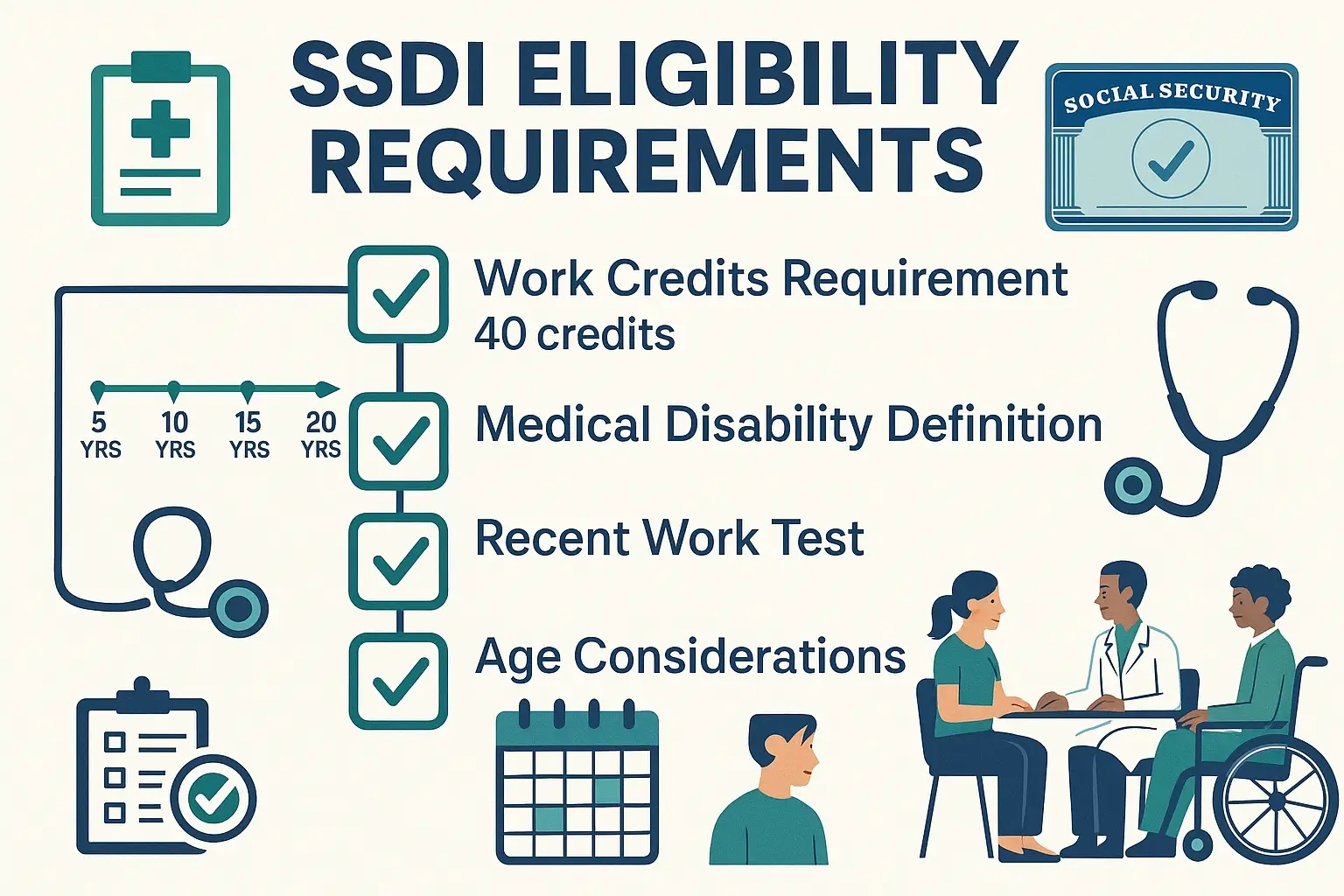
To understand how Social Security Disability Insurance (SSDI) eligibility works, it is important to look at several requirements. These requirements combine medical criteria, work history, and income limitations reviewed by the Social Security Administration (SSA). Meeting them ensures applicants receive the disability benefits they worked hard to earn.
- Medical Requirements: Applicants must prove a qualifying disability that meets the SSA’s definition of severe functional limitations. The medical condition must last at least twelve months or be expected to result in death. Disability determination services evaluate medical records, mental impairment evidence, and other medical criteria. Certain cases listed in the SSA’s Blue Book may qualify automatically, such as cancer, heart disease, or neurological impairments.
- Work Credit Requirements: Eligibility for SSDI benefits depends on paid Social Security taxes and sufficient work credits. Most workers need forty credits, with at least twenty earned in the last ten years before disability. Applicants who have worked long may meet these requirements easily, while younger adults may qualify with fewer credits. Self-employment income also counts if Social Security taxes were paid consistently.
- Work Activity Limits: Applicants must not be engaged in substantial gainful activity, known as SGA, which measures the ability to earn income. In 2024, making more than $1,550 monthly may result in a denied claim, except that higher limits apply for blind workers. The SSA checks income levels, financial resources, and self-employment activity carefully. These limits ensure benefits reach disabled individuals who cannot perform other work.
Understanding these SSDI eligibility requirements helps applicants, family members, and certain household members secure monthly benefits and needed support.
Why Meeting SSDI Eligibility Is Important
Meeting SSDI eligibility is vital because it provides financial protection through monthly disability benefits that replace lost wages. These payments help cover essential living expenses such as rent, utilities, and groceries. Workers who pay Social Security taxes secure valuable income protection during disability. Without SSDI benefits, many households would face immediate financial instability and reliance on limited resources.
Healthcare coverage is another critical reason to meet SSDI eligibility, as beneficiaries gain access to Medicare after 24 months. This coverage helps reduce medical expenses for long-term care and ongoing treatment of severe conditions. Individuals with a qualifying disability and severe functional limitations can better manage their medical needs. Access to healthcare ensures stability and continuity for disabled workers unable to pursue substantial gainful activity.
SSDI eligibility also extends support to family members, including spouses and children, through auxiliary benefits. These additional payments protect entire households from financial hardship when the main worker becomes disabled. Filing correctly and meeting SSA’s definition of disability helps prevent denied disability claims and unnecessary delays. Timely approval secures back pay and ensures eligible persons receive needed support quickly.
Our Simple 4-Step Process
Our simple 4-step process helps you navigate Social Security Disability Insurance (SSDI) requirements with confidence and clarity. Each stage ensures your disability claims are handled correctly, reducing delays and maximizing your chances of approval.
- Case Assessment: We carefully review your medical condition, medical records, and work history under Social Security Disability rules. Our team identifies risks that could delay or block your disability claims. This first step ensures that you understand potential challenges before filing.
- Eligibility & Needs Analysis: We confirm you meet Social Security Administration (SSA) standards and satisfy SSA’s definition of disability. Our experts analyze medical evidence, work credits, and income limits. We tailor strategies that address financial need and improve approval chances.
- Document Preparation & Filing: We gather medical records, tax documents, and employment history to support your case. Our team files your application through the SSA’s process to avoid costly errors. You may apply online, by phone, or at your local Social Security office.
- Ongoing Support & Updates: We monitor your case throughout the application process. Our team provides updates, handles SSA requests, and manages appeals if needed. We remain available for questions, ensuring you feel supported every step.
This structured process will give you strong guidance, better preparation, and a higher chance of receiving Social Security disability benefits.


