
The SSDI application process often feels overwhelming because applicants must gather medical records, employment history, and detailed documentation. Each missing piece of information can trigger delays and prolong the already lengthy waiting period. Applicants who understand these requirements beforehand usually move through the system with fewer complications. Preparation directly impacts how quickly the Social Security Administration can evaluate a disability claim.
A disability timeline calculator clarifies potential timelines, offering realistic projections rather than confusing applicants. Including the five-month waiting period helps individuals anticipate when benefits might finally begin. It also estimates back pay, a critical financial lifeline for many who struggle without income during the application process. These tools empower applicants to plan while reducing uncertainty.
For small businesses, awareness of SSDI timelines prevents compliance oversights that could harm employees and employers. Businesses must prepare for absences or reduced employee availability caused by pending claims. Missing critical deadlines or mismanaging accommodations can lead to costly disputes or penalties. Proactive planning supports both financial stability and workplace trust while navigating SSDI obligations.
Understanding the SSDI Disability Timeline Calculator
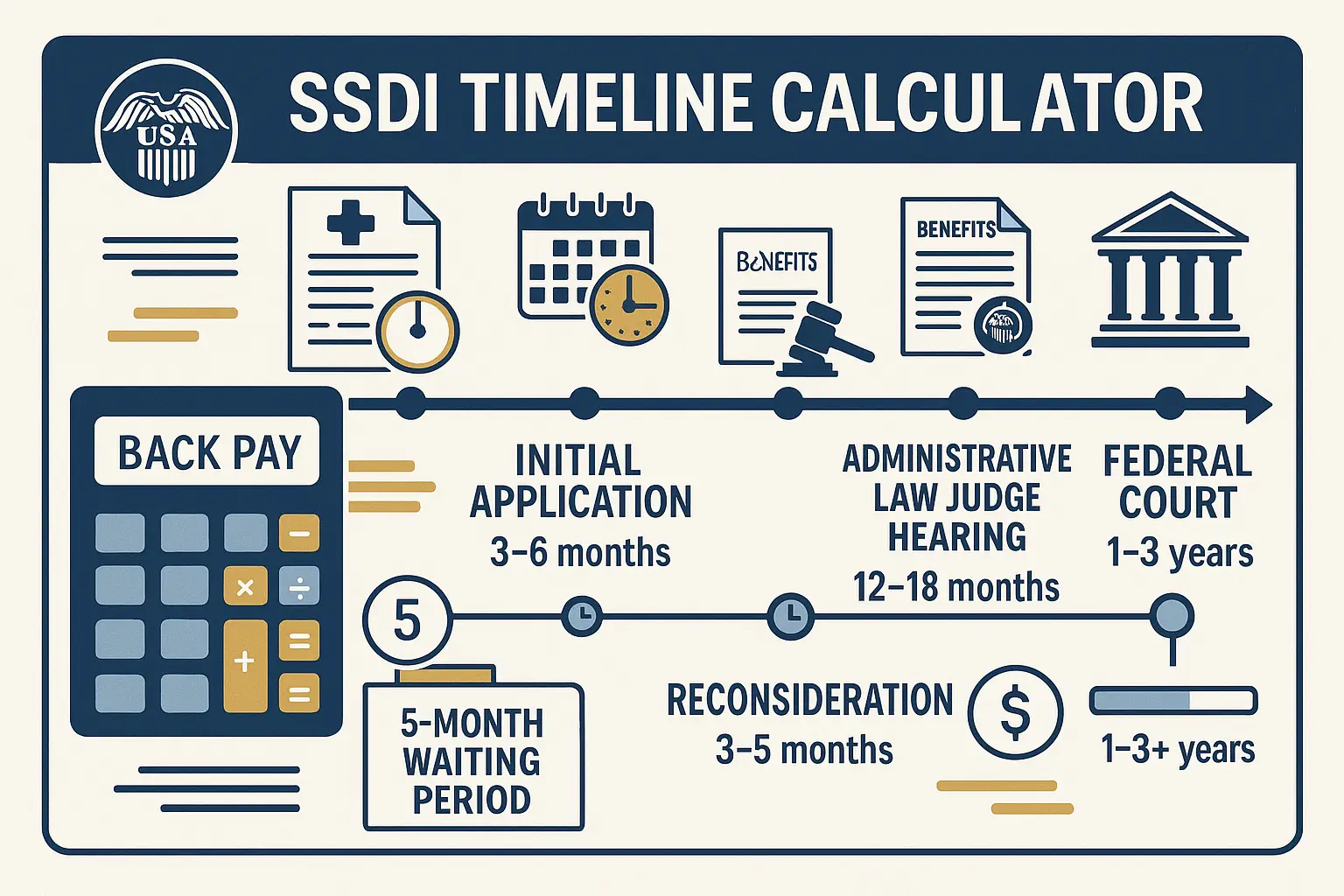
The SSDI disability timeline calculator helps applicants understand the average processing time for Social Security disability claims. It factors in the initial application, disability determination services review, and potential appeal stages. Applicants can see how the five-month waiting period and typical delays influence when they might receive benefits. This tool provides clear projections, helping individuals avoid financial surprises while waiting for Social Security disability insurance approval.
During the application process, the Social Security Administration SSA reviews medical evidence, work history, and eligibility for public disability benefits. If technical denials occur, claimants may file for disability reconsideration or request a hearing before an administrative law judge. The calculator shows how each important step affects approval chances and potential back pay. It also clarifies how long most cases take before applicants typically receive disability payments.
Families, applicants, and employers use the SSDI disability timeline calculator to plan finances, medical care, and workplace responsibilities. For example, families can budget while awaiting lump-sum back pay or supplemental security income. Employers can coordinate compliance with social security obligations when an employee’s disability began months earlier. By understanding the process claims timeline, people can prepare, avoid missed deadlines, and expect when they will start receiving SSDI benefits.
Types of Social Security Disability Insurance Timelines
Understanding the different types of Social Security Disability Insurance timelines helps applicants plan realistically and avoid unnecessary financial strain.
- Initial Application (3–6 months average processing time): The Social Security Administration SSA collects medical and employment records to process claims. Delays are common if disability claims lack sufficient medical evidence or complete documentation. Applicants who prepare carefully increase their chance of receiving benefits without unnecessary wait time.
- Disability Reconsideration (3–5 months): This second review happens after an initial denial, and applicants must submit new or stronger evidence. Different SSA reviewers analyze the same social security disability claim for accuracy and completeness. Many applicants still face denial at this stage, requiring further appeals. Understanding this process helps applicants anticipate potential delays.
- Administrative Law Judge Hearing (12–18 months): This stage is often the longest due to heavy backlogs in scheduling hearings. Some Social Security Administration SSA offices exceed 24 months, creating additional financial stress. Applicants present medical evidence and testimony before an administrative law judge. Strong preparation can determine whether benefits are finally approved.
- Appeals Council Review (12–24 months): The Appeals Council can overturn, remand, or deny an ALJ decision. Extended processing time during this stage often disrupts applicants' financial stability. The council examines errors or inconsistencies in the previous decision. Few cases are approved here, but remands can lead to eventual benefits.
- Federal Court Appeal (1–3+ years): This is the final level of appeal in the social security disability process. Federal judges review the claim for legal and procedural errors. Legal representation is typically required, adding expense and complexity. Success rates are lower, but some applicants gain approval after years of persistence.
By understanding these SSDI timelines, applicants, families, and employers can plan effectively and reduce the risks of prolonged uncertainty.
Why Addressing SSDI Timelines Matters
Addressing SSDI timelines helps applicants prepare for the average processing time at every stage of their disability claims. Careful planning ensures no missed deadlines with the Social Security Administration SSA during any fiscal year. Applicants gain realistic expectations, preventing unnecessary stress while awaiting an initial decision or reconsideration.
Understanding the five-month waiting period protects finances and avoids losing potential back pay from late or incorrect filings. Families, caregivers, and businesses benefit by coordinating financial planning with anticipated disability benefits. This proactive approach provides stability, support, and peace of mind throughout the social security disability process.
Our Simple 4-Step Process
Our simple 4-step process helps applicants navigate social security disability claims with clarity, accuracy, and confidence.
- Case Assessment: We review your current stage in the social security disability process, discussing risks, timeline expectations, and potential back pay eligibility. This step ensures you understand where you stand before proceeding.
- Eligibility & Needs Analysis: We confirm SSDI requirements with the Social Security Administration (SSA) and assess documentation to support faster and smoother processing time. This step helps determine whether you qualify for benefits.
- Document Preparation & Filing: We organize medical and work history to minimize unnecessary delays. We also ensure compliance with SSA guidelines within the correct fiscal year, which increases your chance of timely approval.
- Ongoing Support & Updates: We track your disability claims status closely, update the average processing time at each stage, and adjust strategy if appeals, disability reconsideration, or hearings become necessary.
Following these four steps, applicants gain structure, support, and realistic expectations while pursuing social security disability insurance benefits.


