
Many applicants discover their first Social Security Disability claim is denied despite strong supporting evidence. The SSA denies many claims quickly. Applicants must not view this denial as a final judgment. Instead, it serves as the beginning of the formal appeal process.
Appealing allows claimants to present additional evidence supporting their disability and limitations. The SSA handles hundreds of thousands of appeals each year. A timely appeal ensures your case gets reconsidered carefully. Without an appeal, your claim simply ends with the initial denial.
Missing the appeal deadline carries serious financial consequences. Applicants risk losing ongoing benefits for daily expenses and forfeiting back pay owed from earlier months. Acting promptly preserves both financial stability and critical income support.
Understanding SSDI Denials and Appeals
An SSDI denial shows the Social Security Administration did not find your disability claim fully supported by evidence. Many denials occur because medical records were incomplete or the examiner questioned the severity of your condition. A denied claim should not discourage you from pursuing Social Security Disability Insurance benefits. Filing a written request for reconsideration begins the official appeal process with SSA.
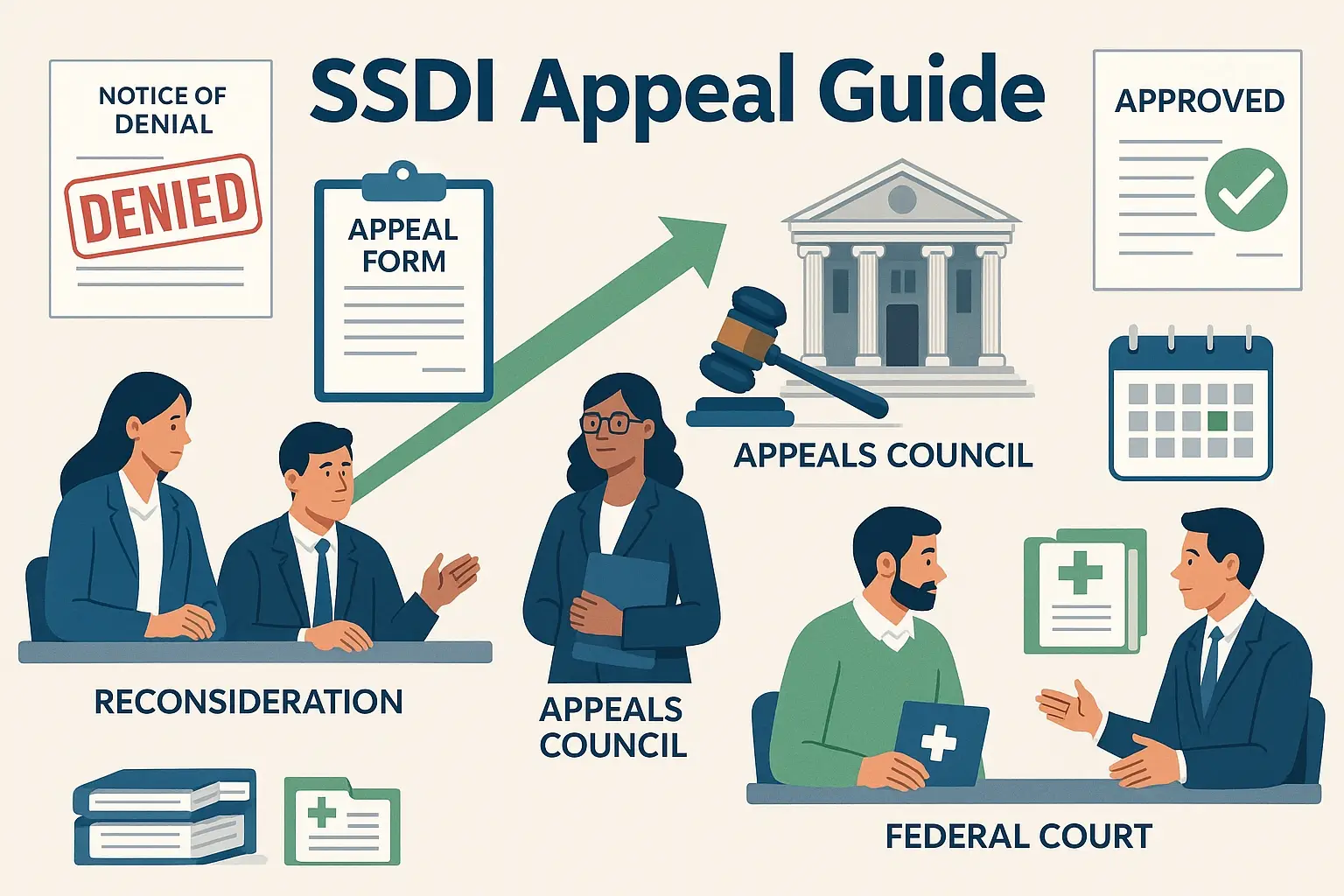
During reconsideration, an examiner reviews updated medical information, work history, and any new evidence you submit. If SSA’s decision still denies benefits, you may request a hearing process before an administrative law judge. At the hearing, you and your representative can testify, present witnesses, and explain your case based on evidence. Depending on the proof presented, a judge’s decision may favor you or continue the denial.
If you disagree with the judge’s decision, you can request further review by the Appeals Council. The Appeals Council’s decision may grant benefits, return the case for a new hearing, or uphold the denial. If denied again, filing in federal court remains the final step in the legal process. Acting before the deadline protects your right to benefits and permanently avoids losing valuable back pay.
Types of SSDI Appeals
When your SSDI claim receives a denial, you still have several levels of appeal to pursue. Each stage offers a different opportunity to present evidence, explain your medical condition, and challenge the SSA’s decision. Understanding how these steps progress helps you prepare effectively and avoid losing potential benefits.
Reconsideration
The Social Security Administration assigns a new examiner to review your denied claim and evaluate updated medical information or work history. You may submit additional medical records, documents, and new evidence to strengthen your Social Security Disability Insurance case. Depending on the SSA's workload, this stage often requires a decision to be made within several months.
Administrative Law Judge (ALJ) Hearing
An impartial administrative law judge conducts the hearing process after a request for reconsideration is denied. You and your representative can testify, present witnesses, and explain your disability’s severity with medical records and other evidence. This step is often where claimants prove eligibility and obtain approval for SSDI benefits. The judge’s decision may grant benefits, request a new hearing, or continue the denial.
Appeals Council Review
The Appeals Council reviews the administrative law judge’s decision to confirm that the correct legal standards were applied. It may issue a favorable ruling, deny the appeal, or remand the case for further review. This stage often focuses on whether the judge properly examined documents and applied administrative law. The Appeals Council’s decision becomes binding unless you pursue the next level.
Federal Court
Filing in federal court is the final legal option if you disagree with the Appeals Council’s decision. This process takes your disability case outside the Social Security Administration and requires strict filing deadlines. Most applicants work with an attorney to navigate complex court rules and procedures. A federal judge will determine if the SSA’s decision followed the law and may remand or approve benefits.
Why Addressing an SSDI Denial Matters
Most Social Security Disability approvals occur during the appeal process rather than the initial claim review by the SSA. Filing an appeal protects your rights under administrative law and ensures your case receives further review. A timely appeal allows you to present updated medical information and evidence that supports your disability. Acting immediately strengthens your claim and prevents unnecessary delays in receiving benefits.
Successful appeals can secure back pay to your original filing date with the Social Security Administration. This financial support helps cover lost income and essential medical treatment related to your disability. Taking prompt action prevents gaps in medical coverage and reduces long-term financial hardship. Addressing an SSDI denial quickly protects your stability and future security.
Our Simple 4-Step Process
We have designed our simple four-step process to provide clarity and support throughout every stage of your SSDI appeal.
- Case Assessment: We carefully review your denial notice, medical records, and claim file to understand why your SSDI claim was denied. Our team identifies risks and opportunities that may affect your eligibility for Social Security Disability benefits. This first step ensures we build a strong foundation for your appeal process.
- Eligibility & Needs Analysis: We determine whether your case requires reconsideration, an Administrative Law Judge hearing, or further appeals. Our analysis matches your medical condition and work history with Social Security’s eligibility requirements. This evaluation helps us prepare the most effective path toward approval.
- Document Preparation & Filing: We prepare the required SSA forms, collect updated medical information, and organize supporting documents. Our team ensures compliance with administrative law, strict filing deadlines, and Social Security’s detailed requirements. Accurate and complete filing strengthens your case for approval.
- Ongoing Support & Updates: We closely monitor deadlines, notices, and SSA updates throughout your appeal process. If needed, we represent you before the ALJ, Appeals Council, or even federal court. Continuous support helps protect your benefits and improves your chance of success.
By following this process, you can confidently navigate complex SSA procedures and focus on securing the benefits you deserve.


