You can work while on SSDI and still keep your disability benefits under specific Social Security work incentive programs. These programs, including the Trial Work Period and Extended Period of Eligibility, encourage recipients to safely test their employment prospects. The Social Security Administration created these protections to help individuals earn income without losing essential support. Understanding how these programs function allows recipients to transition smoothly between disability and work.
Readers will learn about current income limits, reporting requirements, and benefit thresholds while exploring options for safely earning income under SSDI. This guide covers essential details about the Trial Work Period and the Extended Period of Eligibility. It also explains how to track and deduct impairment-related work expenses to maximize income potential. Each topic focuses on clarity and practical application for real-world employment scenarios.
This guide uses verified Social Security Disability and SSA sources to ensure complete accuracy for readers receiving SSDI benefits. It offers clear, practical examples on balancing employment and benefits without breaking program rules. Every recommendation emphasizes transparency and compliance with Social Security reporting requirements. Expect actionable advice, structured explanations, and simplified terms for part-time workers or self-employed individuals.
SSDI Basics and How Substantial Gainful Activity (SGA) Works
Understanding how Social Security Disability Insurance (SSDI) works is essential for anyone receiving disability benefits and considering returning to work.
What SSDI Means
Social Security Disability Insurance (SSDI) is a federal program that provides financial assistance to individuals with disabilities who have sufficient work credits. It offers disability benefits to workers who are unable to perform substantial gainful activity due to a verified medical condition. The Social Security Administration (SSA) manages SSDI and ensures that qualified applicants meet strict eligibility and work history standards. SSDI benefits begin after approval, providing a monthly income that supports individuals with serious long-term disabilities.
Understanding Substantial Gainful Activity (SGA)
Substantial gainful activity (SGA) determines how much an SSDI recipient can earn while still receiving benefits. The Social Security Administration defines SGA as work that earns above specific income limits based on the national wage index. For 2025, the SGA limit is $1,620 for non-blind individuals and $2,700 for individuals who are blind or have a visual impairment. If monthly earnings exceed these amounts, the SSA may consider the recipient capable of performing substantial gainful activity.
How Social Security Evaluates Work
The Social Security Administration (SSA) uses reported monthly earnings and work activity to assess whether a person can continue receiving SSDI benefits. The SSA reviews work expenses and impairment-related work expenses when calculating countable earnings for SGA evaluation. Disabled individuals may test their ability to work during a Trial Work Period (TWP) or Extended Period of Eligibility (EPE) without immediately losing benefits. These safety nets enable SSDI beneficiaries to explore employment opportunities while maintaining financial stability and continuing to receive SSDI benefits.
SSDI vs. SSI:
Social Security Disability (SSDI) differs from Supplemental Security Income (SSI) in how eligibility and benefits are determined. SSDI is based on past work history and Social Security taxes paid, while SSI depends on financial need and limited income. Both programs fall under Social Security, but SSDI provides long-term support to workers who become disabled before retirement age. Understanding these differences helps recipients plan employment goals without risking benefits or violating SSDI work rules.
By understanding Social Security Disability Insurance (SSDI) and the definition of substantial gainful activity (SGA), recipients can make informed decisions about their employment. Knowing the income limits and available safety nets enables individuals with disabilities to earn additional income safely and securely. The Social Security Administration (SSA) offers structured work programs, such as TWP and EPE, to support individuals in achieving financial independence. With proper planning, SSDI recipients can work, accurately report their earnings, and continue to receive essential benefits.
Work Incentives: Your Built-In Safety Nets
The Social Security Administration (SSA) offers several built-in work incentives that enable SSDI recipients to test employment safely without risking immediate loss of benefits. These programs provide protection, flexibility, and a pathway to financial independence, while ensuring continued access to Social Security Disability benefits.
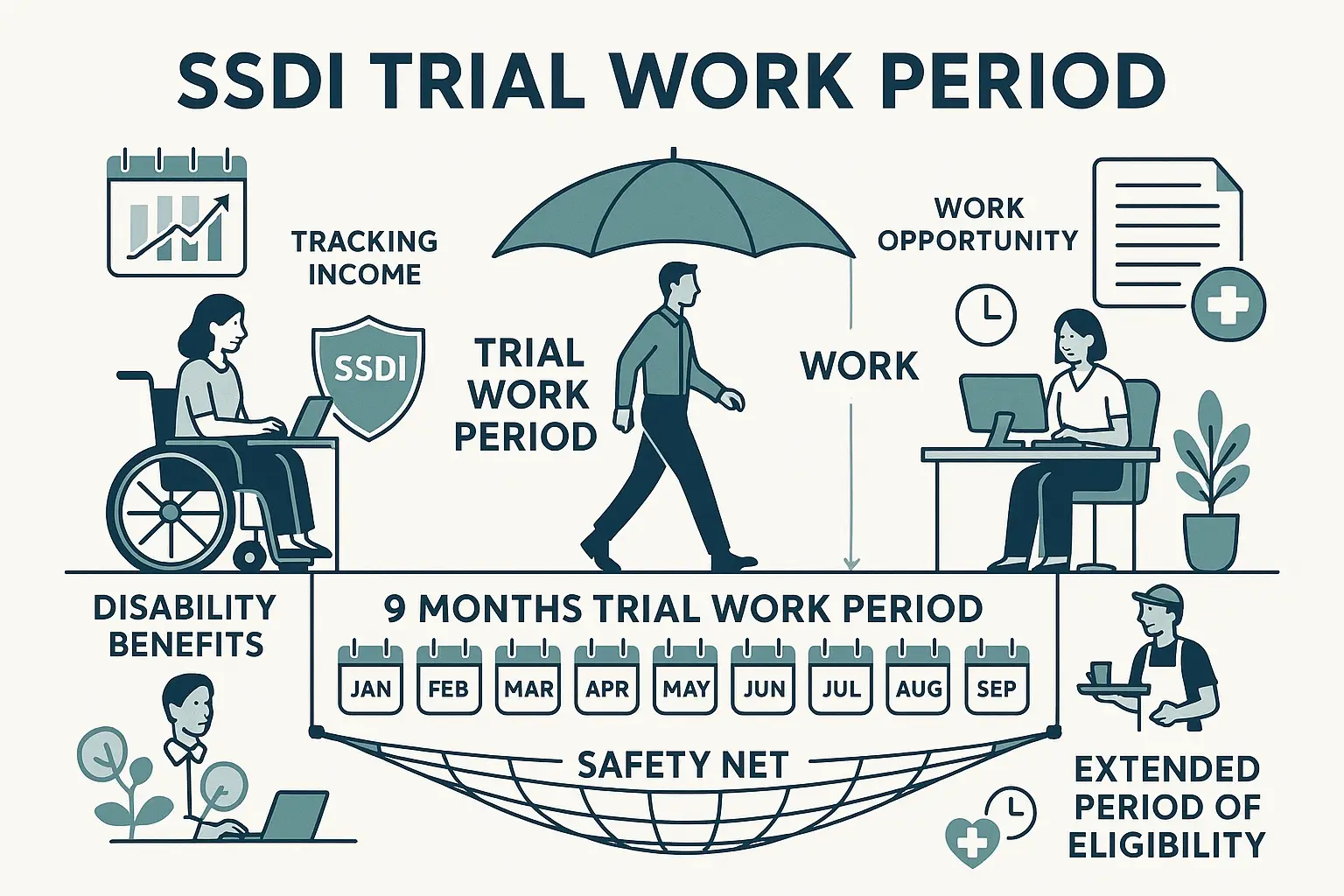
- Trial Work Period (TWP): Social Security allows SSDI beneficiaries to test their ability to work through a Trial Work Period (TWP). During this trial period, recipients can earn income for up to nine months and still receive full SSDI benefits. In 2025, the SSA defines a trial month as earning $1,160 or more or working over 80 hours if self-employed. This safety net allows workers to explore side gigs or part-time jobs without risking the immediate loss of their benefits.
- Extended Period of Eligibility (EPE) and Grace Period: The Extended Period of Eligibility (EPE)—also referred to as the Period of Eligibility (EPE)—is a 36-month safety net that follows the TWP. During this extended period, Social Security Disability recipients can keep benefits for any month their earnings fall below the SGA limit. The SSA also grants a three-month grace period after the first month earnings exceed SGA before stopping cash payments. This flexibility is ideal for individuals with variable income from freelance work or part-time employment.
- Expedited Reinstatement (EXR): Expedited Reinstatement (EXR) allows former SSDI beneficiaries to restart payments if they cannot sustain work due to the same or related disability. The program applies if the worker requests reinstatement within five years of when benefits stopped. This rule ensures that individuals with disabilities do not need to file a new application or undergo another medical review. It protects workers who temporarily leave the workforce, offering a smooth path to have benefits reinstated when needed.
These Social Security Disability work programs—the Trial Work Period, Extended Period of Eligibility, and Expedited Reinstatement—create a secure framework for recipients to rejoin the workforce. They encourage earning income safely while maintaining the right to continue receiving SSDI benefits. With these protections, SSDI recipients can build financial independence without fearing sudden benefit loss.
Self-Employment and Side Gigs: Special Considerations
Many SSDI beneficiaries pursue self-employment or side gigs to supplement income and maintain flexibility while managing their disability. However, Social Security Disability evaluates these types of work differently than traditional employment to ensure fairness and compliance with program rules.
How Social Security Evaluates Self-Employment
The Social Security Administration (SSA) reviews self-employment under Social Security Disability Insurance (SSDI) differently from standard wage-based jobs. Instead of just reviewing pay stubs, the SSA examines business operations, controls, and the level of work activity performed. The agency assesses whether the self-employed person performs substantial gainful activity (SGA) based on both income and work effort. This evaluation ensures that individuals with disabilities can operate a business while meeting the SSDI work requirements.
How Earnings Are Measured
For self-employed SSDI recipients, earning income is calculated using net earnings, not gross receipts. Net earnings represent the profit remaining after deducting legitimate business expenses related to the operation. This method helps SSDI beneficiaries by recognizing the actual financial return from their efforts. It also enables a fair assessment when determining whether the monthly income remains below the SGA limit.
Understanding Unincurred Business Expenses
The SSA defines unincurred business expenses as services or items received at no cost, such as donated tools or free rent. These contributions are deducted from income calculations because they do not represent personal earnings. Examples include volunteer help, free equipment, or donated materials used in running a business. Recognizing these work expenses ensures accurate evaluation of countable earnings under Social Security Disability rules.
Time and Effort as a Measure of Work
The SSA also considers the amount of time and effort a person devotes to managing a business. Even when income is low, significant management or supervision can indicate substantial gainful activity. For example, running daily operations or overseeing clients may show active business engagement. Maintaining detailed records helps prove that business involvement aligns with SSDI work rules and medical limitations.
Examples of Safe Side Gigs
Certain side gigs allow recipients to work within SSDI limits while maintaining their disability benefits. Freelance writing, online tutoring, crafting, graphic design, and consulting can all align with SSA guidelines. These roles offer flexibility in managing a medical condition while maintaining control over work hours and income. When recipients report activity honestly and track earnings, they can continue receiving SSDI benefits safely.
Self-employment offers SSDI recipients a path toward financial independence while respecting Social Security’s strict rules. By understanding net income, unincurred business expenses, and time management expectations, beneficiaries can stay compliant. With careful record-keeping and effective communication, individuals with disabilities can establish a business, earn an income, and maintain their essential SSDI benefits.
Health Coverage While You Work: Medicare Protection
Maintaining healthcare coverage is a major concern for individuals returning to work while receiving Social Security Disability Insurance (SSDI). The Social Security Administration (SSA) ensures that SSDI beneficiaries can keep their Medicare coverage even while testing their ability to work. This protection helps recipients maintain essential medical access while pursuing employment and financial independence.
- Continued Healthcare Coverage Through Medicare: The Social Security Disability program ensures that qualified recipients maintain their Medicare coverage as long as they continue to meet the disability requirements. This continued coverage ensures access to doctors, treatments, and medications while earning income during work incentive periods. The SSA provides this safeguard to help individuals transition to work without losing vital health protection. It gives recipients confidence to pursue part-time work or side gigs while still receiving consistent medical support.
- Extended Period of Eligibility for Medicare Protection: After completing the Trial Work Period (TWP), SSDI beneficiaries can keep premium-free Medicare Part A for 93 consecutive months. The Extended Period of Eligibility (EPE) serves as a safety net, providing long-term health stability for workers with disabilities. During this period, individuals can continue accessing healthcare even if their earnings exceed the Substantial Gainful Activity (SGA) limit. The program ensures that receiving SSDI benefits and testing work potential do not jeopardize medical coverage.
- Part B Coverage Options: Recipients can maintain their Medicare Part B coverage by continuing to pay the standard monthly premium both during and after the EPE. If a person’s premium-free coverage ends, they may be eligible to purchase Part A at a reduced rate if they have sufficient work credits. This flexibility allows beneficiaries to maintain comprehensive coverage regardless of their employment situation. The SSA designed these options to help individuals stay insured while adjusting to changes in their work life.
- Medicare Continuation While Earning Income: Receiving SSDI allows continued access to Medicare even as recipients start earning income or reenter the workforce. The SSA recognizes that many individuals with disabilities may need both health coverage and employment opportunities. This provision helps prevent gaps in medical care while maintaining the financial assistance SSDI provides. It reassures beneficiaries that returning to work will not result in losing access to essential healthcare.
Through extended coverage rules and work incentives, the Social Security Administration (SSA) ensures that working SSDI recipients remain protected under Medicare. The 93-month extension, Part B options, and ongoing EPE provisions create a dependable safety net. These policies encourage recipients to pursue employment with confidence while maintaining access to vital healthcare services.
Ticket to Work and Vocational Rehabilitation
The Social Security Administration (SSA) created the Ticket to Work program to help SSDI recipients transition into employment without risking their benefits. It is a free, voluntary service that supports individuals with disabilities who want to build careers and achieve financial independence. This program enables recipients to explore work opportunities while maintaining access to Social Security Disability benefits.
Overview of the Ticket to Work Program
The Ticket to Work program is a free federal initiative for individuals receiving SSDI benefits who are ready to reenter the workforce. It enables participants to explore part-time or full-time job opportunities with structured support and benefit counseling. The program connects recipients to authorized Employment Networks (ENs) that provide personalized employment assistance. By participating, beneficiaries can improve their job readiness while remaining compliant with Social Security Disability work rules.
Core Benefits of the Program
Participants gain access to a range of career-building services designed to enhance employability and confidence. The program offers job training, vocational counseling, job placement, and benefits management through SSA-approved providers. These services are tailored to individual goals, medical limitations, and professional interests. Each support system is built to help participants develop skills that lead to greater financial independence.
Medical Review Protection and Employment Support
Active participation in the Ticket to Work program pauses scheduled Continuing Disability Reviews (CDRs) by the SSA. This means beneficiaries can focus on working while on SSDI without fear of sudden benefit termination during medical evaluations. The program supports a gradual return to employment through guided planning and mentorship. This protection provides a stable environment for recipients to rebuild their professional identity and long-term earning potential.
State Vocational Rehabilitation (VR) Partnerships
The Ticket to Work program partners with State Vocational Rehabilitation (VR) agencies nationwide. These agencies offer comprehensive services, including education, job coaching, and workplace accommodation assistance. Social Security Disability beneficiaries can use VR services to gain specialized training for sustainable employment. This collaboration ensures consistent guidance from both federal and state programs, thereby maximizing the success of participants.
The Ticket to Work and Vocational Rehabilitation programs provide SSDI recipients with the tools to reenter the workforce safely. Through training, counseling, and benefit management, they promote financial independence without compromising vital Social Security Disability benefits. With continued medical review protection and coordinated support, participants can work confidently toward long-term career and personal growth.
Step-by-Step Guide to Testing a Side Gig
Starting a side gig while receiving Social Security Disability Insurance (SSDI) requires careful planning and consistent tracking. Following each step ensures that recipients stay within Social Security’s rules while maintaining benefits and healthcare coverage.
Step 1: Verify SSDI Eligibility and SGA Limit for 2025
Confirm that you are still eligible for SSDI benefits before starting any side work. Review the Substantial Gainful Activity (SGA) limits for 2025—$1,620 for non-blind individuals and $2,700 for blind individuals. Check your work history and ensure that your medical condition continues to meet Social Security Disability requirements. Understanding your eligibility and the current SGA limit helps prevent interruptions to your benefits.
Step 2: Plan to Earn Income Within Safe Thresholds
Create a budget and estimate how much you can safely earn while receiving SSDI benefits. Ensure your projected income stays below the monthly SGA limit to avoid exceeding Social Security’s thresholds. Include all forms of countable earnings, including gig work, commissions, or business profits. Maintaining control over income helps protect your benefits and prevents unnecessary overpayments.
Step 3: Start Your Trial Work Period and Track Expenses
Begin your Trial Work Period (TWP) to test your work capacity while keeping your full SSDI benefits. Keep detailed records of work hours, pay stubs, and invoices to show compliance with Social Security Disability rules. Track and document impairment-related work expenses (IRWEs), such as transportation or medical equipment used for work purposes. Accurate documentation ensures proper evaluation during SSA reviews or income checks.
Step 4: Prepare for Your Extended Period of Eligibility
After completing your TWP, transition into the Extended Period of Eligibility (EPE), which lasts 36 months. During this period, your benefits continue for any month that your earnings fall below the SGA limit. Monitor your monthly income carefully, especially if it fluctuates due to freelance or seasonal work. This phase provides flexibility for recipients learning how working while on SSDI affects their benefits.
Step 5: Explore Expedited Reinstatement for Added Protection
If you lose benefits because of high earnings but later cannot maintain work, apply for Expedited Reinstatement (EXR). You must request reinstatement within five years of losing eligibility under the same or related medical condition. This Social Security safeguard allows you to restart benefits without reapplying or enduring a full medical review. Knowing this protection exists helps you test work confidently without fearing permanent benefit loss.
Step 6: Review Medicare Coverage and Reporting Requirements
Confirm that your Medicare coverage continues during your Trial Work Period and EPE. You can keep premium-free Part A for 93 months after the TWP ends, and you may choose to purchase Part B if needed. Report all work activity and income changes to the Social Security Administration (SSA) promptly. Transparent reporting ensures that you continue to receive benefits while maintaining compliance with federal regulations.
Testing a side gig under Social Security Disability Insurance (SSDI) is possible with proper preparation and consistent recordkeeping. By understanding SGA limits, work incentives, and reporting requirements, recipients can safely earn income without risking essential benefits. This careful, step-by-step approach enables SSDI beneficiaries to pursue financial growth while maintaining their medical coverage and achieving long-term stability.